


Hyperbaric oxygen therapy to treat diabetes impaired wound healing in rats
- PMID: 25329176
- PMCID: PMC4198078
- DOI: 10.1371/journal.pone.0108533
Hyperbaric oxygen therapy to treat diabetes impaired wound healing in rats
Abstract
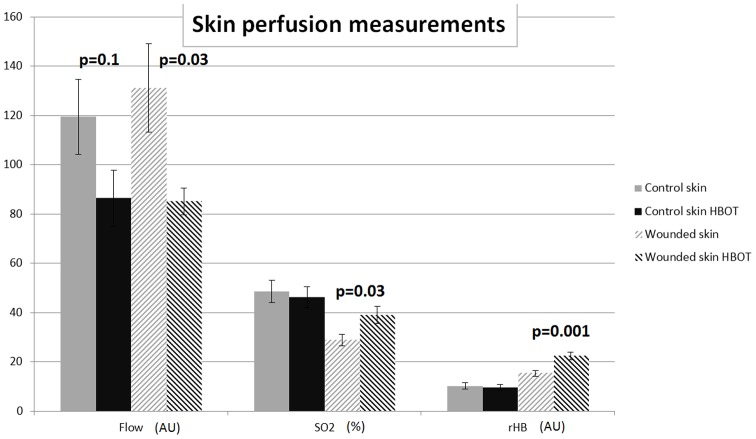
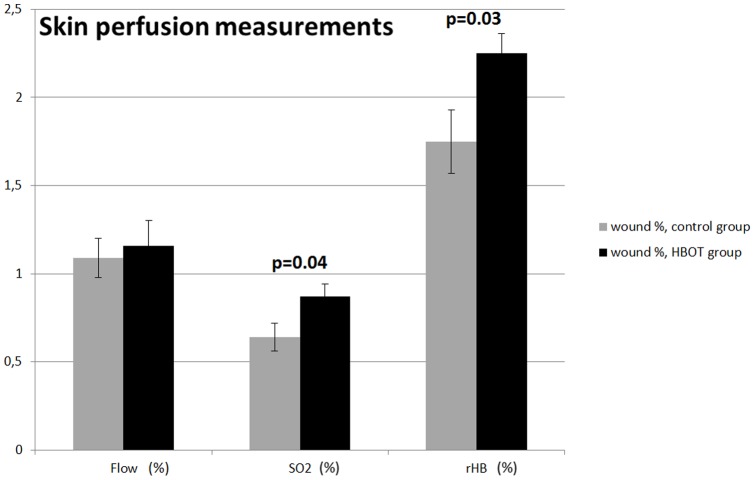
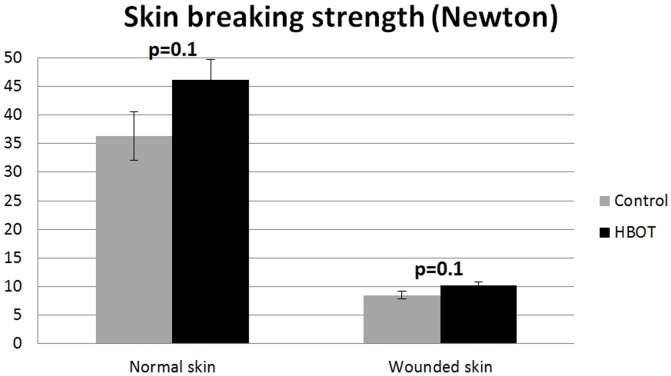
Wound healing in diabetes is frequently impaired and its treatment remains a challenge. Hyperbaric oxygen therapy (HBOT) receives a wide attendance and is often used as a last resort treatment option, however, its effectiveness for many conditions is unproven. We tested the effect of HBOT on healing of diabetic ulcers in an animal experimental setting. Experimental diabetes was induced by intraperitoneal injection of streptozotocin. Four weeks after diabetes induction, rats were ulcerated by clamping a pair of magnet disks on the dorsal skin for 16 h. After magnet removal, the animals received HBOT, daily on weekdays, for 4 weeks. To examine the effect of HBOT on diabetes impaired wound healing, the degree of wound tissue perfusion, inflammation, angiogenesis, and tissue breaking strength were evaluated. HBOT effects on the degree of inflammation and number of blood vessels could not be observed. HBOT improved the tissue breaking strength of the wound, however, this did not reach statistical significance. Twenty hours after ending the HBOT, a significantly improved oxygen saturation of the hemoglobin at the venous end of the capillaries and the quantity of hemoglobin in the micro-blood vessels was measured.
Conflict of interest statement
Figures
References
-
- Brimson CH, Nigam Y (2013) The role of oxygen-associated therapies for the healing of chronic wounds, particularly in patients with diabetes. J Eur Acad Dermatol Venereol 27: 411–418. - PubMed
-
- Kikkawa R (2000) Chronic complications in diabetes mellitus. Brit J Nutr 84: 183–185. - PubMed
-
- Kranke P, Bennett MH, Martyn-St James M, Schnabel A, Debus SE (2012) Hyperbaric oxygen therapy for chronic wounds. Cochrane Database Syst Rev 4: CD004123. - PubMed
Publication types
MeSH terms
Substances
LinkOut - more resources
Full Text Sources
Other Literature Sources
Medical
