


Diversity analysis in Cannabis sativa based on large-scale development of expressed sequence tag-derived simple sequence repeat markers
- PMID: 25329551
- PMCID: PMC4203809
- DOI: 10.1371/journal.pone.0110638
Diversity analysis in Cannabis sativa based on large-scale development of expressed sequence tag-derived simple sequence repeat markers
Abstract
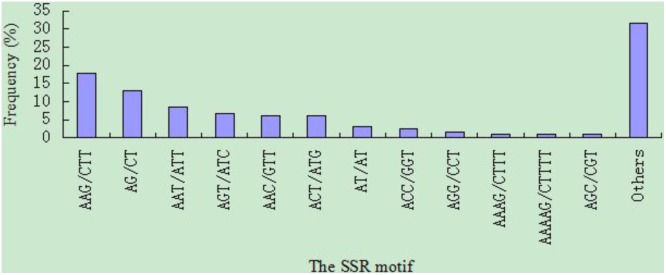
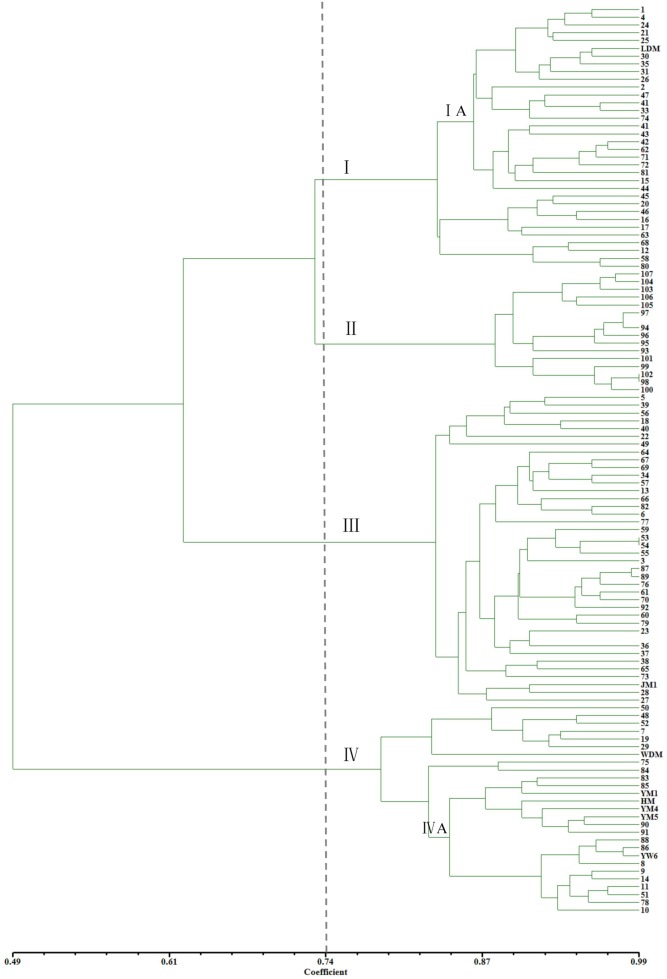
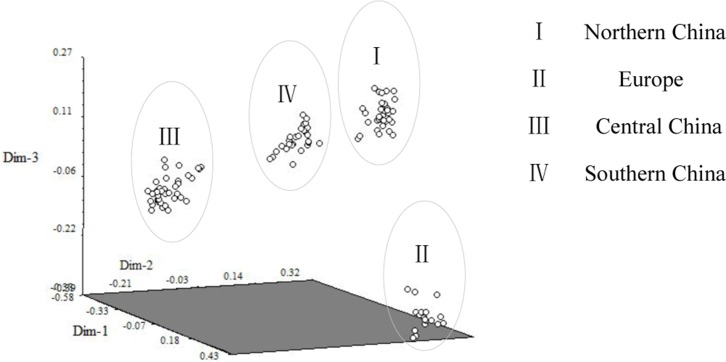
Cannabis sativa L. is an important economic plant for the production of food, fiber, oils, and intoxicants. However, lack of sufficient simple sequence repeat (SSR) markers has limited the development of cannabis genetic research. Here, large-scale development of expressed sequence tag simple sequence repeat (EST-SSR) markers was performed to obtain more informative genetic markers, and to assess genetic diversity in cannabis (Cannabis sativa L.). Based on the cannabis transcriptome, 4,577 SSRs were identified from 3,624 ESTs. From there, a total of 3,442 complementary primer pairs were designed as SSR markers. Among these markers, trinucleotide repeat motifs (50.99%) were the most abundant, followed by hexanucleotide (25.13%), dinucleotide (16.34%), tetranucloetide (3.8%), and pentanucleotide (3.74%) repeat motifs, respectively. The AAG/CTT trinucleotide repeat (17.96%) was the most abundant motif detected in the SSRs. One hundred and seventeen EST-SSR markers were randomly selected to evaluate primer quality in 24 cannabis varieties. Among these 117 markers, 108 (92.31%) were successfully amplified and 87 (74.36%) were polymorphic. Forty-five polymorphic primer pairs were selected to evaluate genetic diversity and relatedness among the 115 cannabis genotypes. The results showed that 115 varieties could be divided into 4 groups primarily based on geography: Northern China, Europe, Central China, and Southern China. Moreover, the coefficient of similarity when comparing cannabis from Northern China with the European group cannabis was higher than that when comparing with cannabis from the other two groups, owing to a similar climate. This study outlines the first large-scale development of SSR markers for cannabis. These data may serve as a foundation for the development of genetic linkage, quantitative trait loci mapping, and marker-assisted breeding of cannabis.
Conflict of interest statement
Figures
References
-
- Gilmore S, Peakall R (2003) Isolation of microsatellite markers in Cannabis sativa L. (marijuana). Mol Ecol Notes 3: 105–107.
-
- Alghanim HJ, Almirall JR (2003) Development of microsatellite markers in Cannabis sativa for DNA typing and genetic relatedness analyses. Anal Bioanal Chem 376: 1225–1233. - PubMed
-
- Gillan R, Cole MD, Linacre A, Thorpe JW, Watson ND (1995) Comparison of Cannabis sativa by random amplification of polymorphic DNA (RAPD) and HPLC of cannabinoid: a preliminary study. Sci Justice 35: 169–177. - PubMed
-
- Jagadish V, Robertson J, Gibbs A (1996) RAPD analysis distinguished Cannabis sativa samples from different sources. Foren Sci Int 79: 113–121.
Publication types
MeSH terms
LinkOut - more resources
Full Text Sources
Other Literature Sources
Research Materials
