


Microbial communities in the upper respiratory tract of patients with asthma and chronic obstructive pulmonary disease
- PMID: 25329665
- PMCID: PMC4199592
- DOI: 10.1371/journal.pone.0109710
Microbial communities in the upper respiratory tract of patients with asthma and chronic obstructive pulmonary disease
Abstract
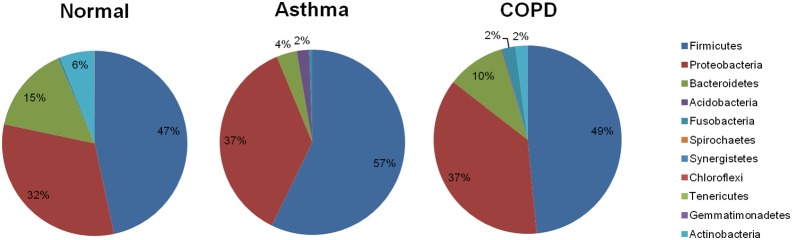
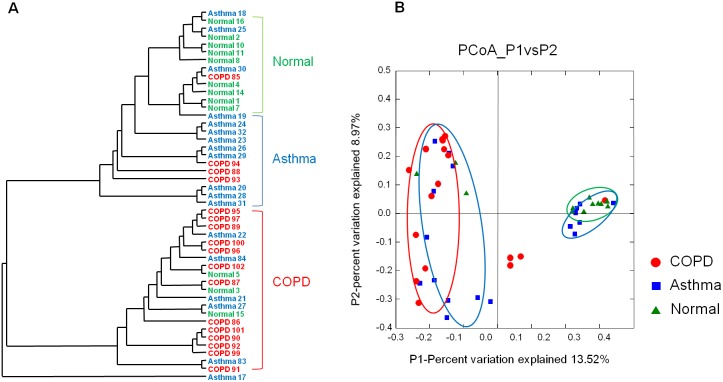
Respiratory infections are well-known triggers of chronic respiratory diseases. Recently, culture-independent tools have indicated that lower airway microbiota may contribute to pathophysiologic processes associated with asthma and chronic obstructive pulmonary disease (COPD). However, the relationship between upper airway microbiota and chronic respiratory diseases remains unclear. This study was undertaken to define differences of microbiota in the oropharynx of asthma and COPD patients relative to those in healthy individuals. To account for the qualitative and quantitative diversity of the 16S rRNA gene in the oropharynx, the microbiomes of 18 asthma patients, 17 COPD patients, and 12 normal individuals were assessed using a high-throughput next-generation sequencing analysis. In the 259,572 total sequence reads, α and β diversity measurements and a generalized linear model revealed that the oropharynx microbiota are diverse, but no significant differences were observed between asthma and COPD patients. Pseudomonas spp. of Proteobacteria and Lactobacillus spp. of Firmicutes were highly abundant in asthma and COPD. By contrast, Streptococcus, Veillonella, Prevotella, and Neisseria of Bacteroidetes dominated in the healthy oropharynx. These findings are consistent with previous studies conducted in the lower airways and suggest that oropharyngeal airway microbiota are important for understanding the relationships between the various parts of the respiratory tract with regard to bacterial colonization and comprehensive assessment of asthma and COPD.
Conflict of interest statement
Figures
References
-
- Janeiro RD (2013) Differentiating chronic obstructive pulmonary disease from asthma in clinical practice. HUPE Journal 12: 57–64.
-
- World Health Organization, Office of Health Communications and Public Relations. (2006) Asthma. Geneva: World Health Organization. 3 p.
-
- World Health Organization “The 10 leading causes of death in the world, 2000 and 2011”, July 2013. Retrieved 2013 November 29.
Publication types
MeSH terms
Substances
LinkOut - more resources
Full Text Sources
Other Literature Sources
Medical
Miscellaneous
