


Calcium supplementation increases blood creatinine concentration in a randomized controlled trial
- PMID: 25329821
- PMCID: PMC4198086
- DOI: 10.1371/journal.pone.0108094
Calcium supplementation increases blood creatinine concentration in a randomized controlled trial
Abstract
Background: Calcium supplements are widely used among older adults for osteoporosis prevention and treatment. However, their effect on creatinine levels and kidney function has not been well studied.
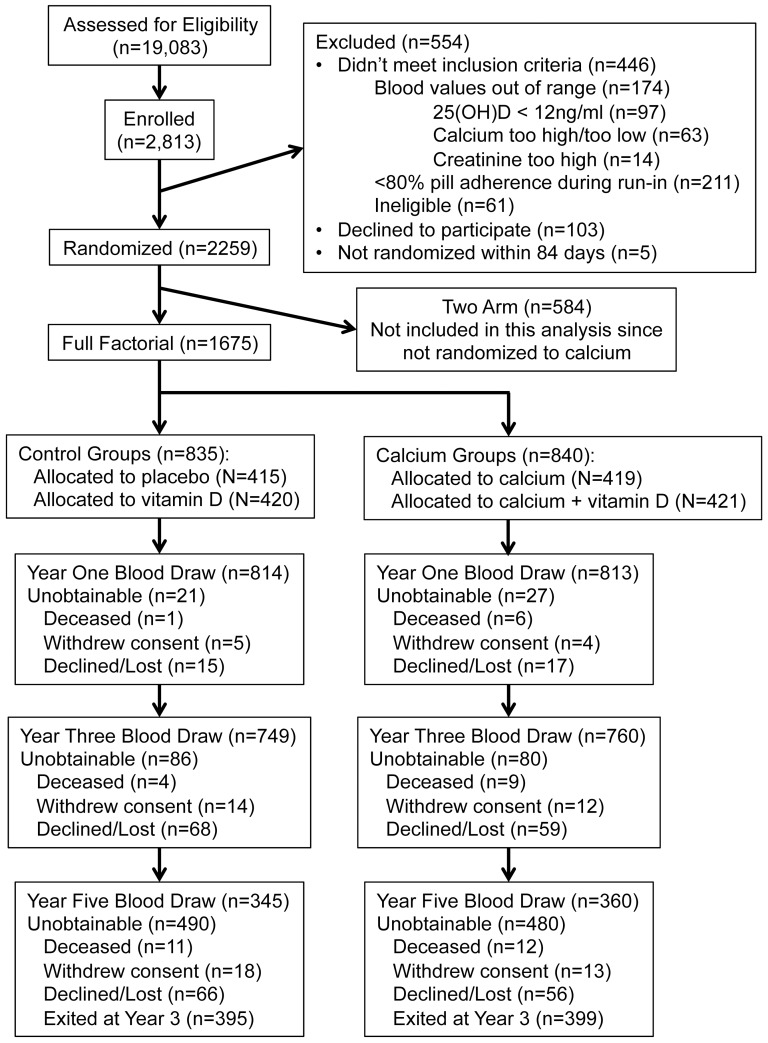
Methods: We investigated the effect of calcium supplementation on blood creatinine concentration in a randomized controlled trial of colorectal adenoma chemoprevention conducted between 2004-2013 at 11 clinical centers in the United States. Healthy participants (N = 1,675) aged 45-75 with a history of colorectal adenoma were assigned to daily supplementation with calcium (1200 mg, as carbonate), vitamin D3 (1000 IU), both, or placebo for three or five years. Changes in blood creatinine and total calcium concentration were measured after one year of treatment and multiple linear regression was used to estimate effects on creatinine concentrations.
Results: After one year of treatment, blood creatinine was 0.013±0.006 mg/dL higher on average among participants randomized to calcium compared to placebo after adjustment for other determinants of creatinine (P = 0.03). However, the effect of calcium treatment appeared to be larger among participants who consumed the most alcohol (2-6 drinks/day) or whose estimated glomerular filtration rate (eGFR) was less than 60 ml/min/1.73 m2 at baseline. The effect of calcium treatment on creatinine was only partially mediated by a concomitant increase in blood total calcium concentration and was independent of randomized vitamin D treatment. There did not appear to be further increases in creatinine after the first year of calcium treatment.
Conclusions: Among healthy adults participating in a randomized clinical trial, daily supplementation with 1200 mg of elemental calcium caused a small increase in blood creatinine. If confirmed, this finding may have implications for clinical and public health recommendations for calcium supplementation.
Trial registration: ClinicalTrials.gov NCT00153816.
Conflict of interest statement
Figures
References
-
- Dawson-Hughes B (2008) A Revised Clinician's Guide to the Prevention and Treatment of Osteoporosis. J Clin Endocrinol Metab 93: 2463–2465. - PubMed
-
- Gahche J, Bailey R, Burt V, Hughes J, Yetley E, et al. (2011) Dietary Supplement Use among U.S. Adults Has Increased since Nhanes Iii (1988–1994). NCHS Data Brief 1–8. - PubMed
-
- Baron JA, Beach M, Mandel JS, van Stolk RU, Haile RW, et al. (1999) Calcium Supplements for the Prevention of Colorectal Adenomas. Calcium Polyp Prevention Study Group. N Engl J Med 340: 101–107. - PubMed
Publication types
MeSH terms
Substances
Associated data
Grants and funding
LinkOut - more resources
Full Text Sources
Other Literature Sources
Medical
Research Materials
Miscellaneous
