Salt-induced stabilization of EIN3/EIL1 confers salinity tolerance by deterring ROS accumulation in Arabidopsis
- PMID: 25330213
- PMCID: PMC4199496
- DOI: 10.1371/journal.pgen.1004664
Salt-induced stabilization of EIN3/EIL1 confers salinity tolerance by deterring ROS accumulation in Arabidopsis
Abstract
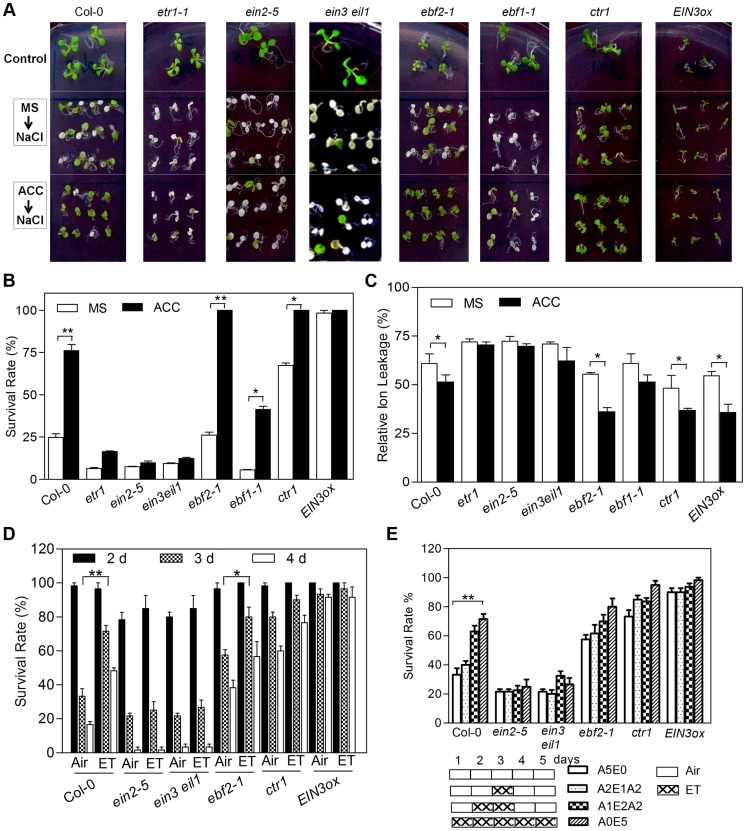
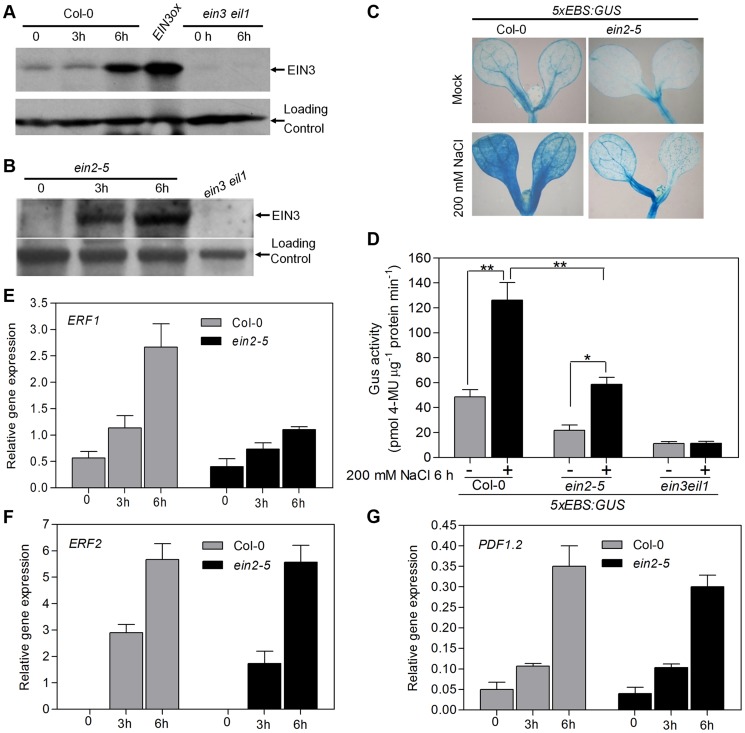
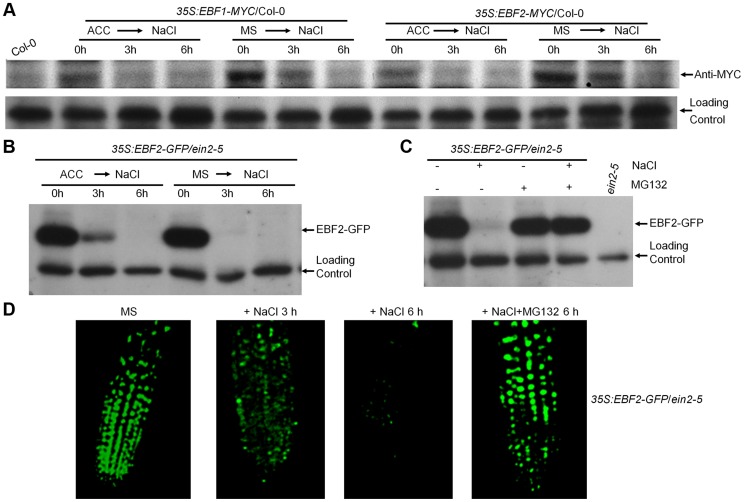
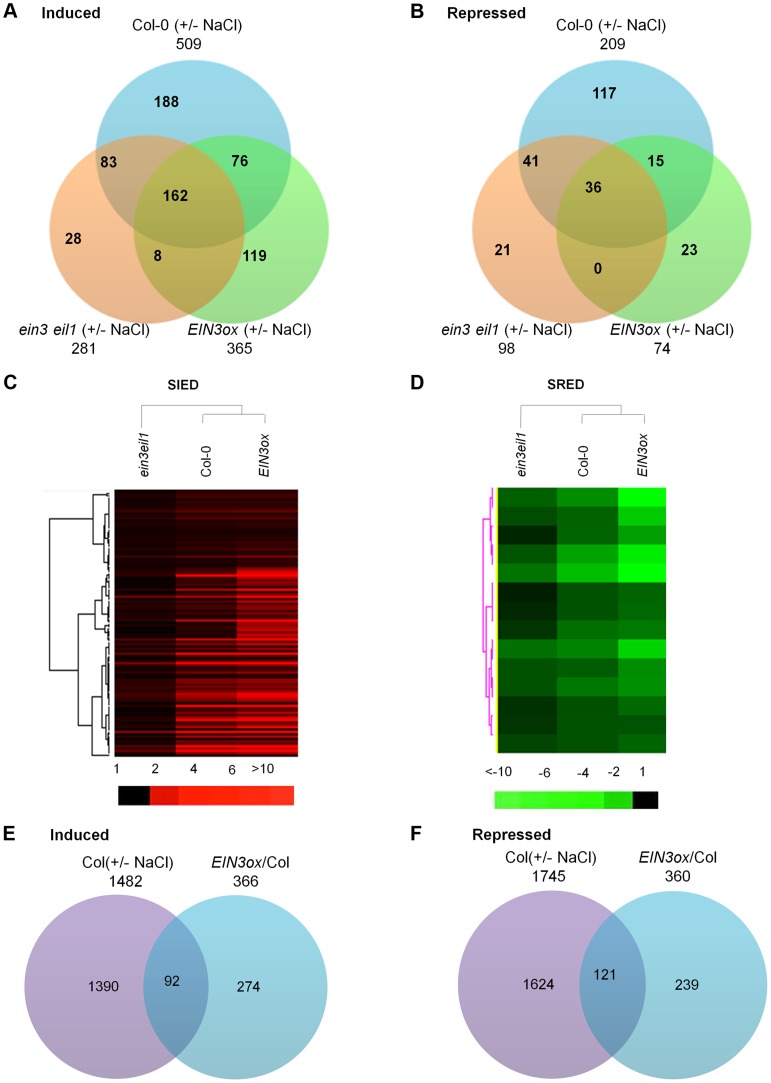
Ethylene has been regarded as a stress hormone to regulate myriad stress responses. Salinity stress is one of the most serious abiotic stresses limiting plant growth and development. But how ethylene signaling is involved in plant response to salt stress is poorly understood. Here we showed that Arabidopsis plants pretreated with ethylene exhibited enhanced tolerance to salt stress. Gain- and loss-of-function studies demonstrated that EIN3 (ETHYLENE INSENSITIVE 3) and EIL1 (EIN3-LIKE 1), two ethylene-activated transcription factors, are necessary and sufficient for the enhanced salt tolerance. High salinity induced the accumulation of EIN3/EIL1 proteins by promoting the proteasomal degradation of two EIN3/EIL1-targeting F-box proteins, EBF1 and EBF2, in an EIN2-independent manner. Whole-genome transcriptome analysis identified a list of SIED (Salt-Induced and EIN3/EIL1-Dependent) genes that participate in salt stress responses, including several genes encoding reactive oxygen species (ROS) scavengers. We performed a genetic screen for ein3 eil1-like salt-hypersensitive mutants and identified 5 EIN3 direct target genes including a previously unknown gene, SIED1 (At5g22270), which encodes a 93-amino acid polypeptide involved in ROS dismissal. We also found that activation of EIN3 increased peroxidase (POD) activity through the direct transcriptional regulation of PODs expression. Accordingly, ethylene pretreatment or EIN3 activation was able to preclude excess ROS accumulation and increased tolerance to salt stress. Taken together, our study provides new insights into the molecular action of ethylene signaling to enhance plant salt tolerance, and elucidates the transcriptional network of EIN3 in salt stress response.
Conflict of interest statement
The authors have declared that no competing interests exist.
Figures
References
-
- Apse MP, Aharon GS, Snedden WA, Blumwald E (1999) Salt tolerance conferred by overexpression of a vacuolar Na+/H+ antiport in Arabidopsis. Science 285: 1256–1258. - PubMed
-
- Bleecker AB, Kende H (2000) Ethylene: a gaseous signal molecule in plants. Annu Rev Cell Dev Biol 16: 1–18. - PubMed
-
- Ecker JR (1995) The ethylene signal transduction pathway in plants. Science 268: 667–675. - PubMed
Publication types
MeSH terms
Substances
LinkOut - more resources
Full Text Sources
Other Literature Sources
Molecular Biology Databases