


Neurological outcomes of animal models of uterine artery ligation and relevance to human intrauterine growth restriction: a systematic review
- PMID: 25330710
- PMCID: PMC4406147
- DOI: 10.1111/dmcn.12599
Neurological outcomes of animal models of uterine artery ligation and relevance to human intrauterine growth restriction: a systematic review
Abstract
Aim: This review explores the molecular, neurological, and behavioural outcomes in animal models of uterine artery ligation. We analyse the relevance of this type of model to the pathological and functional phenotypes that are consistent with cerebral palsy and its developmental comorbidities in humans.
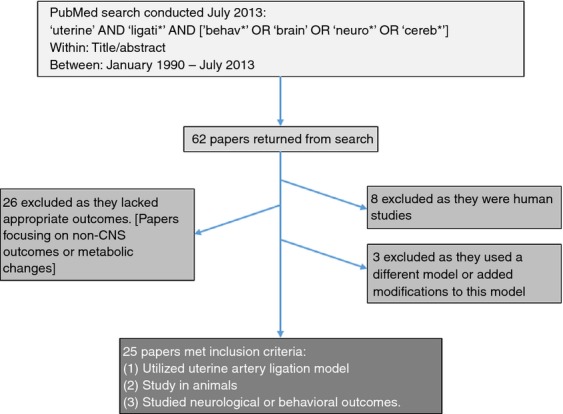
Method: A literature search of the PubMed database was conducted for research using the uterine artery ligation model published between 1990 and 2013. From the studies included, any relevant neuroanatomical and behavioural deficits were then summarized from each document and used for further analysis.
Results: There were 25 papers that met the criteria included for review, and several outcomes were summarized from the results of these papers. Fetuses with growth restriction demonstrated a gradient of reduced body weight with a relative sparing of brain mass. There was a significant reduction in the size of the somatosensory cortex, hippocampus, and corpus callosum. The motor cortex appeared to be spared of identifiable deficits. Apoptotic proteins were upregulated, while those important to neuronal survival, growth, and differentiation were downregulated. Neuronal apoptosis and astrogliosis occurred diffusely throughout the brain regions. White matter injury involved oligodendrocyte precursor maturation arrest, hypomyelination, and an aberrant organization of existing myelin. Animals with growth restriction demonstrated deficits in gait, memory, object recognition, and spatial processing.
Interpretation: This review concludes that neuronal death, white matter injury, motor abnormalities, and cognitive deficits are important outcomes of uterine artery ligation in animal models. Therefore, this is a clinically relevant type of model, as these findings resemble deficits in human cerebral palsy.
© 2014 The Authors Developmental Medicine & Child Neurology published by John Wiley & Sons Ltd on behalf of Mac Keith Press.
Figures
References
-
- Barry JS, Rozance PJ, Anthony RV. An animal model of placental insufficiency-induced intrauterine growth restriction. Semin Perinatol. 2008;32:225–30. - PubMed
-
- Wadley GD, McConell GK, Goodman CA, Siebel AL, Westcott KT, Wlodek ME. Growth restriction in the rat alters expression of metabolic genes during postnatal cardiac development in a sex-specific manner. Physiol Genomics. 2013;45:99–105. - PubMed
Publication types
MeSH terms
LinkOut - more resources
Full Text Sources
Other Literature Sources
Miscellaneous
