


Emerging technologies to increase ligand binding assay sensitivity
- PMID: 25331105
- PMCID: PMC4287293
- DOI: 10.1208/s12248-014-9682-8
Emerging technologies to increase ligand binding assay sensitivity
Abstract
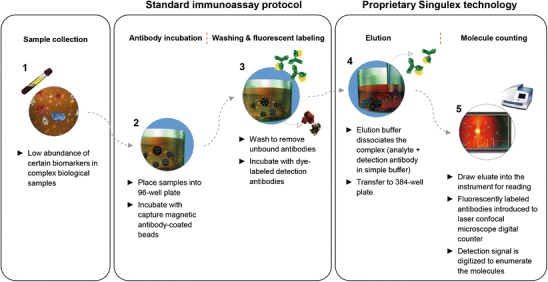
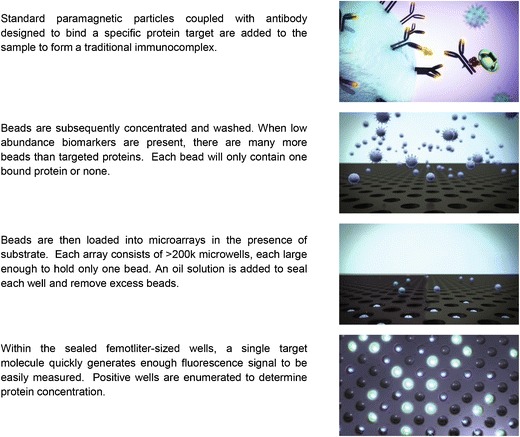
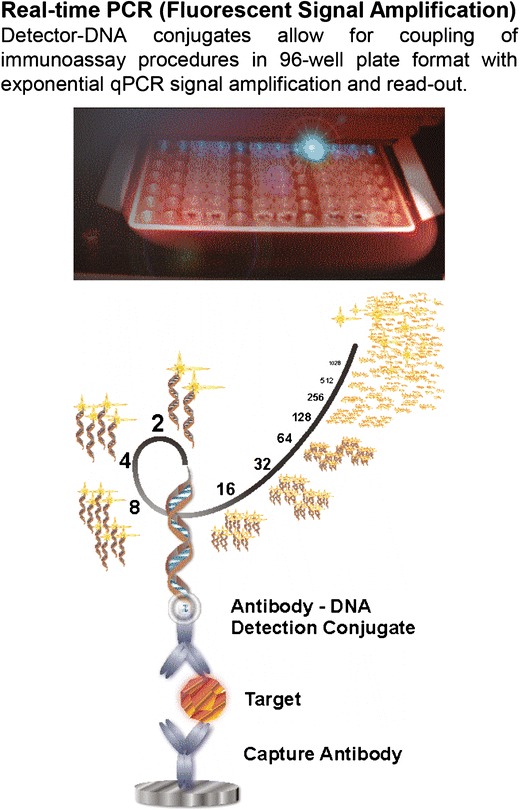
Ligand binding assays (LBAs) have been the method of choice for protein analyte measurements for more than four decades. Over the years, LBA methods have improved in sensitivity and achieved larger dynamic ranges by using alternative detection systems and new technologies. As a consequence, the landscape and application of immunoassay platforms has changed dramatically. The introduction of bead-based methods, coupled with single molecule detection standardization and the ability to amplify assay signals, has improved the sensitivity of many immunoassays, in some cases by several logs of magnitude. Three promising immunoassay platforms are described in this article: Single Molecule Counting (SMC™) from Singulex Inc, Single Molecule Arrays (Simoa™) from Quanterix Corporation, and Immuno-PCR (Imperacer®) from Chimera Biotec GmbH. These platforms have the potential to significantly improve immunoassay sensitivity and thereby address the bioanalytical needs and challenges faced during biopharmaceutical drug development.
Figures
References
-
- Li H, McGuire TC, Muller-Doblies UU, Crawford TB. A simpler, more sensitive competitive inhibition enzyme-linked immunosorbent assay for detection of antibody to malignant catarrhal fever viruses. J Vet Diagn Investig Off Publ Am Assoc Vet Lab Diagnosticians Inc. 2001;13(4):361–4. doi: 10.1177/104063870101300417. - DOI - PubMed
Publication types
MeSH terms
Substances
LinkOut - more resources
Full Text Sources
Other Literature Sources
Research Materials
