


Engineering of an epoxide hydrolase for efficient bioresolution of bulky pharmaco substrates
- PMID: 25331869
- PMCID: PMC4226085
- DOI: 10.1073/pnas.1404915111
Engineering of an epoxide hydrolase for efficient bioresolution of bulky pharmaco substrates
Abstract
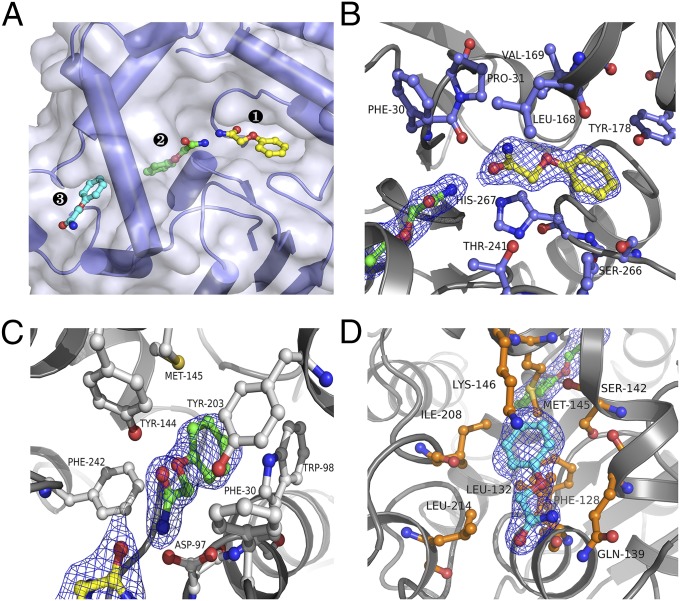
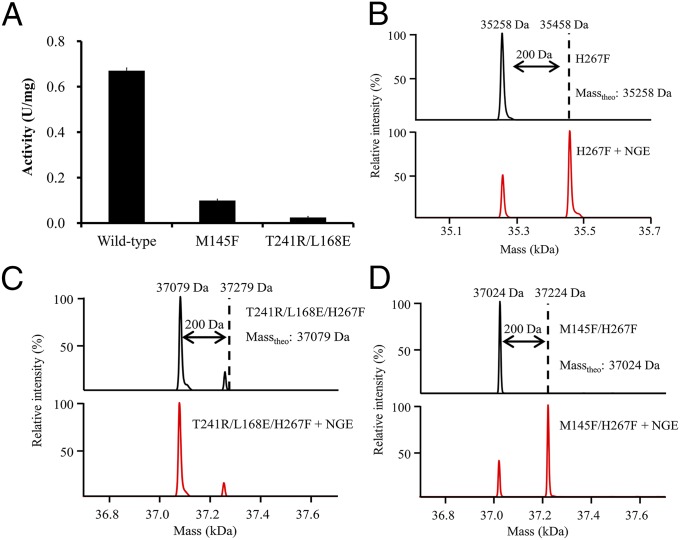
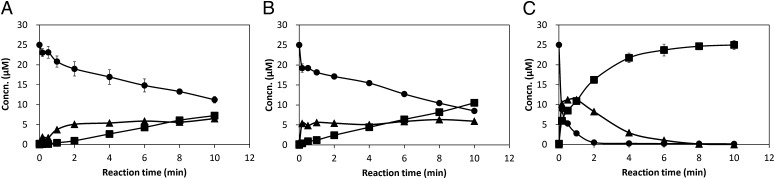
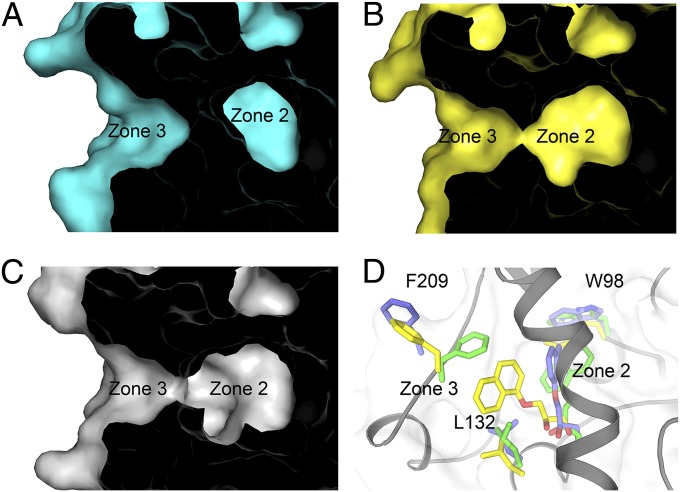
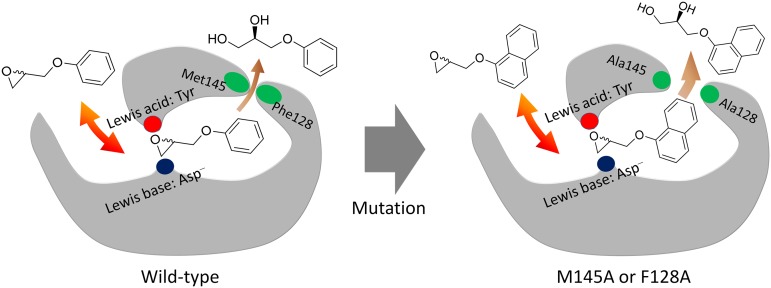
Optically pure epoxides are essential chiral precursors for the production of (S)-propranolol, (S)-alprenolol, and other β-adrenergic receptor blocking drugs. Although the enzymatic production of these bulky epoxides has proven difficult, here we report a method to effectively improve the activity of BmEH, an epoxide hydrolase from Bacillus megaterium ECU1001 toward α-naphthyl glycidyl ether, the precursor of (S)-propranolol, by eliminating the steric hindrance near the potential product-release site. Using X-ray crystallography, mass spectrum, and molecular dynamics calculations, we have identified an active tunnel for substrate access and product release of this enzyme. The crystal structures revealed that there is an independent product-release site in BmEH that was not included in other reported epoxide hydrolase structures. By alanine scanning, two mutants, F128A and M145A, targeted to expand the potential product-release site displayed 42 and 25 times higher activities toward α-naphthyl glycidyl ether than the wild-type enzyme, respectively. These results show great promise for structure-based rational design in improving the catalytic efficiency of industrial enzymes for bulky substrates.
Keywords: X-ray crystallography; bulky substrate; epoxide hydrolase; product release; protein engineering.
Conflict of interest statement
The authors declare no conflict of interest.
Figures
References
-
- Archelas A, Furstoss R. Synthetic applications of epoxide hydrolases. Curr Opin Chem Biol. 2001;5(2):112–119. - PubMed
-
- Tokunaga M, Larrow JF, Kakiuchi F, Jacobsen EN. Asymmetric catalysis with water: Efficient kinetic resolution of terminal epoxides by means of catalytic hydrolysis. Science. 1997;277(5328):936–938. - PubMed
-
- Schmid A, Hofstetter K, Feiten HJ, Hollmann F, Witholt B. Integrated biocatalytic synthesis on Gram scale: The highly enantioselective preparation of chiral oxiranes with styrene monooxygenase. Adv Synth Catal. 2001;343:732–737.
-
- de Vries EJ, Janssen DB. Biocatalytic conversion of epoxides. Curr Opin Biotechnol. 2003;14(4):414–420. - PubMed
-
- Choi WJ, Choi CY. Production of chiral epoxides: Epoxide hydrolase-catalyzed enantioselective hydrolysis. Biotechnol Bioprocess Eng. 2005;10:167–179.
Publication types
MeSH terms
Substances
Associated data
- Actions
- Actions
- Actions
- Actions
LinkOut - more resources
Full Text Sources
Other Literature Sources
