


High protein intake from meat as complementary food increases growth but not adiposity in breastfed infants: a randomized trial
- PMID: 25332329
- PMCID: PMC4196483
- DOI: 10.3945/ajcn.114.088807
High protein intake from meat as complementary food increases growth but not adiposity in breastfed infants: a randomized trial
Abstract
Background: High intake of cow-milk protein in formula-fed infants is associated with higher weight gain and increased adiposity, which have led to recommendations to limit protein intake in later infancy. The impact of protein from meats for breastfed infants during complementary feeding may be different.
Objective: We examined the effect of protein from meat as complementary foods on growth and metabolic profiles of breastfed infants.
Design: This was a secondary analysis from a trial in which exclusively breastfed infants (5-6 mo old from the Denver, CO, metro area) were randomly assigned to receive commercially available pureed meats (Meat group; n = 14) or infant cereal (Cereal group; n = 28) as their primary complementary feedings for ∼ 5 mo. Anthropometric measures and diet records were collected monthly from 5 to 9 mo of age; intakes from complementary feeding and breast milk were assessed at 9 mo of age.
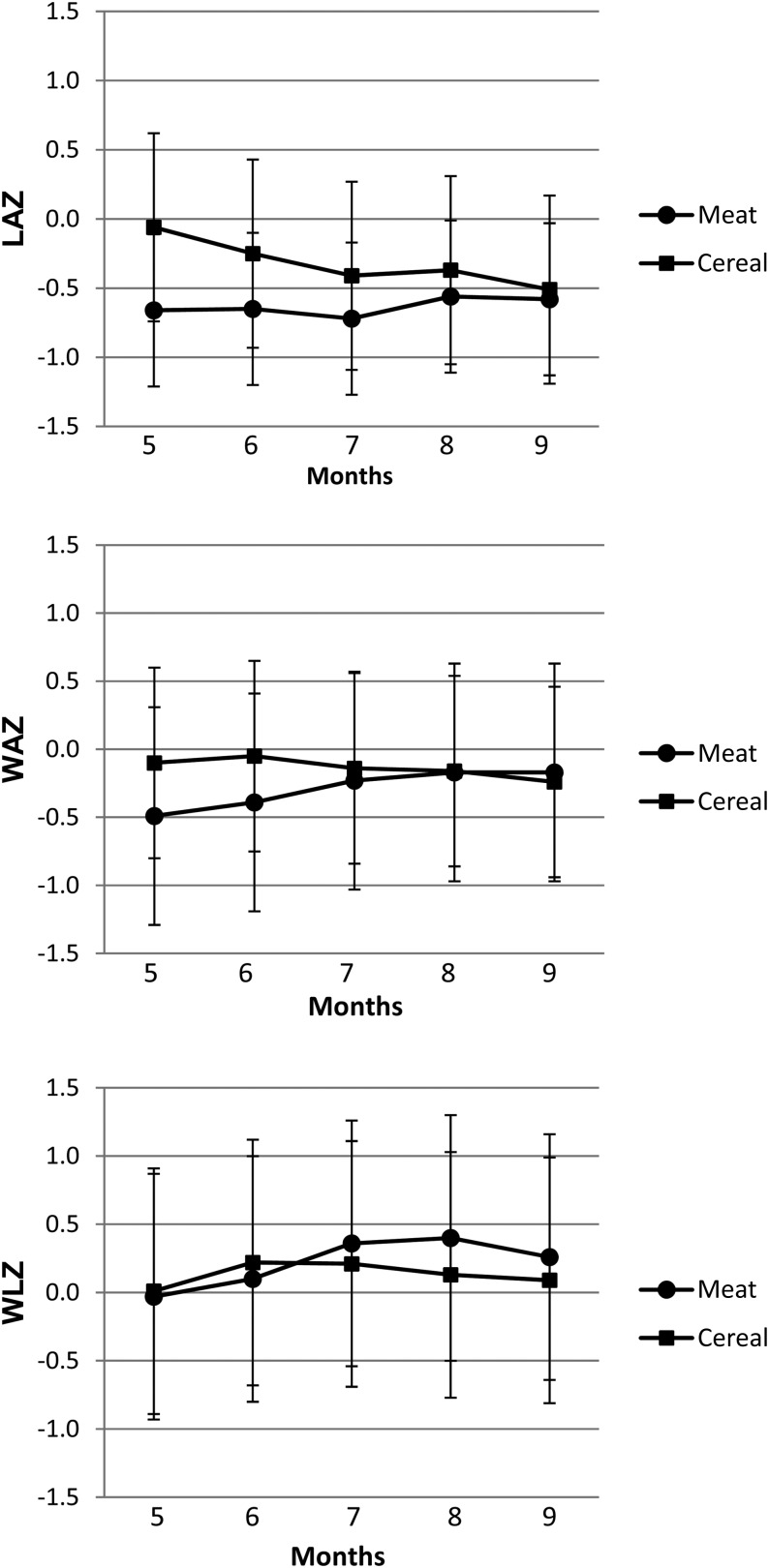
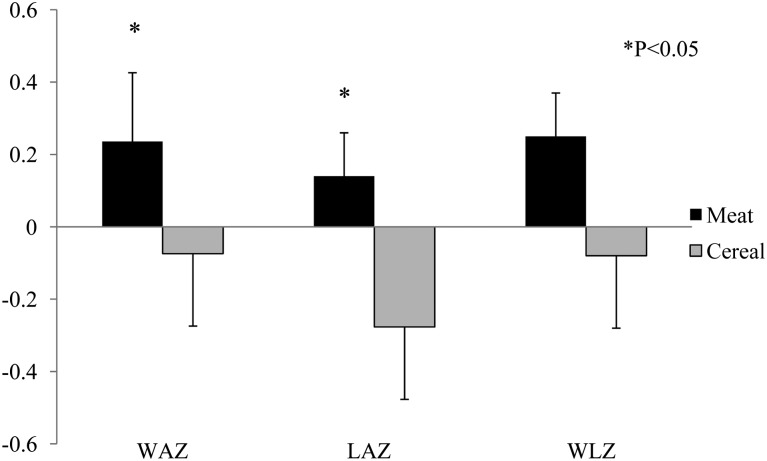
Results: The Meat group had significantly higher protein intake, whereas energy, carbohydrate, and fat intakes from complementary feeding did not differ by group over time. At 9 mo of age, mean (± SEM) intakes of total (complementary feeding plus breast milk) protein were 2.9 ± 0.6 and 1.4 ± 0.4 g · kg(-1) · d(-1), ∼ 17% and ∼ 9% of daily energy intake, for Meat and Cereal groups, respectively (P < 0.001). From 5 to 9 mo of age, the weight-for-age z score (WAZ) and length-for-age z score (LAZ) increased in the Meat group (ΔWAZ: 0.24 ± 0.19; ΔLAZ: 0.14 ± 0.12) and decreased in the Cereal group (ΔWAZ: -0.07 ± 0.17; ΔLAZ: -0.27 ± 0.24) (P-group by time < 0.05). The change in weight-for-length z score did not differ between groups. Total protein intake at 9 mo of age and baseline WAZ were important predictors of changes in the WAZ (R(2) = 0.23, P = 0.01).
Conclusion: In breastfed infants, higher protein intake from meats was associated with greater linear growth and weight gain but without excessive gain in adiposity, suggesting that potential risks of high protein intake may differ between breastfed and formula-fed infants and by the source of protein.
© 2014 American Society for Nutrition.
Figures
References
-
- Ong KK, Loos RJ. Rapid infancy weight gain and subsequent obesity: systematic reviews and hopeful suggestions. Acta Paediatr 2006;95:904–8. - PubMed
-
- Kramer MS, Guo T, Platt RW, Vanilovich I, Sevkovskaya Z, Dzikovich I, Michaelsen KF, Dewey K. Feeding effects on growth during infancy. J Pediatr 2004;145:600–5. - PubMed
-
- Victora CG, Morris SS, Barros FC, Horta BL, Weiderpass E, Tomasi E. Breast-feeding and growth in Brazilian infants. Am J Clin Nutr 1998;67:452–8. - PubMed
-
- Dewey KG, Heinig MJ, Nommsen LA, Peerson JM, Lonnerdal B. Growth of breast-fed and formula-fed infants from 0 to 18 months: the DARLING Study. Pediatrics 1992;89:1035–41. - PubMed
-
- Dewey KG. Growth characteristics of breast-fed compared to formula-fed infants. Biol Neonate 1998;74:94–105. - PubMed
Publication types
MeSH terms
Substances
Grants and funding
LinkOut - more resources
Full Text Sources
Other Literature Sources
Medical
