Recent advances on the mechanisms regulating cholangiocyte proliferation and the significance of the neuroendocrine regulation of cholangiocyte pathophysiology
- PMID: 25332971
- PMCID: PMC4200672
- DOI: 10.3978/j.issn.2305-5839.2012.10.03
Recent advances on the mechanisms regulating cholangiocyte proliferation and the significance of the neuroendocrine regulation of cholangiocyte pathophysiology
Abstract
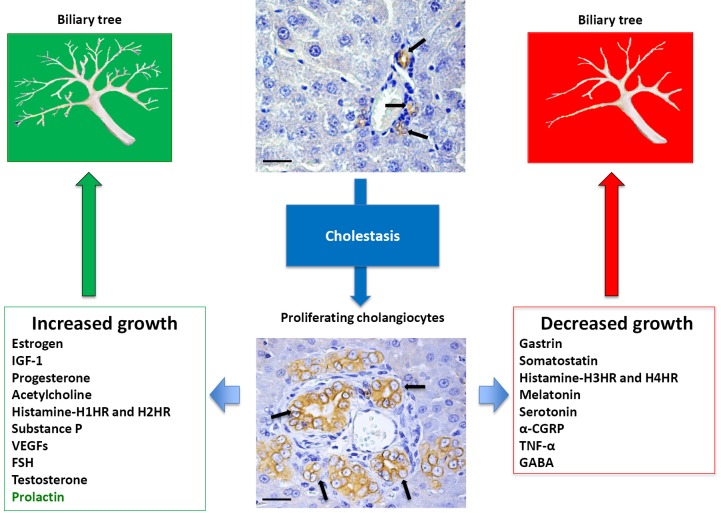
Cholangiocytes are epithelial cells lining the biliary epithelium. Cholangiocytes play several key roles in the modification of ductal bile and are also the target cells in chronic cholestatic liver diseases (i.e., cholangiopathies) such as PSC, PBC, polycystic liver disease (PCLD) and cholangiocarcinoma (CCA). During these pathologies, cholangiocytes (which in normal condition are in a quiescent state) begin to proliferate acquiring phenotypes of neuroendocrine cells, and start secreting different cytokines, growth factors, neuropeptides, and hormones to modulate cholangiocytes proliferation and interaction with the surrounding environment, trying to reestablish the balance between proliferation/loss of cholangiocytes for the maintenance of biliary homeostasis. The purpose of this review is to summarize the recent findings on the mechanisms regulating cholangiocyte proliferation and the significance of the neuroendocrine regulation of cholangiocyte pathophysiology. To clarify the mechanisms of action of these factors we will provide new potential strategies for the management of chronic liver diseases.
Keywords: Biliary tree; cholangiocytes; liver; neuroendocrine regulation; proliferation.
Figures
References
-
- Alpini G, Glaser SS, Ueno Y, et al. Heterogeneity of the proliferative capacity of rat cholangiocytes after bile duct ligation. Am J Physiol 1998;274:G767-75. - PubMed
-
- LeSagE G , Alvaro D, Benedetti A, et al. Cholinergic system modulates growth, apoptosis, and secretion of cholangiocytes from bile duct-ligated rats. Gastroenterology 1999;117:191-9. - PubMed
-
- Alpini G, Glaser S, Robertson W, et al. Large but not small intrahepatic bile ducts are involved in secretin-regulated ductal bile secretion. Am J Physiol 1997;272:G1064-74. - PubMed
Publication types
LinkOut - more resources
Full Text Sources
Other Literature Sources