


Effects of exercise modalities on arterial stiffness and wave reflection: a systematic review and meta-analysis of randomized controlled trials
- PMID: 25333969
- PMCID: PMC4198209
- DOI: 10.1371/journal.pone.0110034
Effects of exercise modalities on arterial stiffness and wave reflection: a systematic review and meta-analysis of randomized controlled trials
Abstract
Background and objectives: Physical activity is associated with lower cardiovascular and all-cause mortality. However, the effects of different exercise modalities on arterial stiffness are currently unclear. Our objectives were to investigate the effects of exercise modalities (aerobic, resistance or combined) on pulse wave velocity (PWV) and augmentation index (AIx), and to determine whether the effects on these indices differed according to the participants' or exercise characteristics.
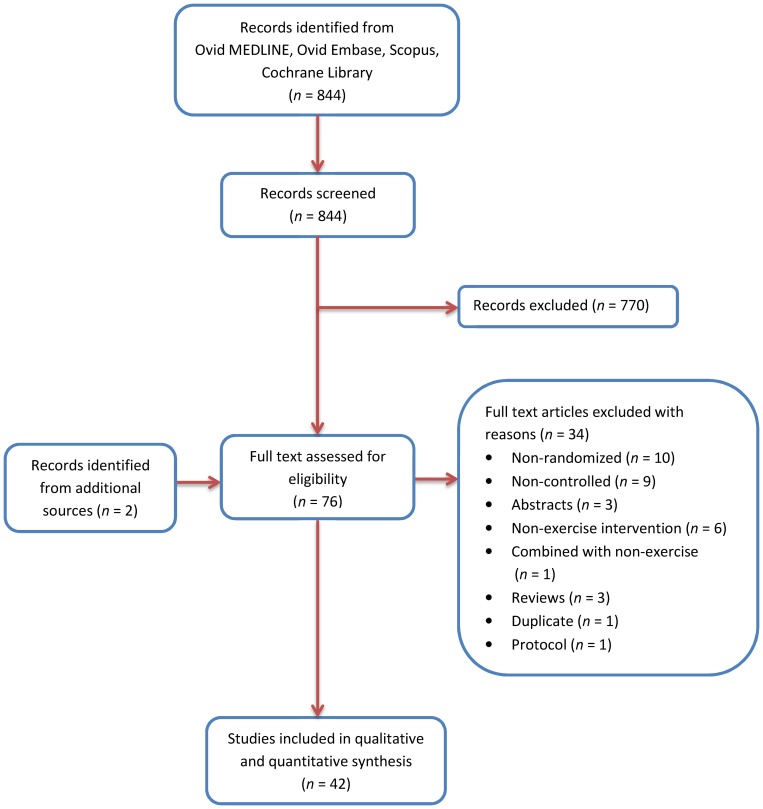
Methods: We searched the Medline, Embase and Cochrane Library databases from inception until April 2014 for randomized controlled trials lasting ≥ 4 weeks investigating the effects of exercise modalities on PWV and AIx in adults aged ≥ 18 years.
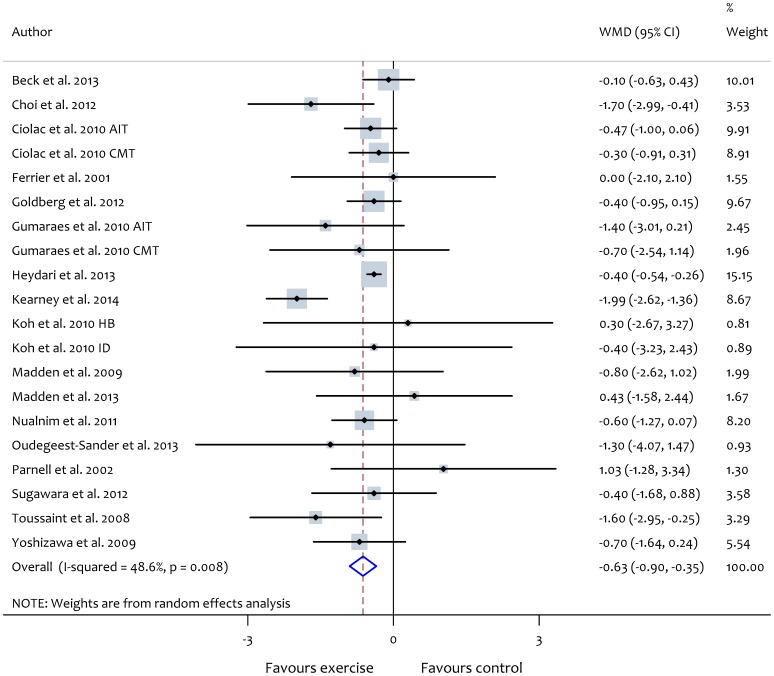
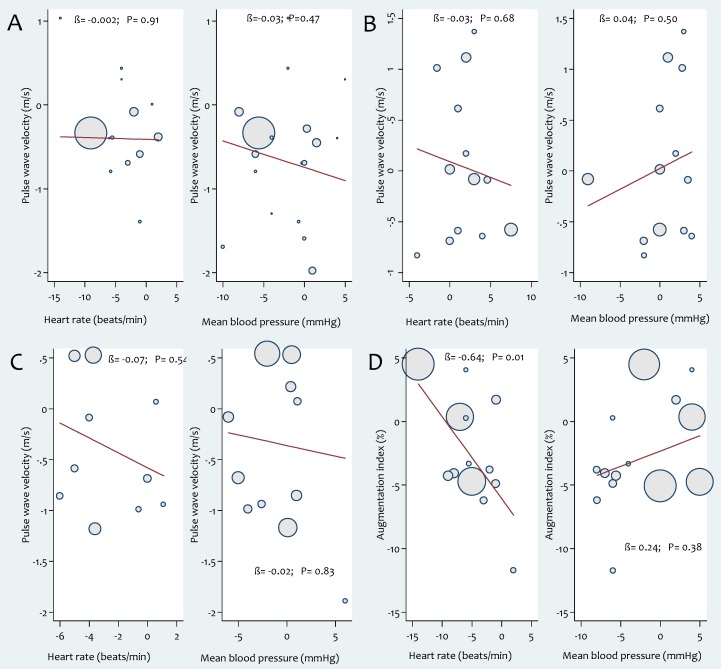
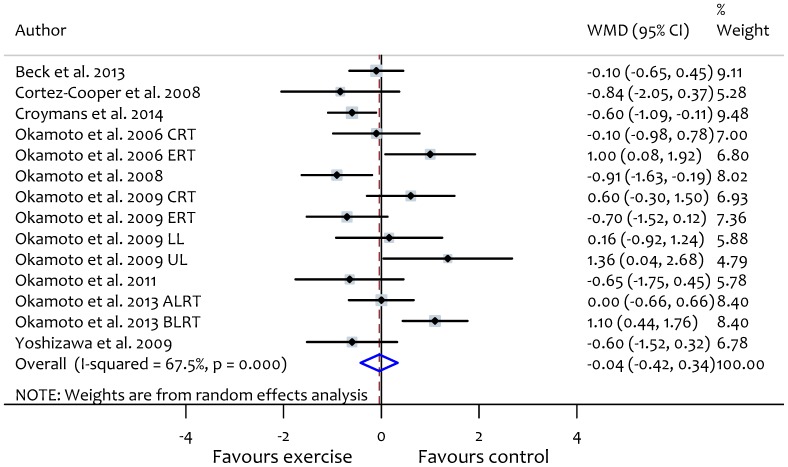
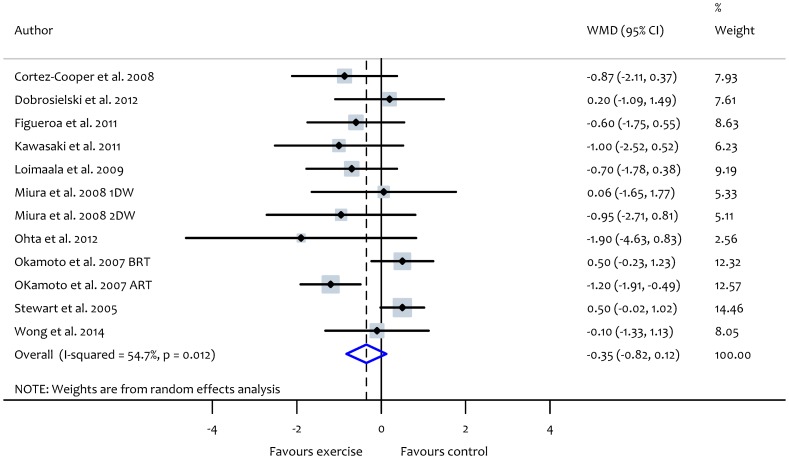
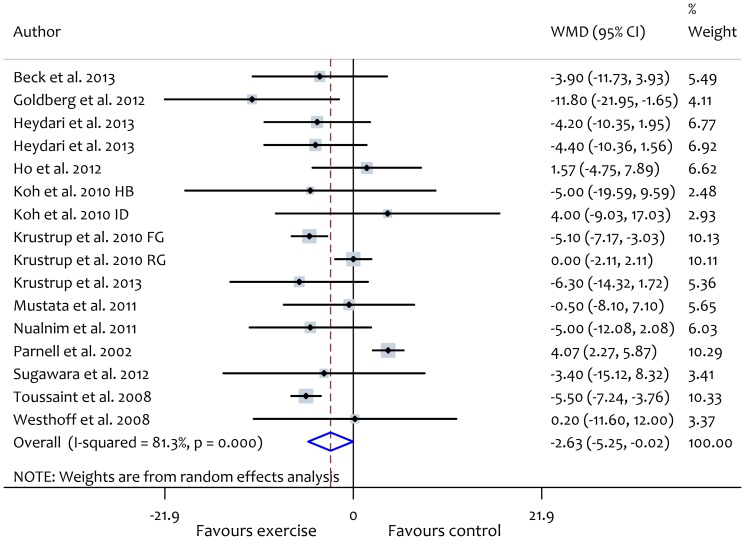
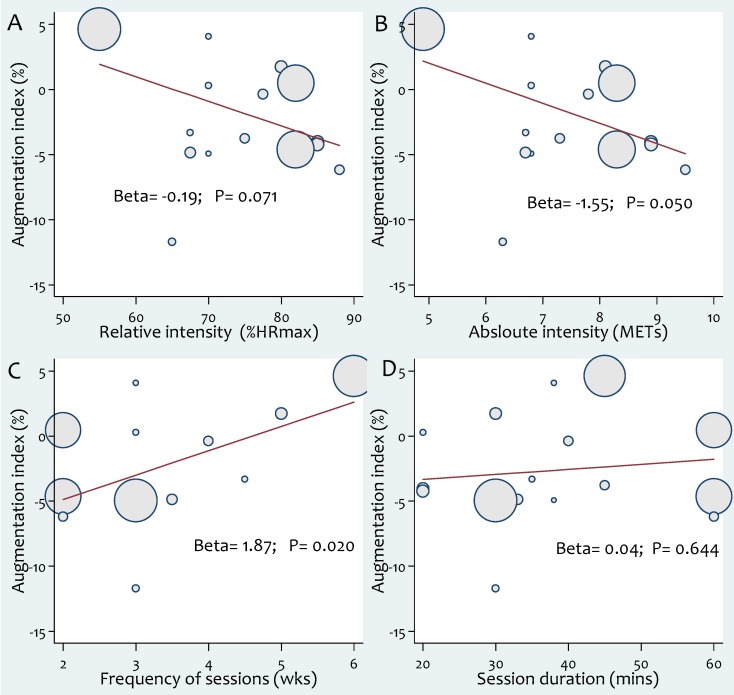
Results: Forty-two studies (1627 participants) were included in this analysis. Aerobic exercise improved both PWV (WMD: -0.63 m/s, 95% CI: -0.90, -0.35) and AIx (WMD:-2.63%, 95% CI: -5.25 to -0.02) significantly. Aerobic exercise training showed significantly greater reduction in brachial-ankle (WMD: -1.01 m/s, 95% CI: -1.57, -0.44) than in carotid-femoral (WMD: -0.39 m/s, 95% CI: -0.52, -0.27) PWV. Higher aerobic exercise intensity was associated with larger reductions in AIx (β: -1.55%, CI -3.09, 0.0001). In addition, aerobic exercise had a significantly larger effect in reducing PWV (WMD:-1.0 m/s, 95% CI: -1.43, -0.57) in participants with stiffer arteries (PWV ≥ 8 m/s). Resistance exercise had no effect on PWV and AIx. There was no significant effect of combined exercise on PWV and AIx.
Conclusions: We conclude that aerobic exercise improved arterial stiffness significantly and that the effect was enhanced with higher aerobic exercise intensity and in participants with greater arterial stiffness at baseline.
Trial registration prospero: Database registration: CRD42014009744.
Conflict of interest statement
Figures
References
-
- Nocon M, Hiemann T, Muller-Riemenschneider F, Thalau F, Roll S, et al. (2008) Association of physical activity with all-cause and cardiovascular mortality: a systematic review and meta-analysis. Eur J Cardiovasc Prev Rehabil 15: 239–246. - PubMed
-
- Schuler G, Adams V, Goto Y (2013) Role of exercise in the prevention of cardiovascular disease: results, mechanisms, and new perspectives. Eur Heart J 34: 1790–1799. - PubMed
Publication types
MeSH terms
Grants and funding
LinkOut - more resources
Full Text Sources
Other Literature Sources
Medical
Miscellaneous
