


Psychological determinants of consumer acceptance of personalised nutrition in 9 European countries
- PMID: 25334009
- PMCID: PMC4204923
- DOI: 10.1371/journal.pone.0110614
Psychological determinants of consumer acceptance of personalised nutrition in 9 European countries
Abstract
Objective: To develop a model of the psychological factors which predict people's intention to adopt personalised nutrition. Potential determinants of adoption included perceived risk and benefit, perceived self-efficacy, internal locus of control and health commitment.
Methods: A questionnaire, developed from exploratory study data and the existing theoretical literature, and including validated psychological scales was administered to N=9381 participants from 9 European countries (Germany, Greece, Ireland, Poland, Portugal, Spain, the Netherlands, the UK, and Norway).
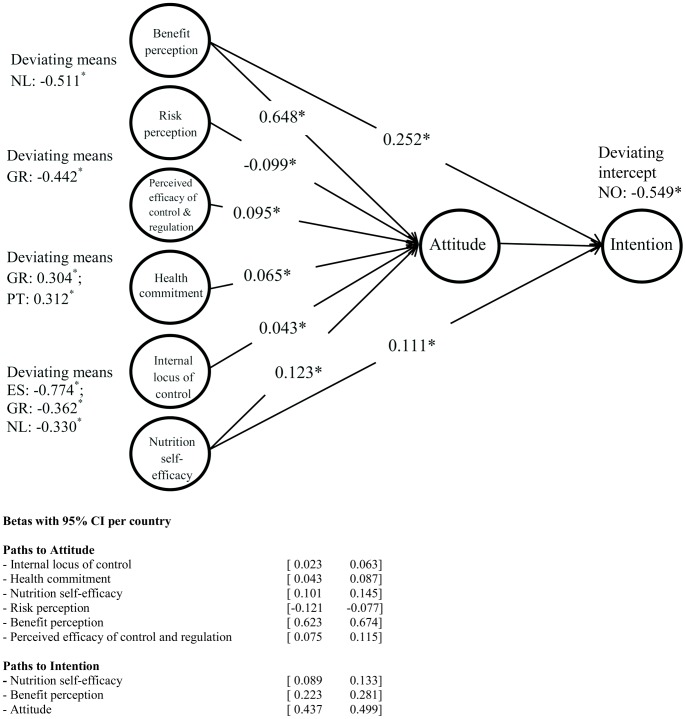
Results: Structural equation modelling indicated that the greater participants' perceived benefits to be associated with personalised nutrition, the more positive their attitudes were towards personalised nutrition, and the greater their intention to adopt it. Higher levels of nutrition self-efficacy were related to more positive attitudes towards, and a greater expressed intention to adopt, personalised nutrition. Other constructs positively impacting attitudes towards personalised nutrition included more positive perceptions of the efficacy of regulatory control to protect consumers (e.g. in relation to personal data protection), higher self-reported internal health locus of control, and health commitment. Although higher perceived risk had a negative relationship with attitude and an inverse relationship with perceived benefit, its effects on attitude and intention to adopt personalised nutrition was less influential than perceived benefit. The model was stable across the different European countries, suggesting that psychological factors determining adoption of personalised nutrition have generic applicability across different European countries.
Conclusion: The results suggest that transparent provision of information about potential benefits, and protection of consumers' personal data is important for adoption, delivery of public health benefits, and commercialisation of personalised nutrition.
Conflict of interest statement
Figures
References
-
- Marshall S, Burrows T, Collins CE (2014) Systematic review of diet quality indices and their associations with health-related outcomes in children and adolescents. J Hum Nutr Diet (in press) - PubMed
-
- Martinez-Gonzalez MA, Bes-Rastrollo M (2014) Dietary patterns, Mediterranean diet, and cardiovascular disease. Curr Opin Lipidol 25: 20–26. - PubMed
Publication types
MeSH terms
Grants and funding
LinkOut - more resources
Full Text Sources
Other Literature Sources
