


Characterization of the bile and gall bladder microbiota of healthy pigs
- PMID: 25336405
- PMCID: PMC4263516
- DOI: 10.1002/mbo3.218
Characterization of the bile and gall bladder microbiota of healthy pigs
Abstract
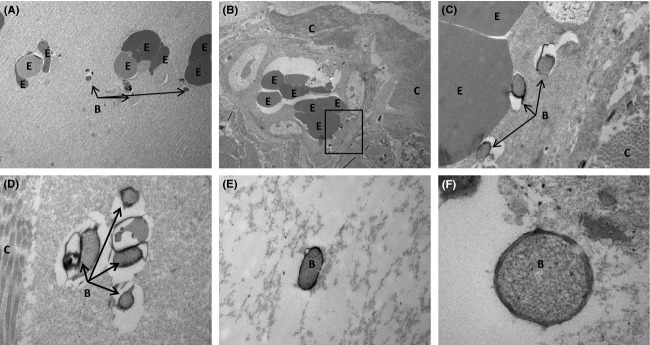
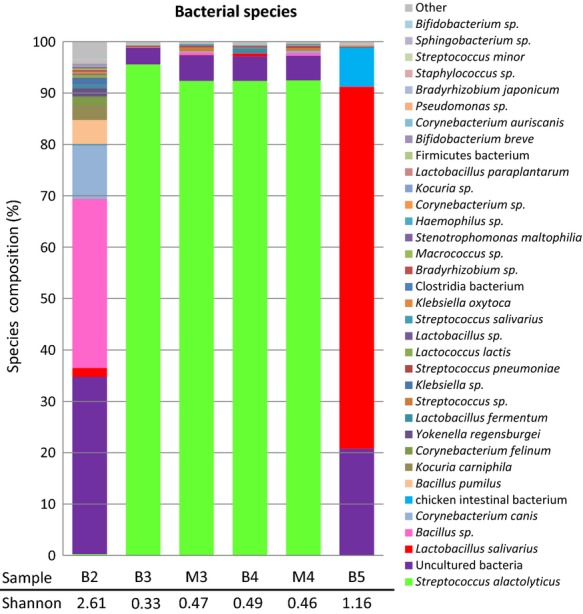
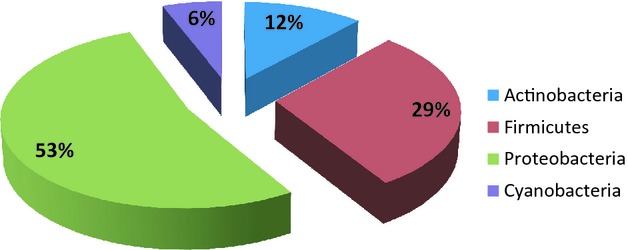
Bile is a biological fluid synthesized in the liver, stored and concentrated in the gall bladder (interdigestive), and released into the duodenum after food intake. The microbial populations of different parts of mammal's gastrointestinal tract (stomach, small and large intestine) have been extensively studied; however, the characterization of bile microbiota had not been tackled until now. We have studied, by culture-dependent techniques and a 16S rRNA gene-based analysis, the microbiota present in the bile, gall bladder mucus, and biopsies of healthy sows. Also, we have identified the most abundant bacterial proteins in the bile samples. Our data show that the gall bladder ecosystem is mainly populated by members of the phyla Proteobacteria, Firmicutes, and Bacteroidetes. Furthermore, fluorescent in situ hybridization (FISH) and transmission electron microscopy (TEM) allowed us to visualize the presence of individual bacteria of different morphological types, in close association with either the epithelium or the erythrocytes, or inside the epithelial cells. Our work has generated new knowledge of bile microbial profiles and functions and might provide the basis for future studies on the relationship between bile microbiota, gut microbiota, and health.
Keywords: Bile; gall bladder; microbiome; microbiota; proteome.
© 2014 The Authors. MicrobiologyOpen published by John Wiley & Sons Ltd.
Figures


References
-
- Bäckhed F, Ley RE, Sonnenburg JL, Peterson DA. Gordon JI. Host-bacterial mutualism in the human intestine. Science. 2005;307:1915–1920. - PubMed
-
- Bauer TM, Steinbrückner B, Brinkmann FE, Ditzen AK, Schwacha H, Aponte JJ, et al. Small intestinal bacterial overgrowth in patients with cirrhosis: prevalence and relation with spontaneous bacterial peritonitis. Am. J. Gastroenterol. 2001;96:2962–2967. - PubMed
-
- Begley M, Gahan CG. Hill C. The interaction between bacteria and bile. FEMS Microbiol. Rev. 2005a;29:625–651. - PubMed
-
- Begley M, Gahan CGM. Hill C. The interaction between bacteria and bile. FEMS Microbiol. Rev. 2005b;29:625–651. - PubMed
Publication types
MeSH terms
LinkOut - more resources
Full Text Sources
Other Literature Sources
Medical
