


In vivo photoacoustic and fluorescence cystography using clinically relevant dual modal indocyanine green
- PMID: 25337743
- PMCID: PMC4239921
- DOI: 10.3390/s141019660
In vivo photoacoustic and fluorescence cystography using clinically relevant dual modal indocyanine green
Abstract
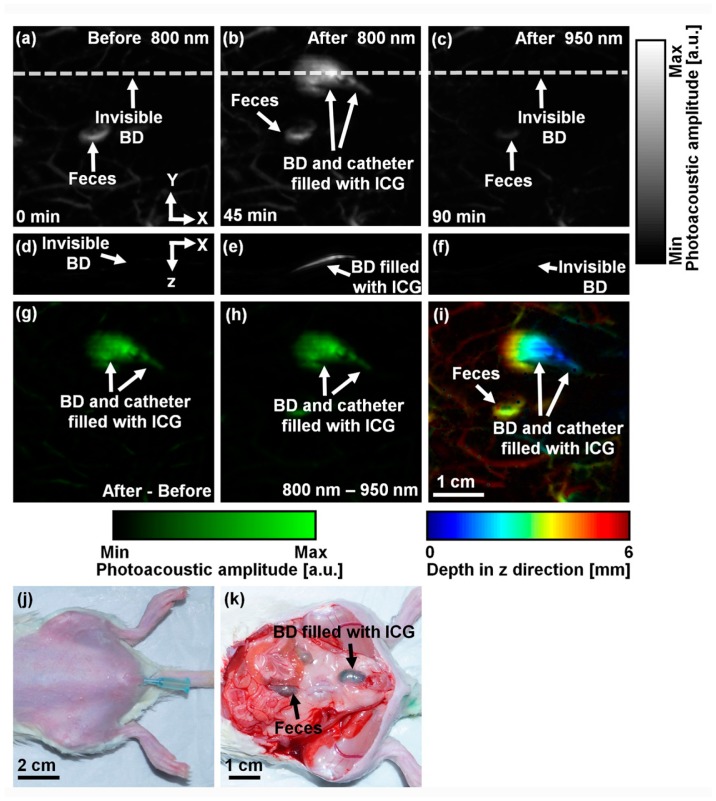
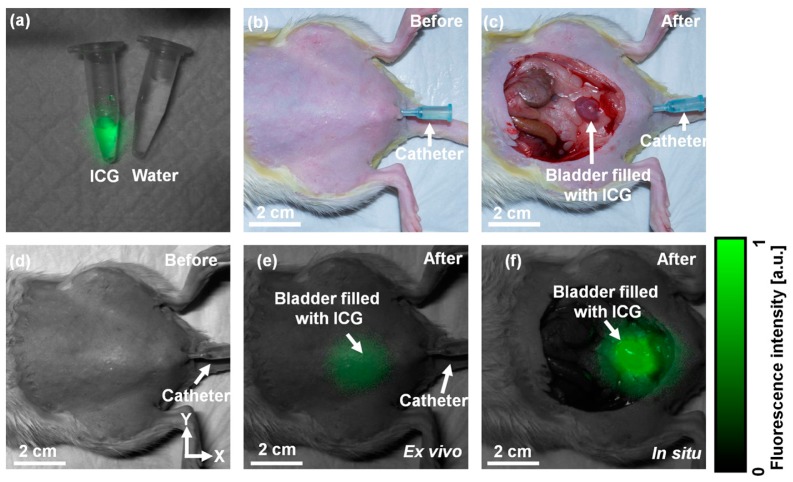
Conventional X-ray-based cystography uses radio-opaque materials, but this method uses harmful ionizing radiation and is not sensitive. In this study, we demonstrate nonionizing and noninvasive photoacoustic (PA) and fluorescence (FL) cystography using clinically relevant indocyanine green (ICG) in vivo. After transurethral injection of ICG into rats through a catheter, their bladders were photoacoustically and fluorescently visualized. A deeply positioned bladder below the skin surface (i.e., ~1.5-5 mm) was clearly visible in the PA and FL image using a laser pulse energy of less than 2 mJ/cm2 (1/15 of the safety limit). Then, the in vivo imaging results were validated through in situ studies. Our results suggest that dual modal cystography can provide a nonionizing and noninvasive imaging tool for bladder mapping.
Figures
References
-
- Han K.S., Choi H.J., Jung D.C., Park S., Cho K.S., Joung J.Y., Seo H.K., Chung J., Lee K.H. A prospective evaluation of conventional cystography for detection of urine leakage at the vesicourethral anastomosis site after radical prostatectomy based on computed tomography. Clin. Radiol. 2011;66:251–256. - PubMed
-
- Morgan D.E., Nallamala L.K., Kenney P.J., Mayo M.S., Rue L.W. Ct cystography: Radiographic and clinical predictors of bladder rupture. Am. J. Roentgenol. 2000;174:89–95. - PubMed
-
- Jeon M., Kim C. Multimodal photoacoustic tomography. IEEE Trans. Multimed. 2013;15:975–982.
Publication types
MeSH terms
Substances
LinkOut - more resources
Full Text Sources
Other Literature Sources
Medical
