


The pro-apoptotic and pro-inflammatory effects of calprotectin on human periodontal ligament cells
- PMID: 25338166
- PMCID: PMC4206420
- DOI: 10.1371/journal.pone.0110421
The pro-apoptotic and pro-inflammatory effects of calprotectin on human periodontal ligament cells
Abstract
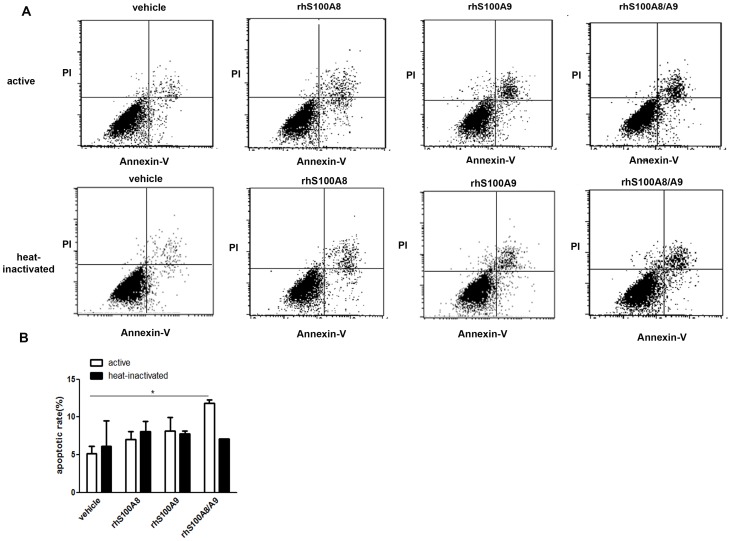
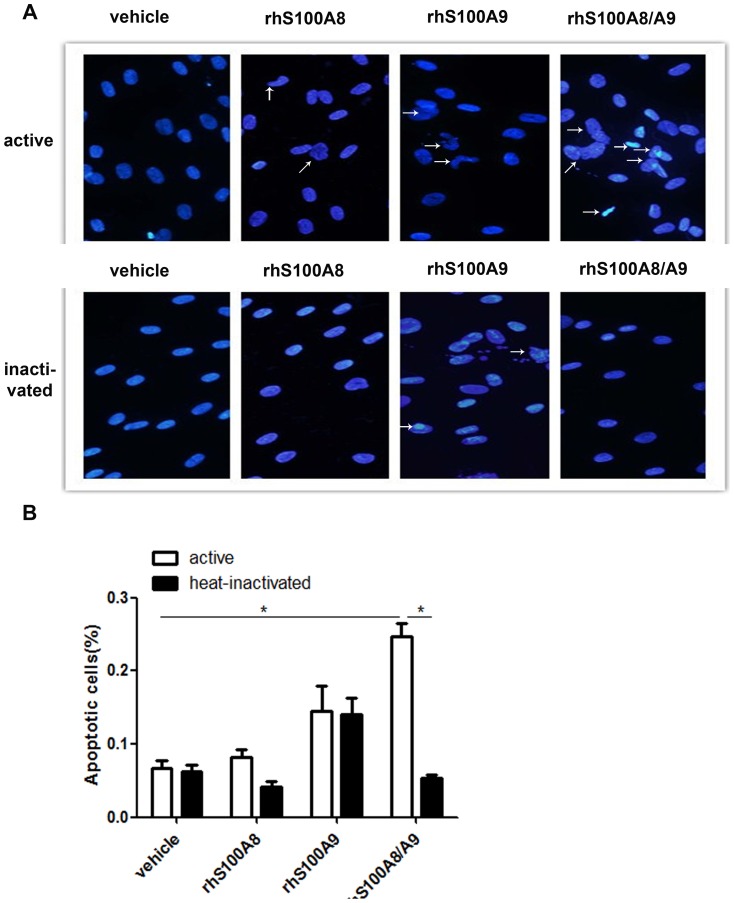
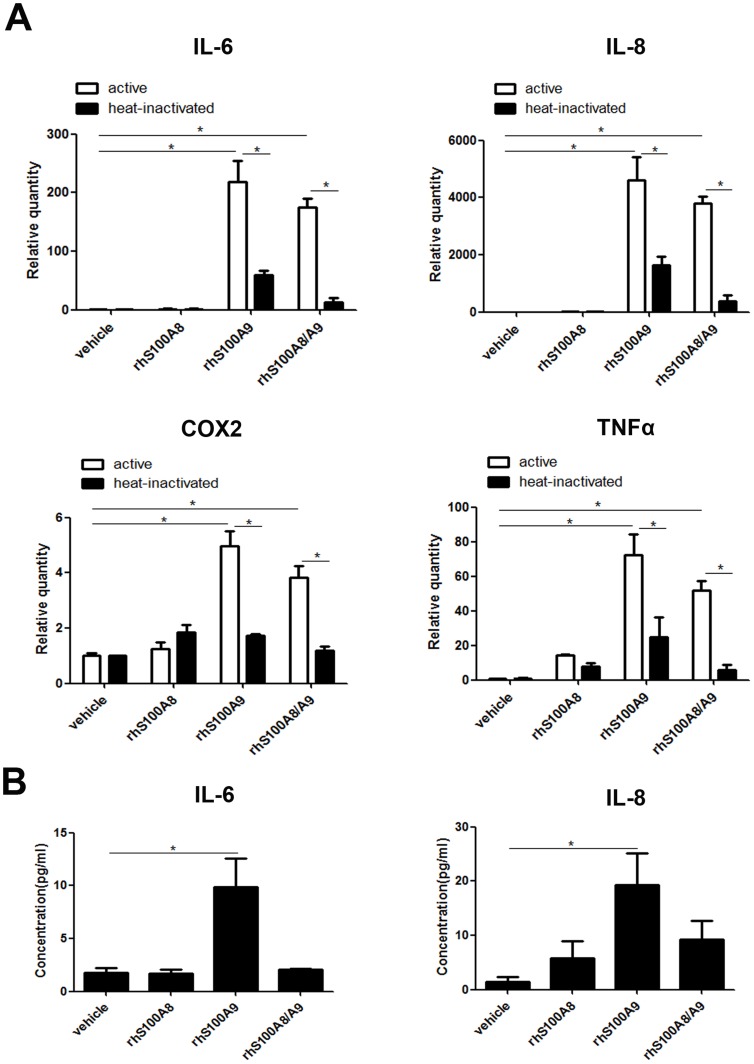
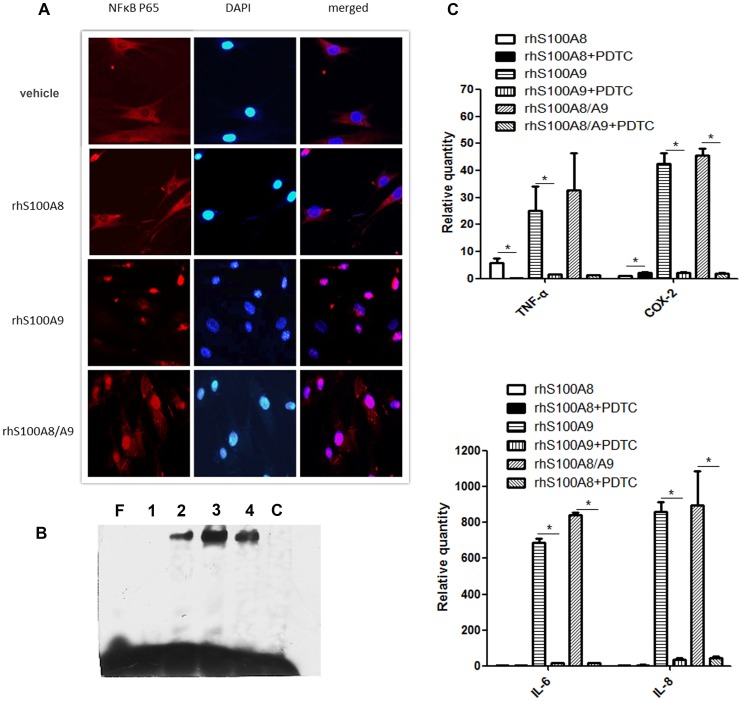
Calprotectin, a heterodimer of S100A8 and S100A9 subunits, is associated with inflammatory disorders such as rheumatoid arthritis and cystic fibrosis. Although calprotectin levels are increased significantly in the gingival crevicular fluid (GCF) of periodontitis patients, its effects on periodontal ligament cells (PDLCs) remain largely unknown. The aim of this study was to evaluate calprotectin levels in the GCF of generalized aggressive periodontitis (AgP) patients and to investigate the effects of recombinant human calprotectin (rhS100A8/A9) and its subunits (rhS100A8 and rhS100A9) in PDLCs. Both the concentration and amount of crevicular calprotectin were significantly higher in the AgP group compared with healthy controls. In addition, the GCF calprotectin levels were correlated positively with clinical periodontal parameters including bleeding index, probing depth, and clinical attachment loss. rhS100A8/A9 promoted cell apoptosis, whereas rhS100A8 and rhS100A9 individually exerted little effect on apoptosis in PDLCs. rhS100A9 and rhS100A8/A9 increased the activation of nuclear factor-κB (NF-κB) by promoting the nuclear translocation of p65 in PDLCs, subsequently inducing expression of the pro-inflammatory cytokines IL-6, IL-8, TNFα, and COX2. Treatment with an NF-κB inhibitor partially reversed the rhS100A9- and rhS100A8/A9-induced upregulation of the pro-inflammatory cytokines. rhS100A9, and not rhS100A8, was mainly responsible for the pro-inflammatory role of calprotectin. Collectively, our results suggest that calprotectin promotes apoptosis and the inflammatory response in PDLCs via rhS100A9. These findings might help identify novel treatments for periodontitis.
Conflict of interest statement
Figures
References
-
- Reynolds JJ, Meikle MC (1997) Mechanisms of connective tissue matrix destruction in periodontitis. Periodontol 2000 14: 144–157. - PubMed
-
- Amano A (2010) Host-parasite interactions in periodontitis: microbial pathogenicity and innate immunity. Periodontol 2000 54: 9–14. - PubMed
-
- Kerkhoff C, Klempt M, Sorg C (1998) Novel insights into structure and function of MRP8 (S100A8) and MRP14 (S100A9). Biochim Biophys Acta 1448: 200–211. - PubMed
-
- Hessian PA, Edgeworth J, Hogg N (1993) MRP-8 and MRP-14, two abundant Ca(2+)-binding proteins of neutrophils and monocytes. J Leukoc Biol 53: 197–204. - PubMed
-
- Abtin A, Eckhart L, Glaser R, Gmeiner R, Mildner M, et al. (2010) The antimicrobial heterodimer S100A8/S100A9 (calprotectin) is upregulated by bacterial flagellin in human epidermal keratinocytes. J Invest Dermatol 130: 2423–2430. - PubMed
Publication types
MeSH terms
Substances
LinkOut - more resources
Full Text Sources
Other Literature Sources
Research Materials
Miscellaneous
