


An update on source-to-sink carbon partitioning in tomato
- PMID: 25339963
- PMCID: PMC4186278
- DOI: 10.3389/fpls.2014.00516
An update on source-to-sink carbon partitioning in tomato
Abstract
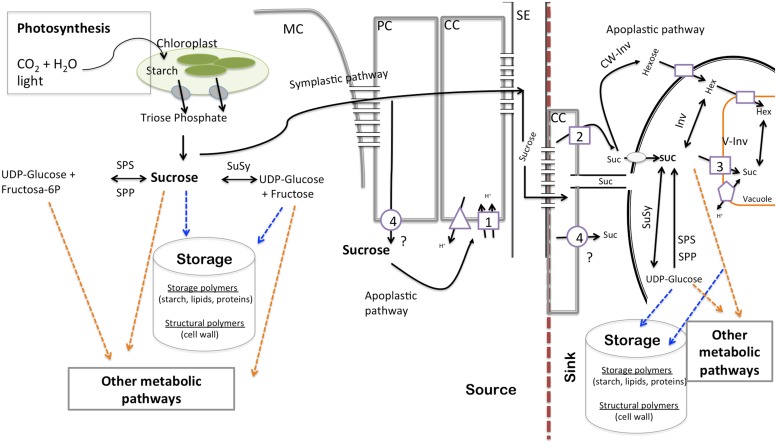
Plant growth and carbon metabolism are closely associated since carbohydrate in the form of sucrose generated by photosynthesis, provides the primary source of building blocks and energy for the production and maintenance of biomass. Regulation of carbon partitioning between source and sink tissues is important because it has a vast influence on both plant growth and development. The regulation of carbon partitioning at the whole plant level is directly linked to the cellular pathways of assimilate transport and the metabolism and allocation of sugars, mainly sucrose and hexoses in source leaves, and sink organs such as roots and fruit. By using tomato plant as a model, this review documents and discusses our current understanding of source-sink interactions from molecular to physiological perspectives focusing on those that regulate the growth and development of both vegetative and reproductive organs. It furthermore discusses the impact that environmental conditions play in maintenance of this balance in an attempt to address the link between physiological and ecological aspects of growth.
Keywords: carbohydrates; carbon partitioning; sink organs; source organs; tomato.
Figures
References
-
- Andersen M. N., Asch F., Wu Y., Jensen C. R., Naested H., Mogensen V. O., et al. (2002). Soluble invertase expression is an early target of drought stress during the critical, abortion–sensitive phase of young ovary development in maize. Plant Physiol. 130 591–604 10.1104/pp.005637 - DOI - PMC - PubMed
-
- Babst B. A., Ferrieri R. A., Thorpe M. R., Orians C. M. (2008). Lymantria dispar herbivory induces rapid changes in carbon transport and partitioning in Populus nigra. Entomol. Exp. Appl. 128 117–125 10.1111/j.1570-7458.2008.00698.x - DOI
Publication types
LinkOut - more resources
Full Text Sources
Other Literature Sources
