Drug-resistant Candida glabrata infection in cancer patients
- PMID: 25340258
- PMCID: PMC4214312
- DOI: 10.3201/eid2011.140685
Drug-resistant Candida glabrata infection in cancer patients
Abstract
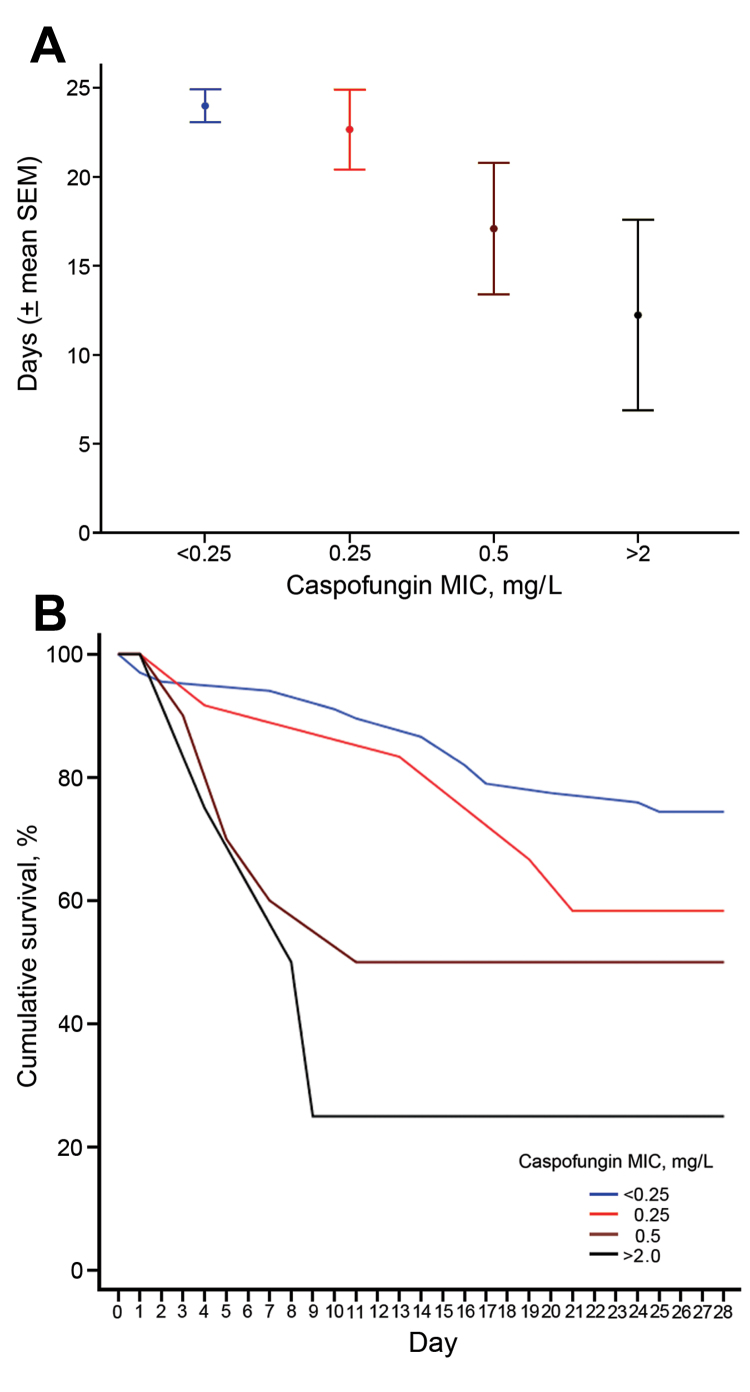
Cancer patients are at risk for candidemia, and increasing Candida spp. resistance poses an emerging threat. We determined rates of antifungal drug resistance, identified factors associated with resistance, and investigated the correlation between resistance and all-cause mortality rates among cancer patients with ≥1 C. glabrata-positive blood culture at MD Anderson Cancer Center, Houston, Texas, USA, during March 2005-September 2013. Of 146 isolates, 30 (20.5%) were resistant to fluconazole, 15 (10.3%) to caspofungin, and 10 (6.8%) to multiple drugs (9 caspofungin-resistant isolates were also resistant to fluconazole, 1 to amphotericin B). Independently associated with fluconazole resistance were azole preexposure, hematologic malignancy, and mechanical ventilation. Independently associated with caspofungin resistance were echinocandin preexposure, monocytopenia, and total parenteral nutrition. Fluconazole resistance was highly associated with caspofungin resistance, independent of prior azole or echinocandin use. Caspofungin resistance was associated with increased 28-day all-cause mortality rates. These findings highlight the need for good stewardship of antifungal drugs.
Figures
References
-
- Sipsas NV, Lewis RE, Tarrand J, Hachem R, Rolston KV, Raad II, et al. Candidemia in patients with hematologic malignancies in the era of new antifungal agents (2001–2007): stable incidence but changing epidemiology of a still frequently lethal infection. Cancer. 2009;115:4745–52. 10.1002/cncr.24507 - DOI - PubMed
MeSH terms
Substances
LinkOut - more resources
Full Text Sources
Other Literature Sources
Medical
Miscellaneous