


Identification and genotyping of Mycobacterium tuberculosis isolated from water and soil samples of a metropolitan city
- PMID: 25340935
- PMCID: PMC4388118
- DOI: 10.1378/chest.14-0960
Identification and genotyping of Mycobacterium tuberculosis isolated from water and soil samples of a metropolitan city
Abstract
Background: The potential role of environmental Mycobacterium tuberculosis in the epidemiology of TB remains unknown. We investigated the transmission of M tuberculosis from humans to the environment and the possible transmission of M tuberculosis from the environment to humans.
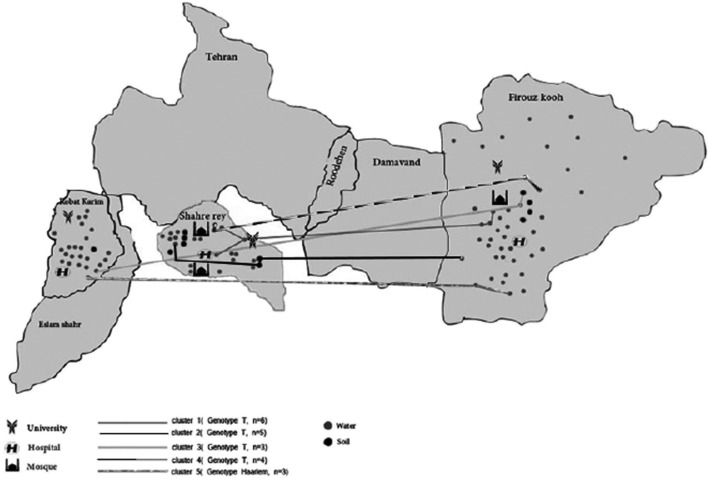
Methods: A total of 1,500 samples were collected from three counties of the Tehran, Iran metropolitan area from February 2012 to January 2014. A total of 700 water samples (47%) and 800 soil samples (53%) were collected. Spoligotyping and the mycobacterial interspersed repetitive units-variable number of tandem repeats typing method were performed on DNA extracted from single colonies. Genotypes of M tuberculosis strains isolated from the environment were compared with the genotypes obtained from 55 patients with confirmed pulmonary TB diagnosed during the study period in the same three counties.
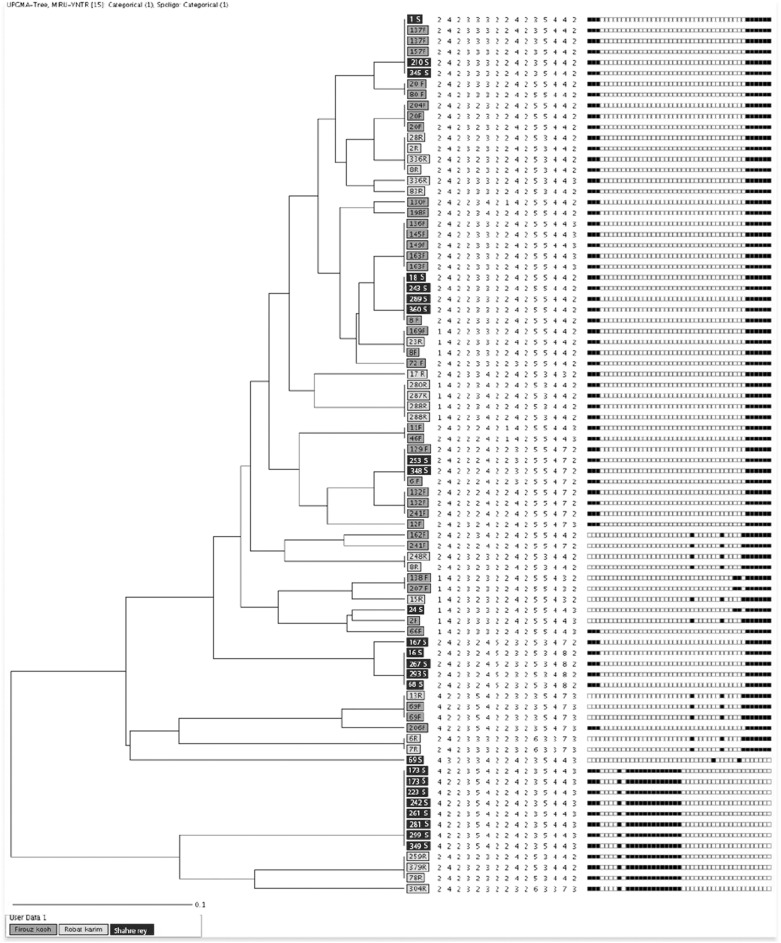
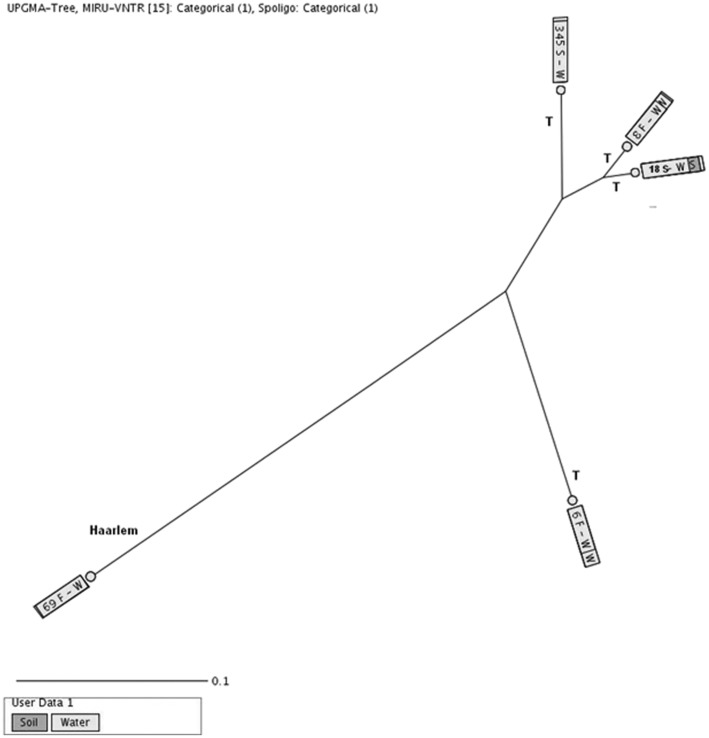
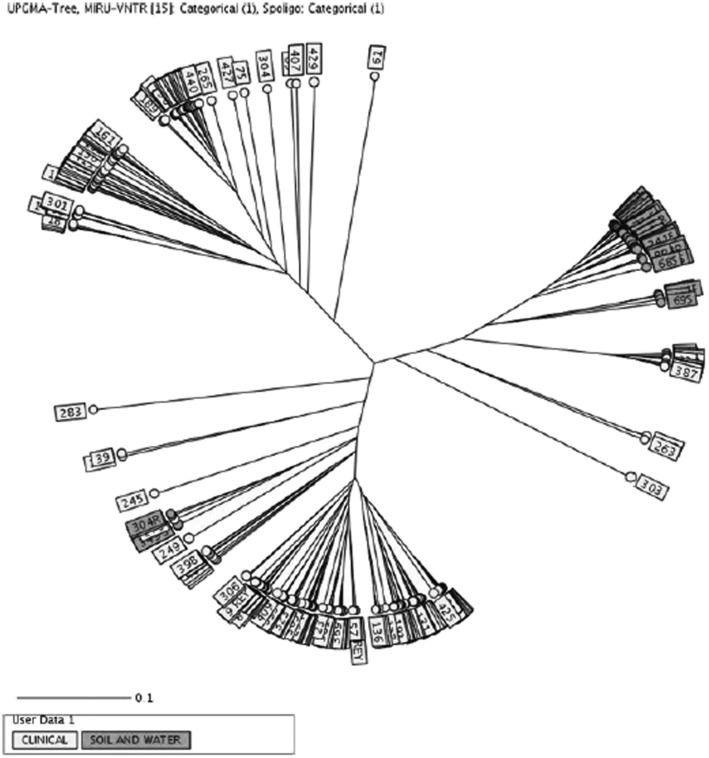
Results: M tuberculosis was isolated from 11 of 800 soil samples (1%) and 71 of 700 water samples (10%). T family (56 of 82, 68%) followed by Delhi/CAS (11 of 82, 13.4%) were the most frequent M tuberculosis superfamilies in both water and soil samples. Overall, 27.7% of isolates in clusters were related. No related typing patterns were detected between soil, water, and clinical isolates. The most frequent superfamily of M tuberculosis in clinical isolates was Delhi/CAS (142, 30.3%) followed by NEW-1 (127, 27%). The bacilli in contaminated soil (36%) and damp water (8.4%) remained reculturable in some samples up to 9 months.
Conclusions: Although the dominant M tuberculosis superfamilies in soil and water did not correspond to the dominant M tuberculosis family in patients, the presence of circulating genotypes of M tuberculosis in soil and water highlight the risk of transmission.
Figures
Comment in
-
How is TB transmitted?Chest. 2015 Apr;147(4):e158. doi: 10.1378/chest.14-3111. Chest. 2015. PMID: 25846543 Free PMC article. No abstract available.
-
Response.Chest. 2015 Apr;147(4):e158-e159. doi: 10.1378/chest.14-3235. Chest. 2015. PMID: 25846544 Free PMC article. No abstract available.
References
-
- Musehold P. Uber die Widerstand-fahigkeit der mit dem Lungenauswur-fherausbeforderten Tuberkelbazillen in Abwassern im Flusswasser und in Kultiverten Boden. Arb Kaiserl Gesundh. 1900;17:56.
-
- Johnson KR, Braden CR, Cairns KL, et al. Transmission of Mycobacterium tuberculosis from medical waste. JAMA. 2000;284(13):1683-1688. - PubMed
-
- Norby B, Fosgate GT, Manning EJ, Collins MT, Roussel AJ. Environmental mycobacteria in soil and water on beef ranches: association between presence of cultivable mycobacteria and soil and water physicochemical characteristics. Vet Microbiol. 2007;124(1-2):153-159. - PubMed
Publication types
MeSH terms
Substances
Grants and funding
LinkOut - more resources
Full Text Sources
Other Literature Sources
Medical
