


Adenotrophic viviparity in tsetse flies: potential for population control and as an insect model for lactation
- PMID: 25341093
- PMCID: PMC4453834
- DOI: 10.1146/annurev-ento-010814-020834
Adenotrophic viviparity in tsetse flies: potential for population control and as an insect model for lactation
Abstract
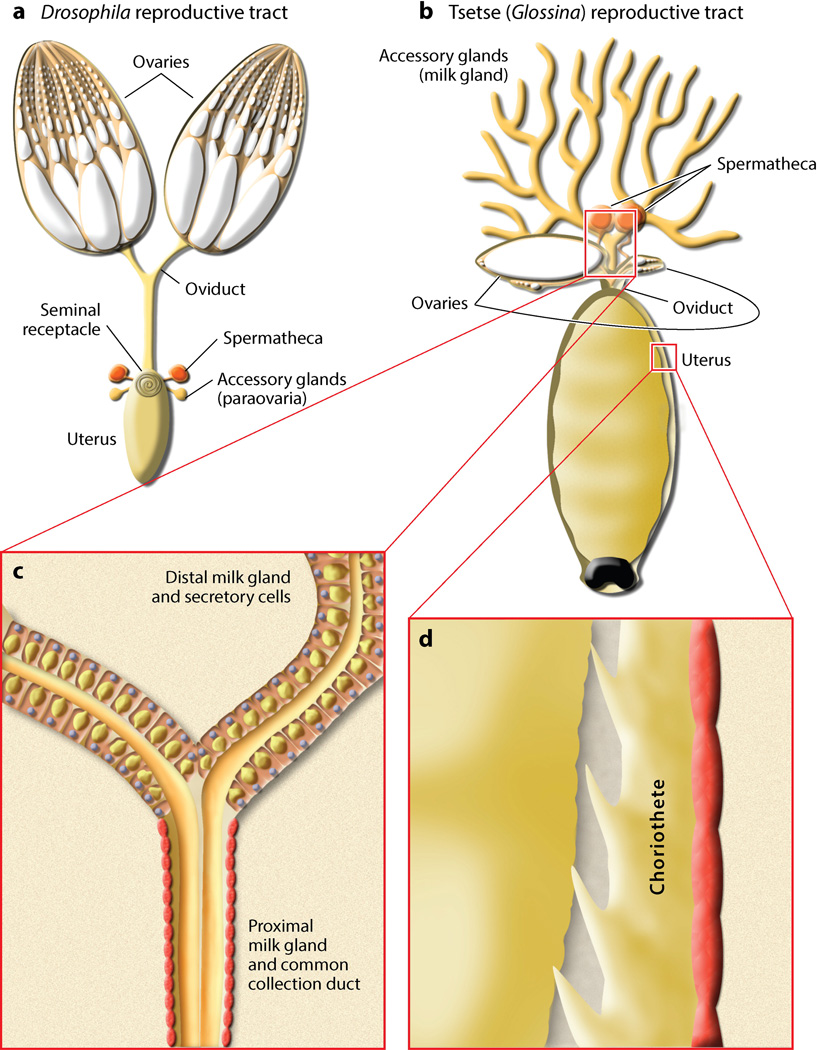
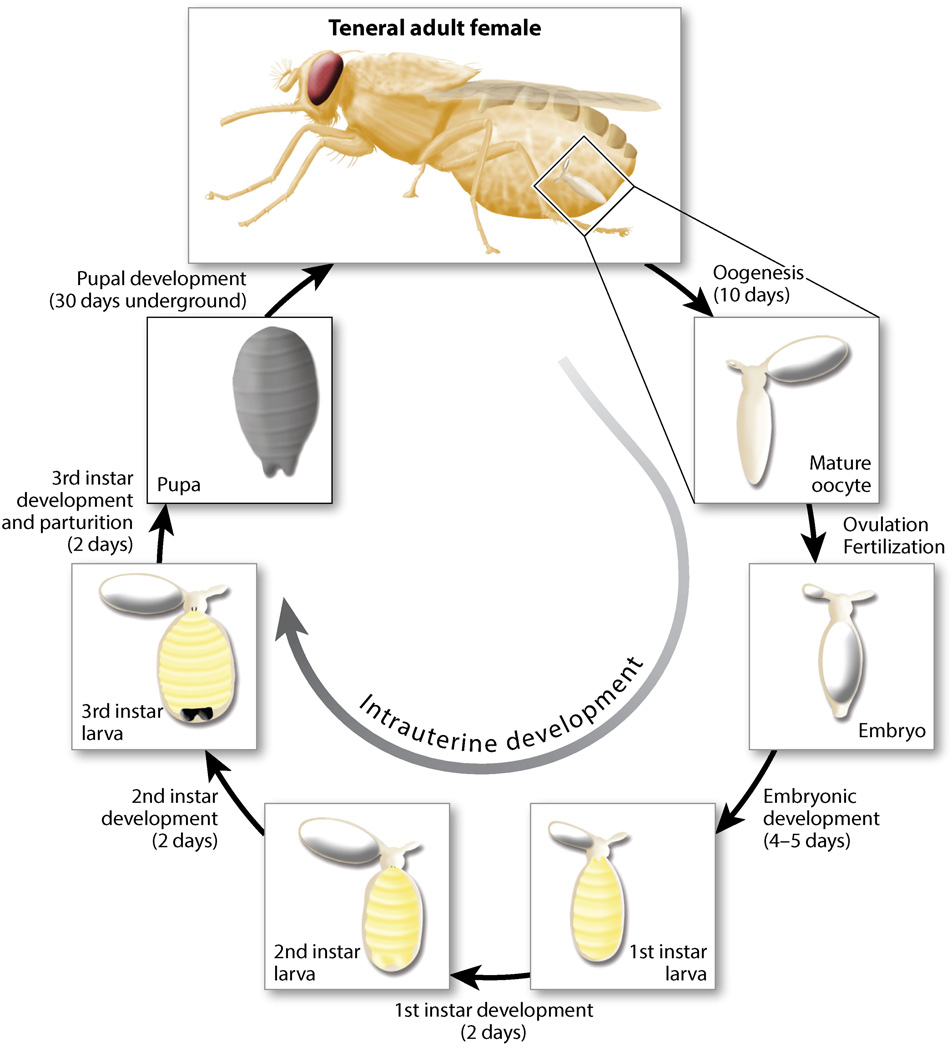
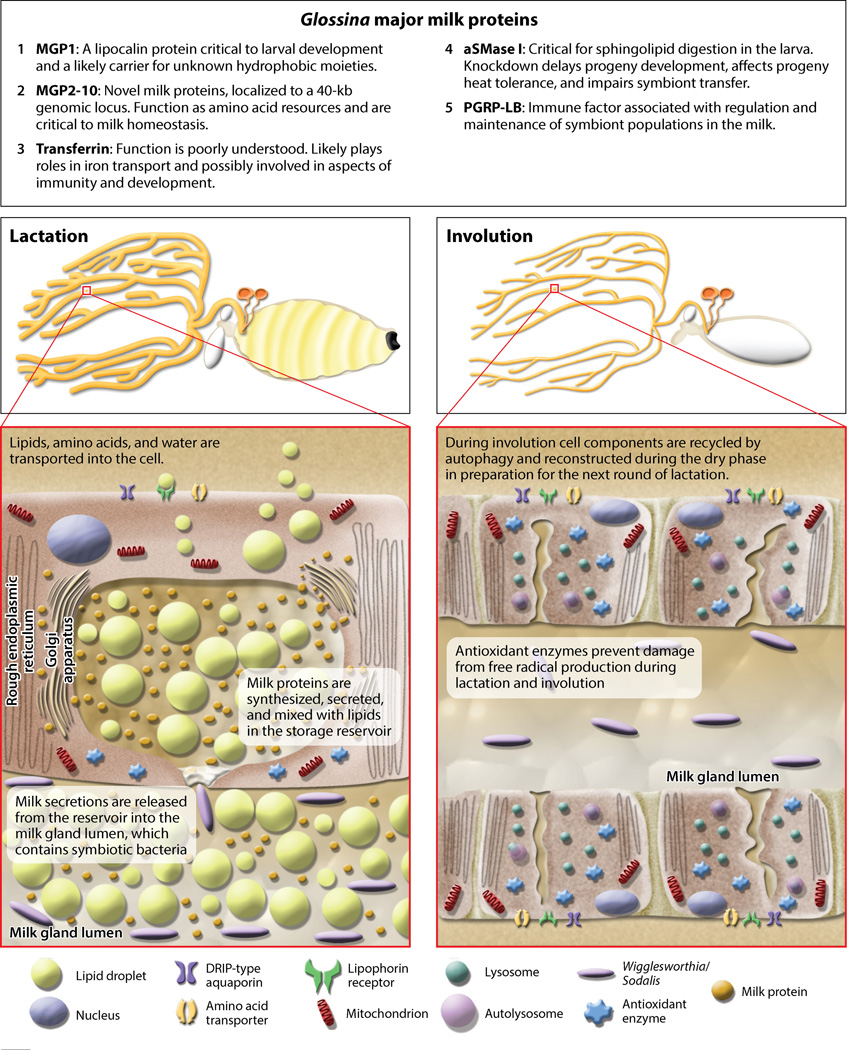
Tsetse flies (Glossina spp.), vectors of African trypanosomes, are distinguished by their specialized reproductive biology, defined by adenotrophic viviparity (maternal nourishment of progeny by glandular secretions followed by live birth). This trait has evolved infrequently among insects and requires unique reproductive mechanisms. A key event in Glossina reproduction involves the transition between periods of lactation and nonlactation (dry periods). Increased lipolysis, nutrient transfer to the milk gland, and milk-specific protein production characterize lactation, which terminates at the birth of the progeny and is followed by a period of involution. The dry stage coincides with embryogenesis of the progeny, during which lipid reserves accumulate in preparation for the next round of lactation. The obligate bacterial symbiont Wigglesworthia glossinidia is critical to tsetse reproduction and likely provides B vitamins required for metabolic processes underlying lactation and/or progeny development. Here we describe findings that utilized transcriptomics, physiological assays, and RNA interference-based functional analysis to understand different components of adenotrophic viviparity in tsetse flies.
Keywords: Glossina; Wigglesworthia; adenotrophic viviparity; lactation; tsetse fly.
Figures
References
-
- Adams TS. The role of juvenile hormone in housefly ovarian follicle morphogenesis. J. Insect Physiol. 1974;20:263–276. - PubMed
-
- Adams TS, Reinecke JP. The reproductive physiology of the screwworm, Cochliomyia hominivorax (Diptera: Calliphoridae). I. Oogenesis. J. Med. Entomol. 1979;15:472–483. - PubMed
-
-
Akman L, Yamashita A, Watanabe H, Oshima K, Shiba T, et al. Genome sequence of the endocellular obligate symbiont of tsetse flies, Wigglesworthia glossinidia. Nat. Genet. 2002;32:402–407. Provides the first genome sequence for Wigglesworthia.
-
Publication types
MeSH terms
Grants and funding
LinkOut - more resources
Full Text Sources
Other Literature Sources
Miscellaneous
