Gender differences in the learning and teaching of surgery: a literature review
- PMID: 25341220
- PMCID: PMC4207172
- DOI: 10.5116/ijme.5380.ca6b
Gender differences in the learning and teaching of surgery: a literature review
Abstract
Objective: To explore evidence concerning gender differences in teaching and learning in surgery to guide future initiatives.
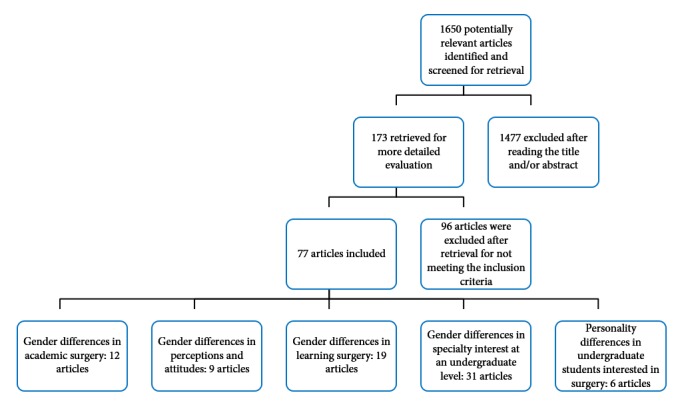
Methods: This systematic review was conducted searching in the following electronic databases: MEDLINE, EMBASE, CINAHL, PsycINFO, ERIC, Web of Science, Scopus and PubMed. All studies related to gender differences in surgical education, teaching or learning of surgery at an undergraduate level were included. Data was extracted and critically appraised. Gender differences in learning, teaching, skills acquisition, perceptions and attitudes, interest on surgery, personality and factors influencing interest in surgical careers were differentiated.
Results: There is an underrepresentation of women in surgical academia, due to lack of role models and gender awareness. It is not clear whether or not gender itself is a factor that affects the learning of surgical tasks. Female students pursuing a surgical career had experienced sexual harassment and gender discrimination that can have an effect on the professional identity formation and specialty choice. There are differences in personality among female and male students interested in surgery. Gender is a determining factor to choose surgery, with a consistent lower proportion of women compared interested in pursuing a surgical career. Mentoring and personality fit are important in medical student's specialty selection. Female students are more likely to be discouraged from pursuing a surgical career by a lack of female role models.
Conclusions: Bias against women in surgery still exists. There is a lack of studies that investigate the role of women in the teaching of surgery.
Keywords: Gender; medical education; surgery; surgical education; teaching and learning; undergraduate.
References
-
- Soreide K, Glomsaker T, Soreide JA. Surgery in Norway: beyond the scalpel in the 21st century. Archives of surgery (Chicago, Ill: 1960). 2008;143 (10):1011-1016. - PubMed
-
- Troppmann KM, Palis BE, Goodnight JE, Ho HS, Troppmann C. Women surgeons in the new millennium. Archives of surgery (Chicago, Ill: 1960). 2009;144(7):635-642. - PubMed
Publication types
MeSH terms
LinkOut - more resources
Full Text Sources
Other Literature Sources