


Molecular pathologic diagnosis of epidermal growth factor receptor
- PMID: 25342599
- PMCID: PMC4207139
- DOI: 10.1093/neuonc/nou294
Molecular pathologic diagnosis of epidermal growth factor receptor
Abstract
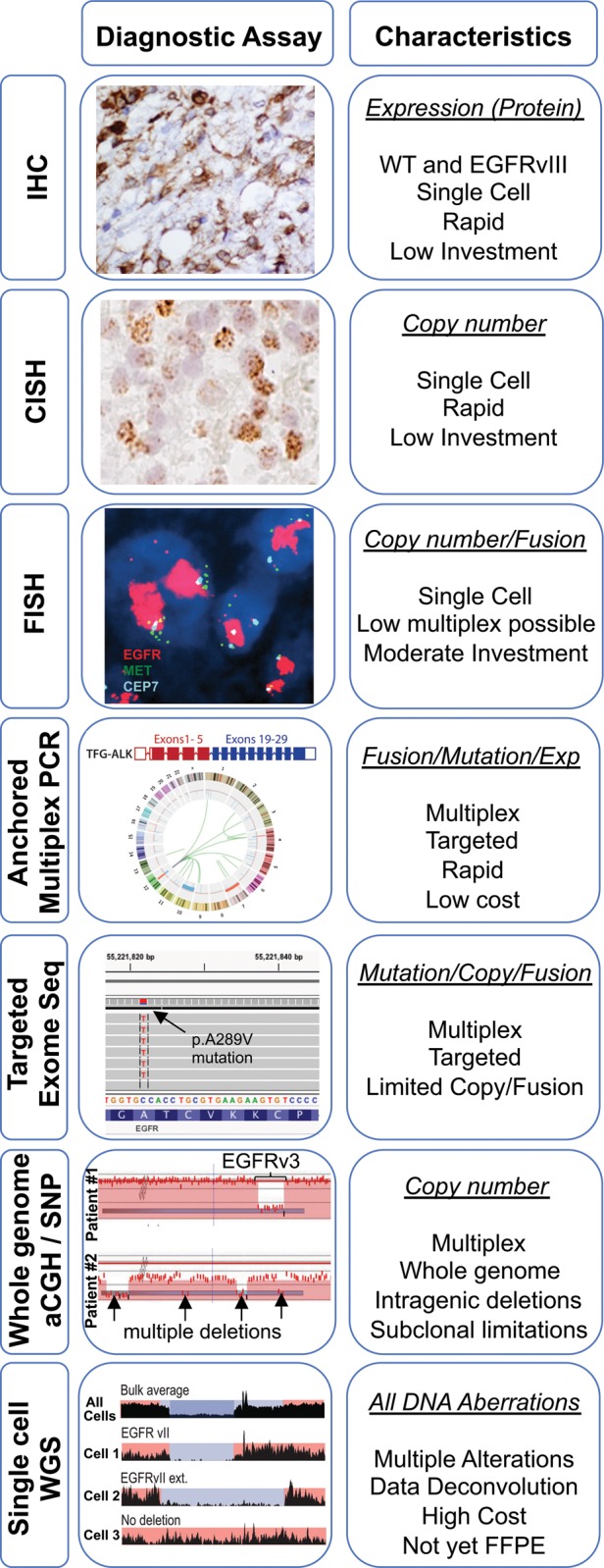
Epidermal growth factor receptor (EGFR) was one of the first oncogenes identified in glioblastoma (GBM) and remains one of the most attractive therapeutic targets. Genomic alterations in EGFR are present in 57% of patients and are strikingly diverse, including gene amplification, rearrangements, and point mutations. Each aberration class has important clinical implications for diagnosis, prognosis, or therapeutic investigation of EGFR in clinical trials. Somatic copy number alterations (SCNAs) are the most common abnormalities in EGFR, with gene amplification present in >43% of patients. The presence of EGFR amplification is often used now to support the diagnosis of GBM and discriminate GBM from other gliomas. It is currently detected in clinical labs using fluorescence in situ hybridization, colorimetric in situ hybridization or, more recently multiplex genomic technologies such as array CGH or targeted next-generation sequencing approaches. Rearrangements of EGFR are most commonly internal deletions leading to activation of the receptor including EGFRvIII and, less commonly, EGFRvII and other variants, which are collectively seen in 25% of GBM patients. EGFRvIII is readily detected via mutation-specific antibodies, but heterogeneity of this and other deletion variants has hindered reliable detection of these aberrations using genomic DNA-based methods. RNA expression profiling (Nanostring and anchored multiplex PCR) has additional potential as a rapid and reliable strategy for detecting EGFR rearrangements with high sensitivity. Single nucleotide variants in EGFR are relatively rare and diverse but are efficiently detected using the targeted or exome-sequencing assays that are now entering clinical pathology practice. The advent of multiplex technologies has revealed the fact that multiple aberrations of EGFR are present in at least 30% of patients with EGFR disruption, a fact recently highlighted by more quantitative sequencing techniques and single cell analysis of GBM. Diagnostic assays used to evaluate EGFR and other receptor tyrosine kinases will therefore be increasingly used to measure and resolve this heterogeneity in order to better understand their mechanisms of resistance. In summary, the diagnostic approaches for identifying clinically relevant EGFR aberrations have rapidly advanced and are providing insights into more effective inhibition of this familiar oncogene in GBM and other cancers.
Keywords: EGFR; GBM; diagnostics; pathology; sequencing.
© The Author(s) 2014. Published by Oxford University Press on behalf of the Society for Neuro-Oncology. All rights reserved. For permissions, please e-mail: journals.permissions@oup.com.
Figures
References
-
- Mellinghoff IK, Wang MY, Vivanco I, et al. Molecular determinants of the response of glioblastomas to EGFR kinase inhibitors. N Engl J Med. 2005;353(19):2012–2024. - PubMed
-
- Doetsch F, Petreanu L, Caille I, et al. EGF converts transit-amplifying neurogenic precursors in the adult brain into multipotent stem cells. Neuron. 2002;36(6):1021–1034. - PubMed
-
- Bachoo RM, Maher EA, Ligon KL, et al. Epidermal growth factor receptor and Ink4a/Arf: convergent mechanisms governing terminal differentiation and transformation along the neural stem cell to astrocyte axis. Cancer Cell. 2002;1(3):269–277. - PubMed
Publication types
MeSH terms
Substances
Grants and funding
LinkOut - more resources
Full Text Sources
Other Literature Sources
Medical
Research Materials
Miscellaneous
