


Unmet needs associated with attention-deficit/hyperactivity disorder in eight European countries as reported by caregivers and adolescents: results from qualitative research
- PMID: 25344102
- PMCID: PMC4445478
- DOI: 10.1007/s40271-014-0083-y
Unmet needs associated with attention-deficit/hyperactivity disorder in eight European countries as reported by caregivers and adolescents: results from qualitative research
Abstract
Introduction: Attention-deficit/hyperactivity disorder (ADHD) is a neurobehavioral disorder characterized by inattention, impulsivity, and hyperactivity, the levels of which are inappropriately high for an individual's developmental age.
Objective: The objective of this study was to explore the unmet needs of children/adolescents with ADHD and their caregivers in eight European countries.
Methods: Semi-structured interviews with 38 caregivers of children/adolescents (aged 6-17 years) with ADHD and no or less serious comorbidities and 28 adolescents (aged 13-17 years) with ADHD and no or less serious comorbidities were conducted, audio-recorded, transcribed into English, and coded for analysis.
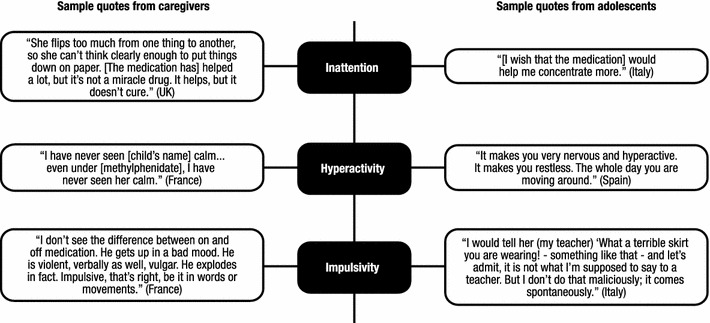
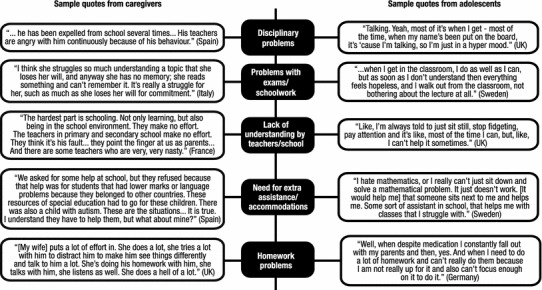
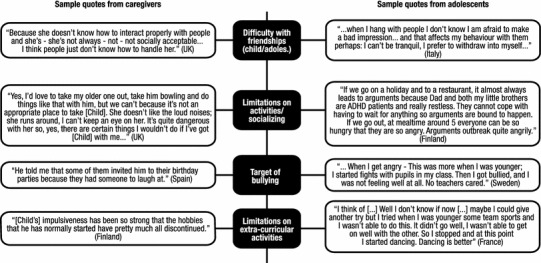
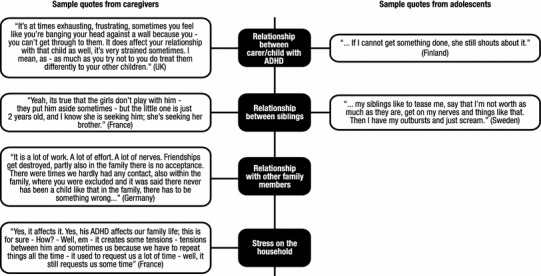
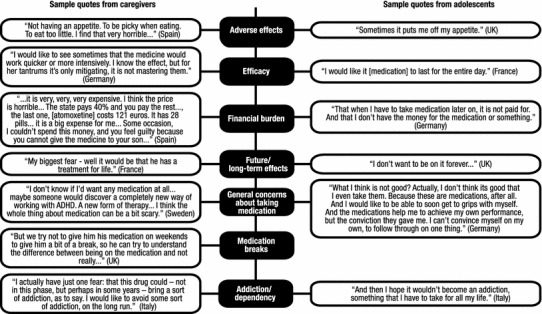
Results: Caregivers reported their own ADHD-related issues, including making personal accommodations, such as limiting activities and spending extra time/effort caring for their child/adolescent, social impacts, and strained relationships. Medication was generally considered helpful; however, most children experience core ADHD symptoms while on medication (reported by 88 % of caregivers and 100 % of adolescents). Adolescents often reported schoolwork difficulties (96 %) and peer issues (75 %), while caregivers reported school issues (84 %) and peer difficulties (79 %). Caregivers reported minimal ADHD education and community support. Caregivers (29 %) and adolescents (54 %) desired medication that better controlled symptoms but had concerns about being oversubdued. Caregivers reported concerns about adverse effects (21 %).
Conclusions: European caregivers of children/adolescents with ADHD identified multiple unmet needs, which persist despite treatment. Adolescents noted impacts on school and social interactions consistent with caregivers. Future research is needed to quantify the study findings, and, ultimately, ease the impact of ADHD on patients and their caregivers.
Figures
References
-
- Preuss U, Ralston SJ, Baldursson G, Falissard B, Lorenzo MJ, Rodrigues Pereira R, et al. Study design, baseline patient characteristics and intervention in a cross-cultural framework: results from the ADORE study. Eur Child Adolesc Psychiatry. 2006;15(Suppl 1):I4–I14. doi: 10.1007/s00787-006-1002-0. - DOI - PubMed
-
- Taylor E, Dopfner M, Sergeant J, Asherson P, Banaschewski T, Buitelaar J, et al. European clinical guidelines for hyperkinetic disorder: first upgrade. Eur Child Adolesc Psychiatry. 2004;13(Suppl 1):7–30. - PubMed
-
- Health Ministry of Spain. Guía de Práctica Clínica sobre el Trastorno por Déficit de Atención con Hiperactividad (TDAH) en Niños y Adolescentes. Available at: http://www.anhipa.com/Documentos/Guiaclinica.pdf. Accessed 2 Aug 2013.
-
- NICE (National Institute for Health and Clinical Excellence). Clinical Guidance 72. Attention deficit hyperactivity disorder (ADHD): diagnosis and management of ADHD in children, young people and adults. Available at: http://www.nice.org.uk/nicemedia/live/12061/42059/42059.pdf. Accessed 2 Aug 2013.
Publication types
MeSH terms
LinkOut - more resources
Full Text Sources
Other Literature Sources
Medical
