


Characterization and evaluation of the artemis camera for fluorescence-guided cancer surgery
- PMID: 25344146
- PMCID: PMC4422838
- DOI: 10.1007/s11307-014-0799-z
Characterization and evaluation of the artemis camera for fluorescence-guided cancer surgery
Abstract
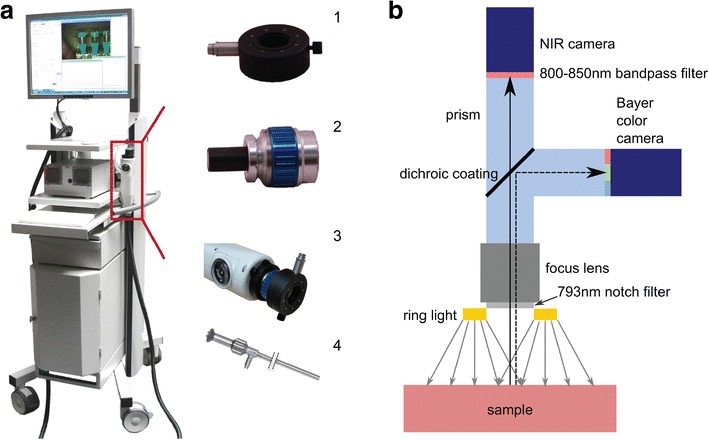
Purpose: Near-infrared (NIR) fluorescence imaging can provide the surgeon with real-time visualization of, e.g., tumor margins and lymph nodes. We describe and evaluate the Artemis, a novel, handheld NIR fluorescence camera.
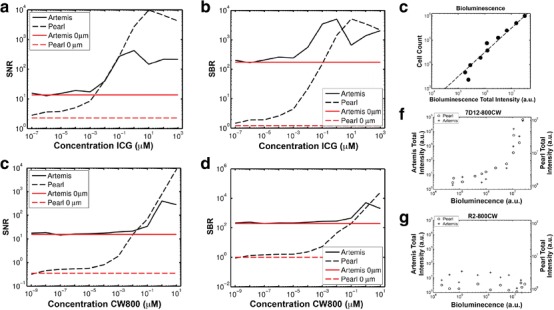
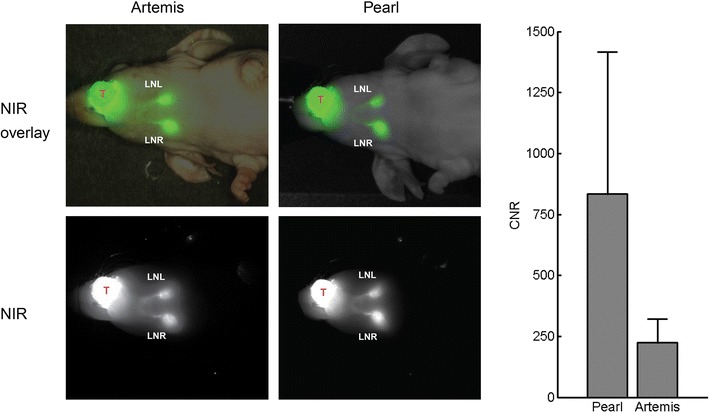
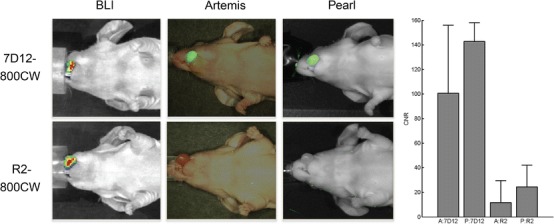
Procedures: We evaluated minimal detectable cell numbers (FaDu-luc2, 7D12-IRDye 800CW), preclinical intraoperative detection of sentinel lymph nodes (SLN) using indocyanine green (ICG), and of orthotopic tongue tumors using 7D12-800CW. Results were compared with the Pearl imager. Clinically, three patients with liver metastases were imaged using ICG.
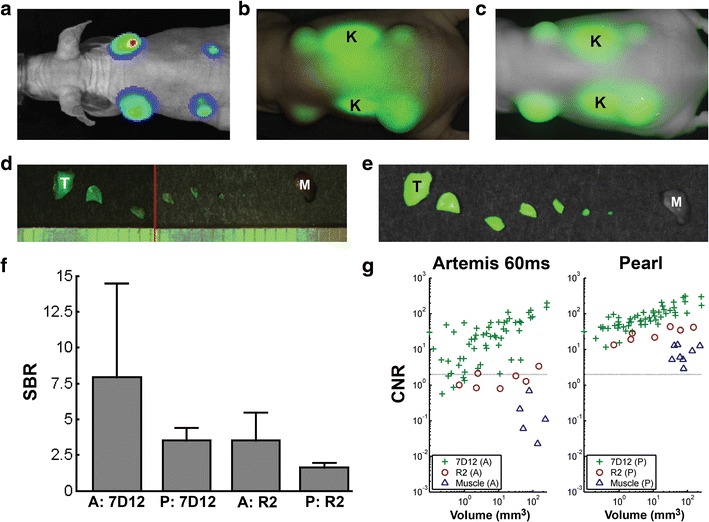
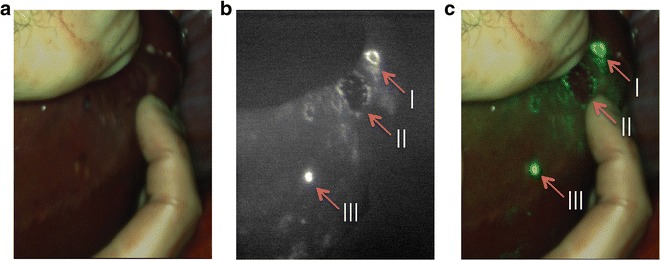
Results: Minimum detectable cell counts for Artemis and Pearl were 2 × 10(5) and 4 × 10(4) cells, respectively. In vivo, seven SLNs were detected in four mice with both cameras. Orthotopic OSC-19-luc2-cGFP tongue tumors were clearly identifiable, and a minimum FaDu-luc2 tumor size of 1 mm(3) could be identified. Six human malignant lesions were identified during three liver surgery procedures.
Conclusions: Based on this study, the Artemis system has demonstrated its utility in fluorescence-guided cancer surgery.
Conflict of interest statement
The authors report no conflicts of interest
Figures
References
Publication types
MeSH terms
Substances
LinkOut - more resources
Full Text Sources
Other Literature Sources
Miscellaneous
