


Improvement of drug dose calculations by classroom teaching or e-learning: a randomised controlled trial in nurses
- PMID: 25344483
- PMCID: PMC4212177
- DOI: 10.1136/bmjopen-2014-006025
Improvement of drug dose calculations by classroom teaching or e-learning: a randomised controlled trial in nurses
Abstract
Introduction: Insufficient skills in drug dose calculations increase the risk for medication errors. Even experienced nurses may struggle with such calculations. Learning flexibility and cost considerations make e-learning interesting as an alternative to classroom teaching. This study compared the learning outcome and risk of error after a course in drug dose calculations for nurses with the two methods.
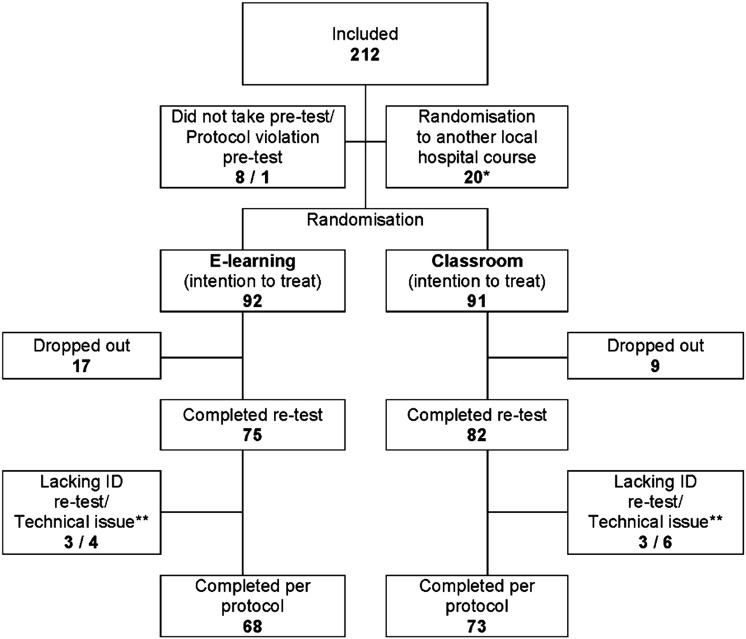
Methods: In a randomised controlled open study, nurses from hospitals and primary healthcare were randomised to either e-learning or classroom teaching. Before and after a 2-day course, the nurses underwent a multiple choice test in drug dose calculations: 14 tasks with four alternative answers (score 0-14), and a statement regarding the certainty of each answer (score 0-3). High risk of error was being certain that incorrect answer was correct. The results are given as the mean (SD).
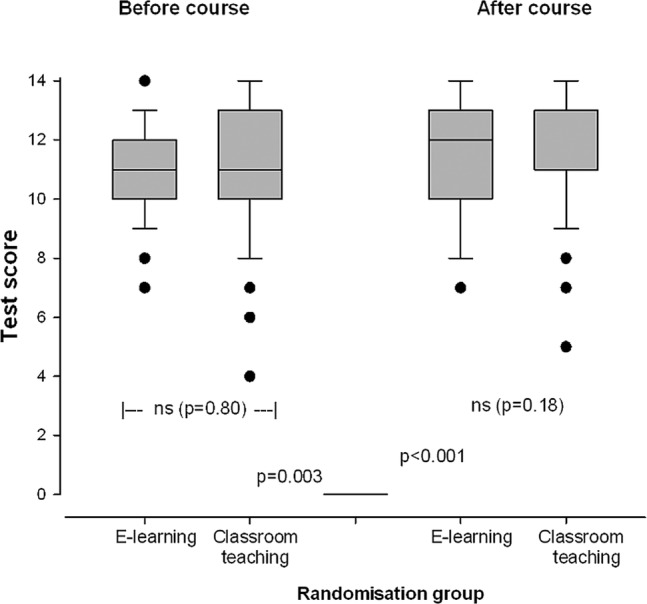
Results: 16 men and 167 women participated in the study, aged 42.0 (9.5) years with a working experience of 12.3 (9.5) years. The number of correct answers after e-learning was 11.6 (2.0) and after classroom teaching 11.9 (2.0) (p=0.18, NS); improvement were 0.5 (1.6) and 0.9 (2.2), respectively (p=0.07, NS). Classroom learning was significantly superior to e-learning among participants with a pretest score below 9. In support of e-learning was evaluation of specific value for the working situation. There was no difference in risk of error between groups after the course (p=0.77).
Conclusions: The study showed no differences in learning outcome or risk of error between e-learning and classroom teaching in drug dose calculations. The overall learning outcome was small. Weak precourse knowledge was associated with better outcome after classroom teaching.
Keywords: HEALTH SERVICES ADMINISTRATION & MANAGEMENT; MEDICAL EDUCATION & TRAINING.
Published by the BMJ Publishing Group Limited. For permission to use (where not already granted under a licence) please go to http://group.bmj.com/group/rights-licensing/permissions.
Figures
References
-
- Pennsylvania Patient Safety Authority. Medication Errors in the Emergency Department: Need for Pharmacy Involvement?2011:1–7
-
- Norwegian Board of Health. Report 2008–2011 for MedEvent (the Reporting System for Adverse Events in Specialized Health Services) Oslo; 2012
-
- Wheeler DW, Remoundos DD, Whittlestone KD, et al. Calculation of doses of drugs in solution: are medical students confused by different means of expressing drug concentrations? Drug Saf 2004;27:729–34 - PubMed
Publication types
MeSH terms
LinkOut - more resources
Full Text Sources
Other Literature Sources
Medical
Miscellaneous
