


The RaDIANT community study protocol: community-based participatory research for reducing disparities in access to kidney transplantation
- PMID: 25348614
- PMCID: PMC4230631
- DOI: 10.1186/1471-2369-15-171
The RaDIANT community study protocol: community-based participatory research for reducing disparities in access to kidney transplantation
Abstract
Background: The Southeastern United States has the lowest kidney transplant rates in the nation, and racial disparities in kidney transplant access are concentrated in this region. The Southeastern Kidney Transplant Coalition (SEKTC) of Georgia, North Carolina, and South Carolina is an academic and community partnership that was formed with the mission to improve access to kidney transplantation and reduce disparities among African American (AA) end stage renal disease (ESRD) patients in the Southeastern United States.
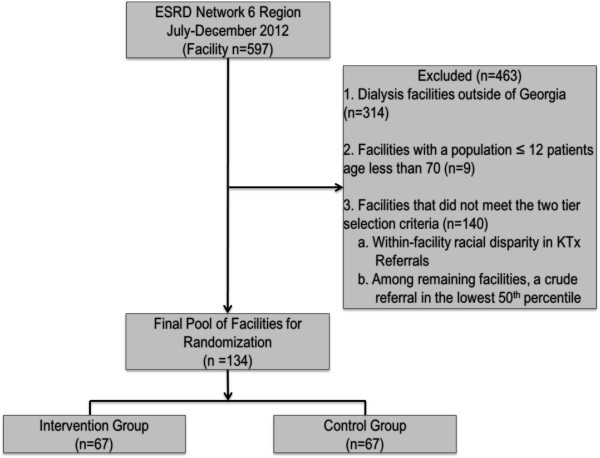
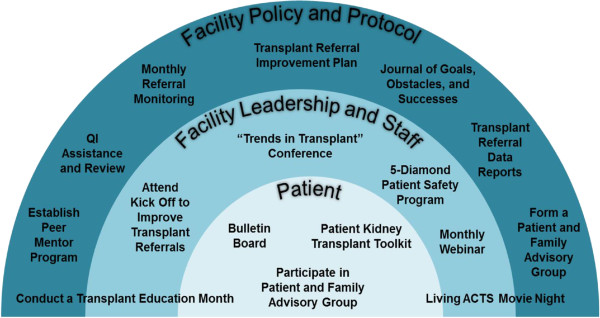
Methods/design: We describe the community-based participatory research (CBPR) process utilized in planning the Reducing Disparities In Access to kidNey Transplantation (RaDIANT) Community Study, a trial developed by the SEKTC to reduce health disparities in access to kidney transplantation among AA ESRD patients in Georgia, the state with the lowest kidney transplant rates in the nation. The SEKTC Coalition conducted a needs assessment of the ESRD population in the Southeast and used results to develop a multicomponent, dialysis facility-randomized, quality improvement intervention to improve transplant access among dialysis facilities in GA. A total of 134 dialysis facilities are randomized to receive either: (1) standard of care or "usual" transplant education, or (2) the multicomponent intervention consisting of transplant education and engagement activities targeting dialysis facility leadership, staff, and patients within dialysis facilities. The primary outcome is change in facility-level referral for kidney transplantation from baseline to 12 months; the secondary outcome is reduction in racial disparity in transplant referral.
Discussion: The RaDIANT Community Study aims to improve equity in access to kidney transplantation for ESRD patients in the Southeast.
Trial registration: Clinicaltrials.gov number NCT02092727.
Figures
References
-
- System USRD. U S Renal Data System . USRDS 2013 Annual Data Report: Atlas of Chronic Kidney Disease and End-Stage Renal Disease in the United States. Bethesda, MD: National Institutes of Health, National Institute of Diabetes and Digestive and Kidney Diseases; 2013.
-
- Danovitch GM. Options for patients with kidney failure. In: Danovitch GM, editor. Handbook of Kidney Transplantation. 2. Philadelphia: Lippincott Williams & Wilkins; 2005. pp. 1–22.
-
- Tonelli M, Wiebe N, Knoll G, Browne S, Jadhav D, Klarenbach S, Gill J. Systematic review: kidney transplantation compared with dialysis in clinically relevant outcomes. Am J Transplant. 2011;11(10):2093–2109. - PubMed
Pre-publication history
-
- The pre-publication history for this paper can be accessed here:http://www.biomedcentral.com/1471-2369/15/171/prepub
Publication types
MeSH terms
Associated data
Grants and funding
LinkOut - more resources
Full Text Sources
Other Literature Sources
Medical
