


Combination treatment of biomechanical support and targeted intra-arterial infusion of peripheral blood stem cells mobilized by granulocyte-colony stimulating factor for the osteonecrosis of the femoral head: a randomized controlled clinical trial
- PMID: 25349059
- PMCID: PMC4376653
- DOI: 10.1002/jbmr.2390
Combination treatment of biomechanical support and targeted intra-arterial infusion of peripheral blood stem cells mobilized by granulocyte-colony stimulating factor for the osteonecrosis of the femoral head: a randomized controlled clinical trial
Abstract
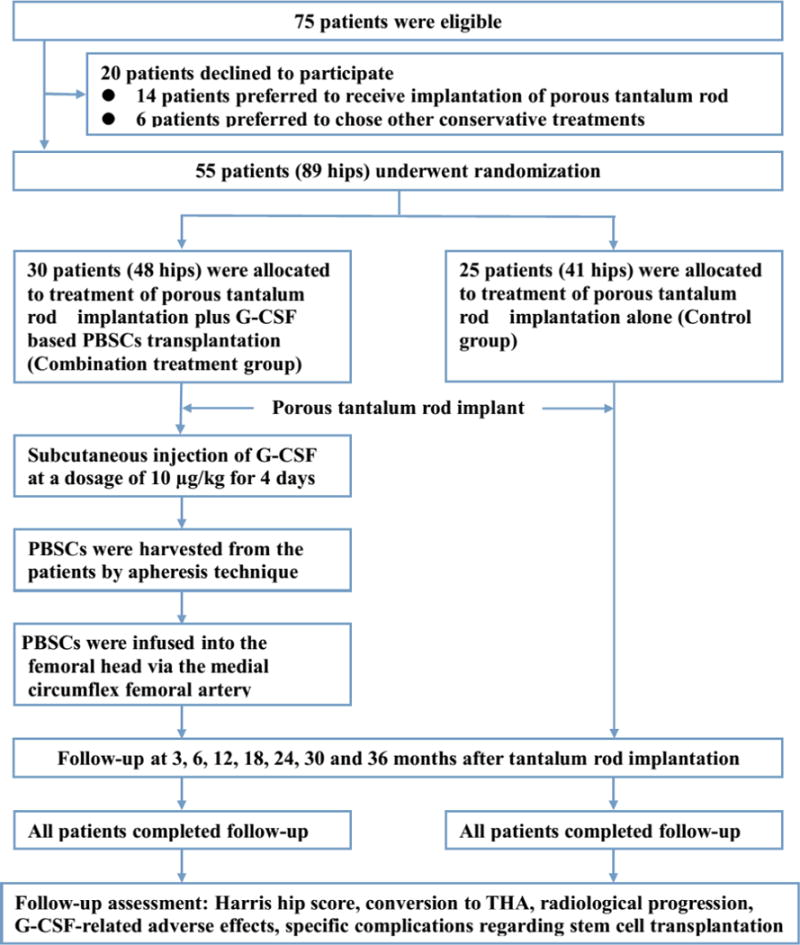
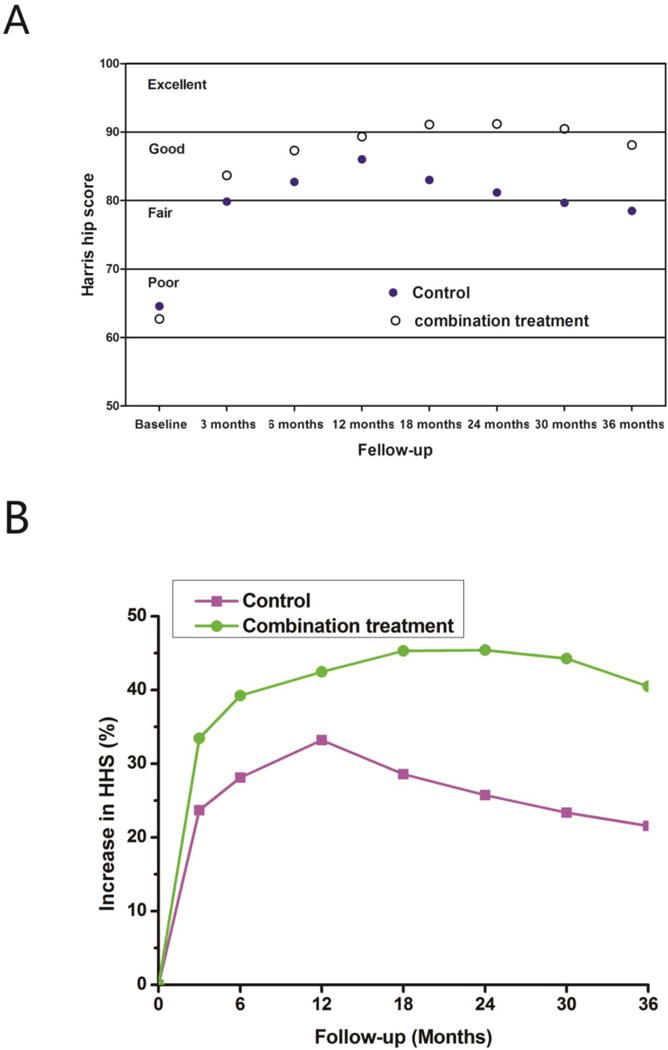
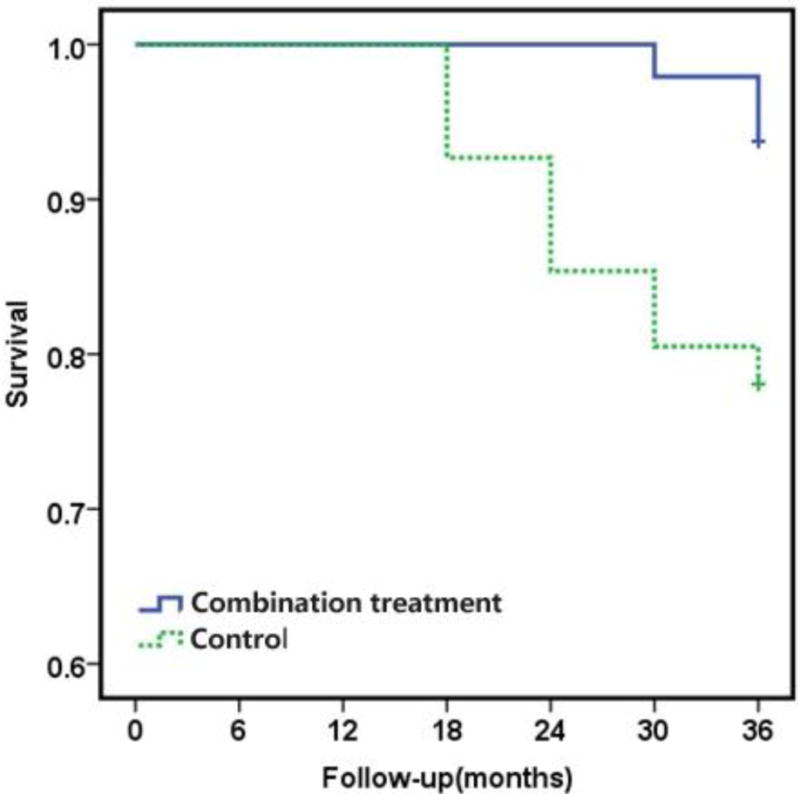
The objective of this study was to determine the benefits of combination treatment with mechanical support and targeted intra-arterial infusion of peripheral blood stem cells (PBSCs) mobilized by granulocyte-colony stimulating factor (G-CSF) via the medial circumflex femoral artery on the progression of osteonecrosis of the femoral head (ONFH). Fifty-five patients (89 hips) with early and intermediate stage ONFH were recruited and randomly assigned to combination treatment or mechanical support treatment (control group). All hips received mechanical support treatment (porous tantalum rod implantation). Then, hips in the combination treatment group were performed targeted intra-arterial infusion of PBSCs. At each follow-up, Harris hip score (HHS) and Association Research Circulation Osseous (ARCO) classification were used to evaluate the symptoms and progression of osteonecrosis. Total hip arthroplasty (THA) was assessed as an endpoint at each follow-up. At 36 months, 9 of the 41 hips (21.95%) in the control group progressed to clinical failure and underwent THA whereas only 3 of the 48 hips (6.25%) in the combination treatment group required THA (p = 0.031). Kaplan-Meier survival analysis showed a significant difference in the survival time between the two groups (log-rank test; p = 0.025). Compared to the control group, combination treatment significantly improved the HHS at 36 months (p = 0.003). At the final follow-up examination, radiological progression was noted in 13 of 41 hips (31.71%) for the control group, but in only 4 of 48 hips (8.33%) for the combination treatment group (p = 0.005). The overall collapse rates were 15.15% (5/33 hips) and 8.11% (3/37 hips) in the control and combination treatment groups, respectively. Targeted intra-arterial infusion of PBSCs is capable of enhancing the efficacy of biomechanical support in the treatment of ONFH. This clinical trial confirmed that the combination treatment might be a safe and feasible choice for the treatment of early or intermediate stages of ONFH.
Keywords: GRANULOCYTE-COLONY STIMULATING FACTOR; INTRA-ARTERIAL DELIVERY; MEDIAL CIRCUMFLEX FEMORAL ARTERY; OSTEONECROSIS OF THE FEMORAL HEAD; PERIPHERAL BLOOD STEM CELLS.
© 2014 American Society for Bone and Mineral Research.
Conflict of interest statement
The authors state that they have no conflicts of interest.
Figures
References
-
- Wen Q, Ma L, Chen YP, Yang L, Luo W, Wang XN. Treatment of avascular necrosis of the femoral head by hepatocyte growth factor-transgenic bone marrow stromal stem cells. Gene Ther. 2008;15(23):1523–1535. - PubMed
-
- Fan M, Peng J, Qin L, Lu S. Experimental animal models of osteonecrosis. Rheumatol Int. 2011;31(8):983–994. - PubMed
-
- Aaron RK. Osteonecrosis: etiology, pathophysiology and diagnosis. In: Callaghan JJ, Rosenberg AG, Rubash HE, editors. The adult hip. Lippincott-Raven; Philadelphia: 1998. pp. 451–466.
-
- Lieberman JR1, Berry DJ, Mont MA, Aaron RK, Callaghan JJ, Rajadhyaksha AD, Urbaniak JR. Osteonecrosis of the hip: management in the 21st century. Instr Course Lect. 2003;52:337–355. - PubMed
Publication types
MeSH terms
Substances
Grants and funding
LinkOut - more resources
Full Text Sources
Other Literature Sources
