Lipopolysaccharide: basic biochemistry, intracellular signaling, and physiological impacts in the gut
- PMID: 25349574
- PMCID: PMC4204704
- DOI: 10.5217/ir.2014.12.2.90
Lipopolysaccharide: basic biochemistry, intracellular signaling, and physiological impacts in the gut
Abstract
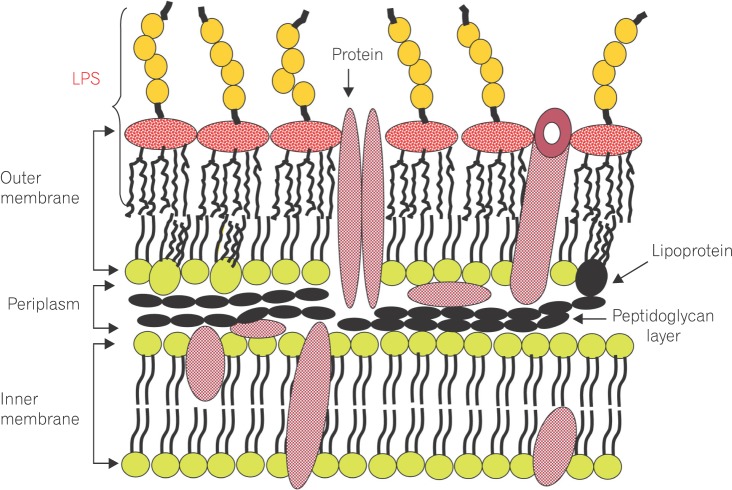
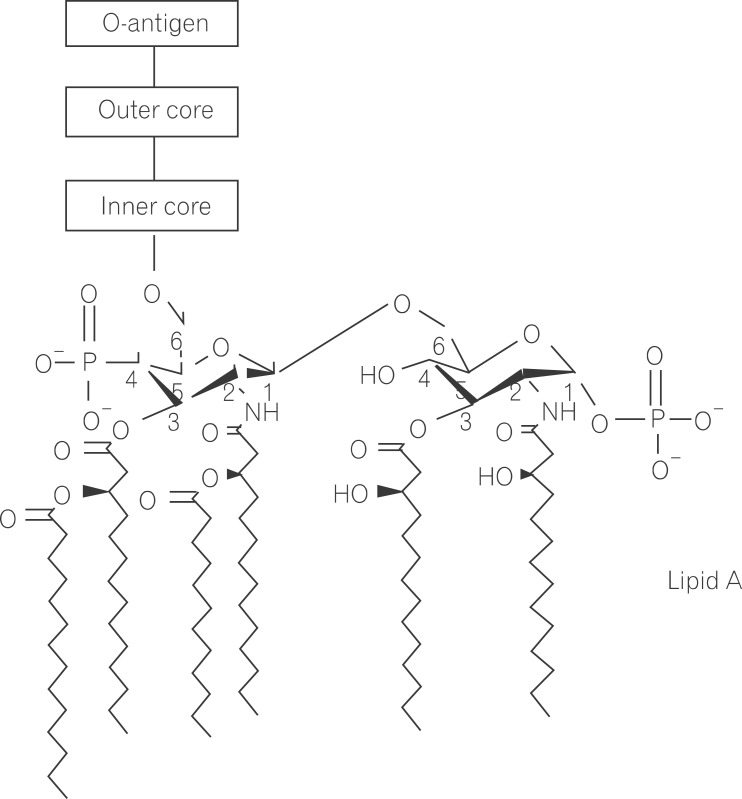
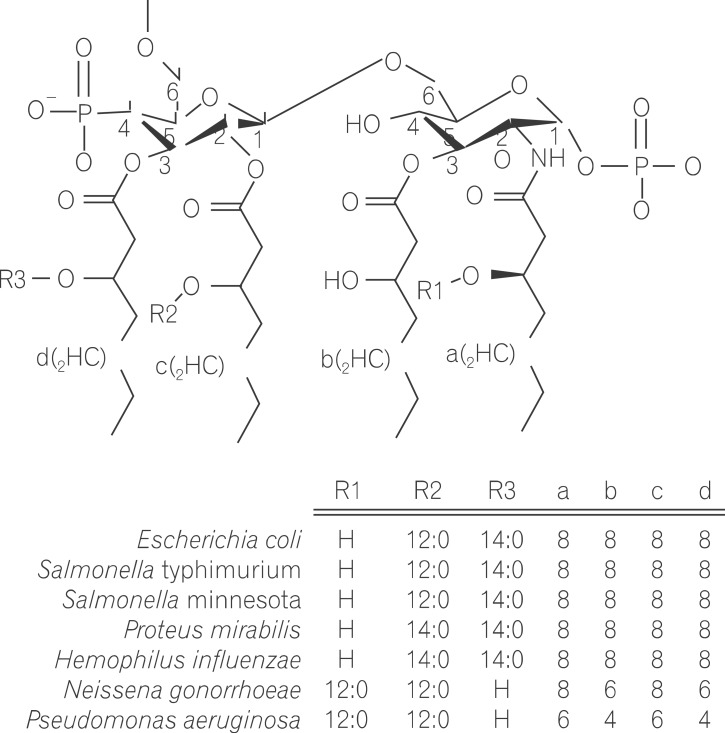
Lipopolysaccharide (LPS), a main constituent of Gram-negative bacterial membrane, specifically activates Toll-like receptor 4, leading to the production of pleiotropic cytokines/chemokines which in turn regulate inflammatory and innate and subsequent adaptive immune responses. Given that human gut harbors a large collection of commensal bacteria, LPS released by gut microbes is able to make the great impact on gut homeostasis through the intracellular signaling pathways engaged by host-microbial interaction. Emerging evidence indicates that LPS in the gut has a potency to elicit the pathogenesis of intestinal inflammatory diseases such as inflammatory bowel disease and necrotizing enterocolitis. In this review, we discuss the current understanding of the basic biochemistry of LPS, LPS-induced intracellular signaling, and physiological impacts of LPS in the intestine.
Keywords: Inflammatory bowel diseases; Lipopolysaccharides; Toll-like receptors.
Conflict of interest statement
Conflict of interest: None.
Figures
References
-
- Raetz CR. Biochemistry of endotoxins. Annu Rev Biochem. 1990;59:129–170. - PubMed
-
- Raetz CR, Ulevitch RJ, Wright SD, Sibley CH, Ding A, Nathan CF. Gram-negative endotoxin: an extraordinary lipid with profound effects on eukaryotic signal transduction. FASEB J. 1991;5:2652–2660. - PubMed
-
- Rietschel ET, Brade H. Bacterial endotoxins. Sci Am. 1992;267:54–61. - PubMed
-
- Murakami A, Ohigashi H. Targeting NOX, INOS and COX-2 in inflammatory cells: chemoprevention using food phytochemicals. Int J Cancer. 2007;121:2357–2363. - PubMed
Publication types
LinkOut - more resources
Full Text Sources
Other Literature Sources