


A systematic review of speech recognition technology in health care
- PMID: 25351845
- PMCID: PMC4283090
- DOI: 10.1186/1472-6947-14-94
A systematic review of speech recognition technology in health care
Abstract
Background: To undertake a systematic review of existing literature relating to speech recognition technology and its application within health care.
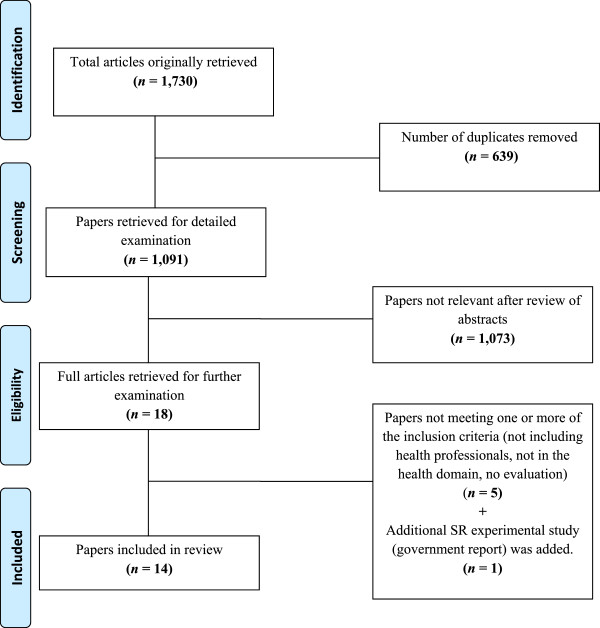
Methods: A systematic review of existing literature from 2000 was undertaken. Inclusion criteria were: all papers that referred to speech recognition (SR) in health care settings, used by health professionals (allied health, medicine, nursing, technical or support staff), with an evaluation or patient or staff outcomes. Experimental and non-experimental designs were considered. Six databases (Ebscohost including CINAHL, EMBASE, MEDLINE including the Cochrane Database of Systematic Reviews, OVID Technologies, PreMED-LINE, PsycINFO) were searched by a qualified health librarian trained in systematic review searches initially capturing 1,730 references. Fourteen studies met the inclusion criteria and were retained.
Results: The heterogeneity of the studies made comparative analysis and synthesis of the data challenging resulting in a narrative presentation of the results. SR, although not as accurate as human transcription, does deliver reduced turnaround times for reporting and cost-effective reporting, although equivocal evidence of improved workflow processes.
Conclusions: SR systems have substantial benefits and should be considered in light of the cost and selection of the SR system, training requirements, length of the transcription task, potential use of macros and templates, the presence of accented voices or experienced and in-experienced typists, and workflow patterns.
Figures
References
-
- HISA: Health Informatics Society of Australia. http://www.hisa.org.au/. 2013 [cited 2014 14 January 2014]
-
- NEHTA:: PCEHR. http://www.nehta.gov.au/our-work/pcehr. 2014 [cited 2014 30th October 2014]
-
- Becker H. Computerization of patho-histological findings in natural language. Pathol Eur. 1972;7(2):193–200. - PubMed
-
- Anderson B, Bross IDJ, Sager N. Grammatical compression in notes and records: analysis and computation. Am J Computational Linguistics. 1975;2(4):68–82.
-
- Hirschman L, Grishman R, Sager N. American Federation of Information Processing Societies: 1976. New York, NY, USA: National Computer Conference, ACM, Association for Computing Machinery Location; 1976. From Text to Structured Information: Automatic Processing of Medical Reports.
Pre-publication history
-
- The pre-publication history for this paper can be accessed here:http://www.biomedcentral.com/1472-6947/14/94/prepub
Publication types
MeSH terms
LinkOut - more resources
Full Text Sources
Other Literature Sources
Research Materials
Miscellaneous
