


Neonatal mortality in a referral hospital in Cameroon over a seven year period: trends, associated factors and causes
- PMID: 25352867
- PMCID: PMC4209622
- DOI: 10.4314/ahs.v14i3.4
Neonatal mortality in a referral hospital in Cameroon over a seven year period: trends, associated factors and causes
Abstract
Background: The fourth Millennium Development Goals targets reduction of the mortality rate of under-fives by 2/3 by the year 2015. This reduction starts with that of neonatal mortality representing 40% of childhood mortality. In Cameroon neonatal mortality was 31% in 2011.
Objectives: We assessed the trends, associated factors and causes of neonatal deaths at the Yaounde Gynaeco-Obstetric and Pediatric Hospital.
Methods: The study was a retrospective chart review. Data was collected from the hospital records, and included both maternal and neonatal variables from 1(st) January 2004 to 31(st) December 2010.
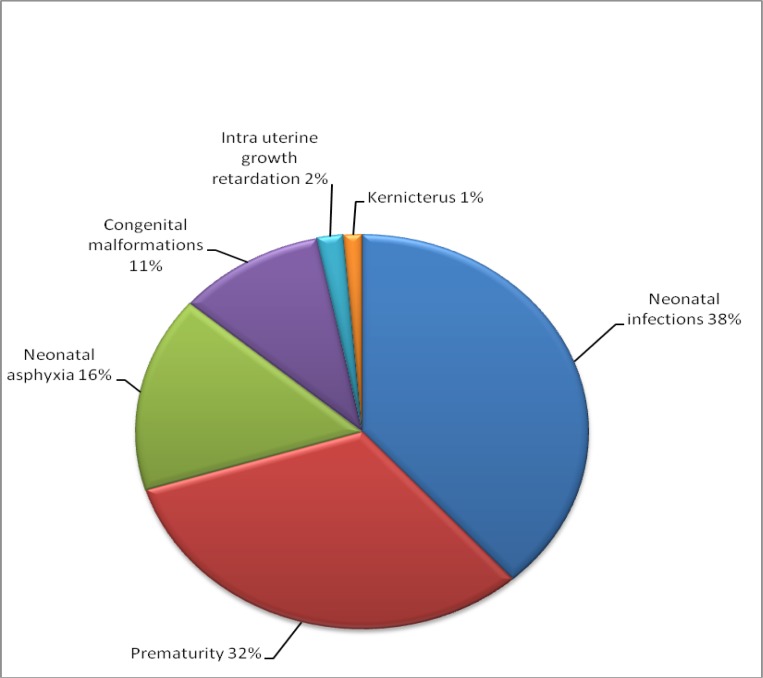
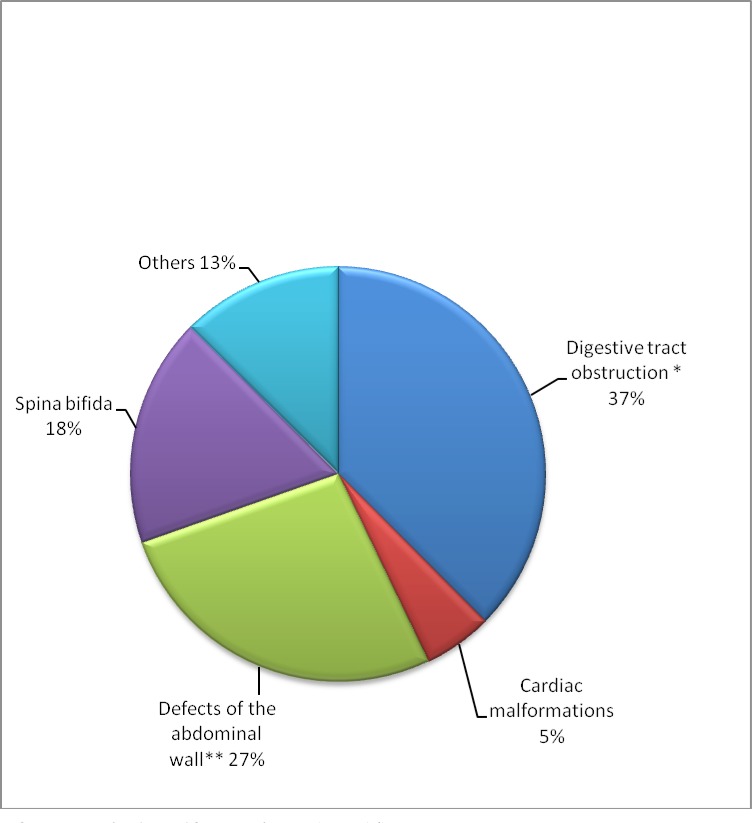
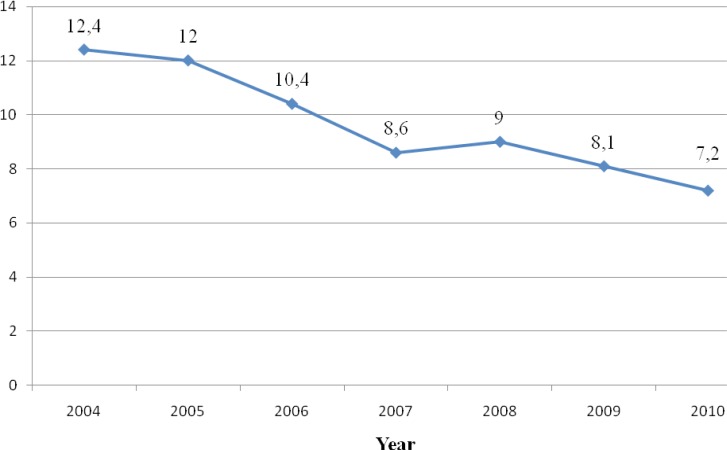
Results: The neonatal mortality was 10%. Out-borns represented 49.3% of the deceased neonates with 11.3% born at home. The neonatal mortality rate followed a downward trend dropping from 12.4% in 2004 to 7.2% in 2010. The major causes of deaths were: neonatal sepsis (37.85%), prematurity (31.26%), birth asphyxia (16%), and congenital malformations (10.54%). Most (74.2%) of the deaths occurred within the first week with 35% occurring within 24 hours of life. Mortality was higher in neonates with birth weight less than 2500 g and a gestational age of less than 37 weeks. In the mothers, it was high in single parenthood, primiparous and in housewives and students..
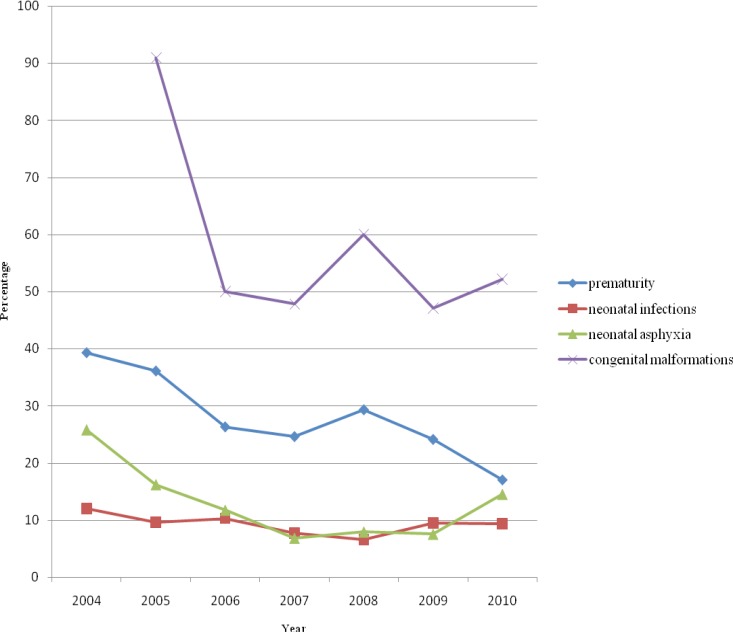
Conclusion: There has been a steady decline of neonatal mortality since 2004. Neonatal sepsis, prematurity, birth asphyxia and congenital malformations were the major causes of neonatal deaths. Neonatal sepsis remained constant although at lower rates over the study period.
Keywords: Cameroon; mortality; neonates; referral hospital.
Figures
References
-
- United Nations, author. The Millennium Development Goals Report 2005. New York: 2005.
-
- Organisation Mondiale de la Santé, author. Il faut améliorer les soins aux nouveau-nés pour réduire la mortalité infantile. 2010. [11th November 2010]. (Fre). disponible sur www.who.int.
-
- Fonds des Nations Unies pour l'Enfance (UNICEF), author La situation des enfants dans le monde 2009-La santé maternelle et néonatale. New York (NY): UNICEF; 2008. (Fre).
-
- WHO, author. Perinatal mortality: A listing of available information. 1996. pp. 1–4. WHO/FRH/MSM/96.7.
-
- Wise PH. Infant mortality/neonatal disease in sexual and reproductive health: A public health perspective. Elservier INC; 2008. pp. 200–2006.
MeSH terms
LinkOut - more resources
Full Text Sources
Other Literature Sources
Medical