


Carbonyl compounds generated from electronic cigarettes
- PMID: 25353061
- PMCID: PMC4245608
- DOI: 10.3390/ijerph111111192
Carbonyl compounds generated from electronic cigarettes
Abstract
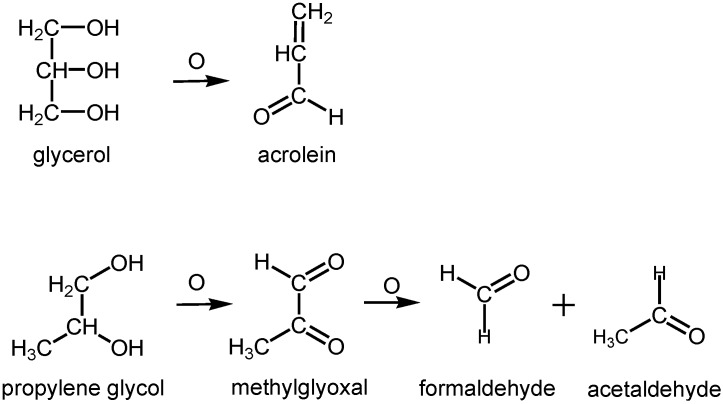
Electronic cigarettes (e-cigarettes) are advertised as being safer than tobacco cigarettes products as the chemical compounds inhaled from e-cigarettes are believed to be fewer and less toxic than those from tobacco cigarettes. Therefore, continuous careful monitoring and risk management of e-cigarettes should be implemented, with the aim of protecting and promoting public health worldwide. Moreover, basic scientific data are required for the regulation of e-cigarette. To date, there have been reports of many hazardous chemical compounds generated from e-cigarettes, particularly carbonyl compounds such as formaldehyde, acetaldehyde, acrolein, and glyoxal, which are often found in e-cigarette aerosols. These carbonyl compounds are incidentally generated by the oxidation of e-liquid (liquid in e-cigarette; glycerol and glycols) when the liquid comes in contact with the heated nichrome wire. The compositions and concentrations of these compounds vary depending on the type of e-liquid and the battery voltage. In some cases, extremely high concentrations of these carbonyl compounds are generated, and may contribute to various health effects. Suppliers, risk management organizations, and users of e-cigarettes should be aware of this phenomenon.
Figures
References
-
- Gilbert H.A. Smokeless Non-Tobacco Cigarette. 3200819. Patent No. 1965 Aug 17;
-
- Farsalinos K.E., Romagna G., Tsiapras D., Kyrzopoulos S., Voudris V. Characteristics, perceived side effects and benefits of electronic cigarette use: A worldwide survey of more than 19,000 consumers. Int. J. Environ. Res. Public Health. 2014;11:4356–4373. doi: 10.3390/ijerph110404356. - DOI - PMC - PubMed
Publication types
MeSH terms
Substances
LinkOut - more resources
Full Text Sources
Other Literature Sources
Medical
