Review
. 2015 Feb 1;308(3):F179-97.
doi: 10.1152/ajprenal.00455.2014. Epub 2014 Oct 29.

Reactive oxygen species as important determinants of medullary flow, sodium excretion, and hypertension

Affiliations
Review

Reactive oxygen species as important determinants of medullary flow, sodium excretion, and hypertension

Allen W Cowley Jr et al. Am J Physiol Renal Physiol. .

Abstract

The physiological evidence linking the production of superoxide, hydrogen peroxide, and nitric oxide in the renal medullary thick ascending limb of Henle (mTAL) to regulation of medullary blood flow, sodium homeostasis, and long-term control of blood pressure is summarized in this review. Data obtained largely from rats indicate that experimentally induced elevations of either superoxide or hydrogen peroxide in the renal medulla result in reduction of medullary blood flow, enhanced Na(+) reabsorption, and hypertension. A shift in the redox balance between nitric oxide and reactive oxygen species (ROS) is found to occur naturally in the Dahl salt-sensitive (SS) rat model, where selective reduction of ROS production in the renal medulla reduces salt-induced hypertension. Excess medullary production of ROS in SS rats emanates from the medullary thick ascending limbs of Henle [from both the mitochondria and membrane NAD(P)H oxidases] in response to increased delivery and reabsorption of excess sodium and water. There is evidence that ROS and perhaps other mediators such as ATP diffuse from the mTAL to surrounding vasa recta capillaries, resulting in medullary ischemia, which thereby contributes to hypertension.

Keywords: Dahl SS rats; NAD(P)H oxidase; hydrogen peroxide (H2O2); kidney; mTAL; medullary blood flow; nitric oxide (NO); superoxide (O2·−).


Figures

Fig. 1.
Fig. 1.
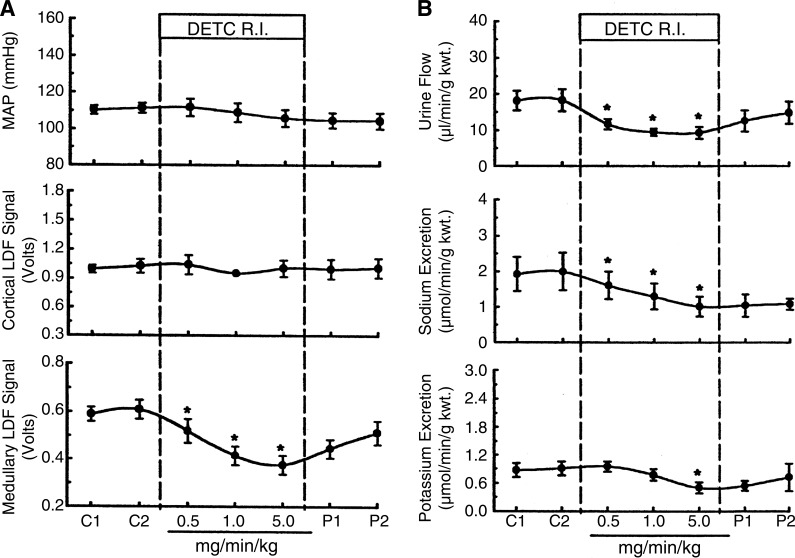
Effect of renal medullary interstitial infusion (R.I.) of the SOD inhibitor diethyldithiocarbamic acid (DETC) on mean arterial pressure (MAP) and renal cortical and medullary laser-Doppler flow (LDF; A) and urine flow and sodium and potassium excretion (B). *P < 0.05 compared with control. Reprinted with permission from Zou et al. (206).
Fig. 2.
Fig. 2.
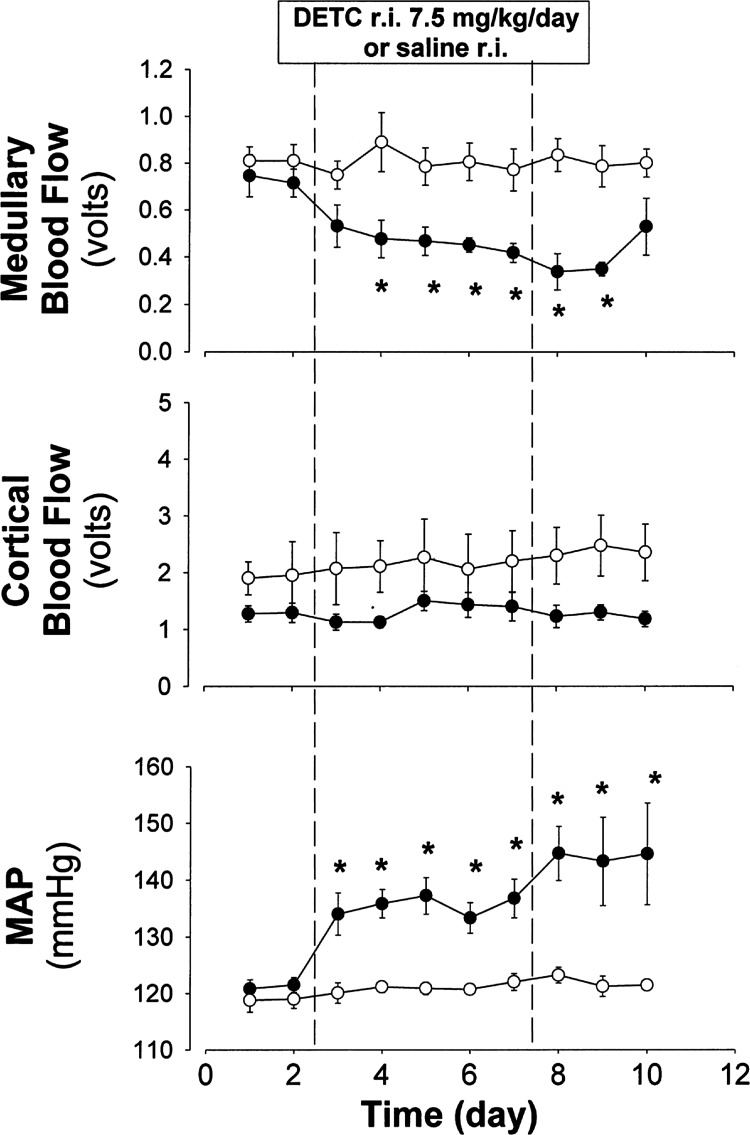
Effects of chronic infusion of DETC (7.5 mg·kg−1·day, for 5 days; ●) or saline (○) into the renal medullary interstitium (r.i.) on renal medullary blood flow (n = 5–6), renal cortical blood flow, and MAP. Reprinted with permission from Makino et al. (114).
Fig. 3.
Fig. 3.
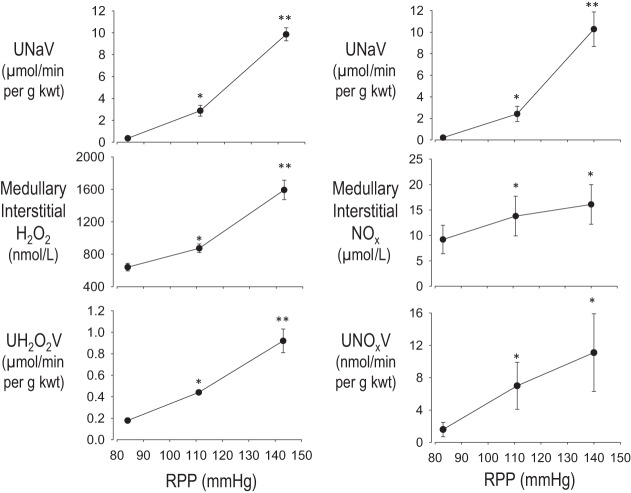
Responses to changes in renal perfusion pressure (RPP). Left: changes in excretion of urinary sodium (UNaV), medullary interstitial H2O2, and urinary excretion of H2O2 (UH2O2V) following a change in RPP. Right: changes in excretion of UNaV, medullary interstitial NO2/NO3 (NOx), and urinary excretion of NO2/NO3 (UNOxV) following a change in RPP. Values are means ± SE. *Significant change from the lowest pressure (P < 0.05). **Significant change from both the lowest and the intermediate pressure (P < 0.05). Regraphed from results presented in Jin et al. (84).
Fig. 4.
Fig. 4.
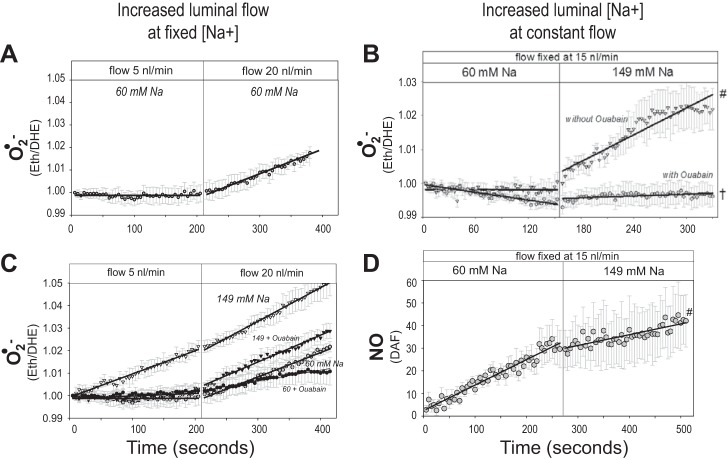
Response of superoxide (O2·−) production as measured by the change in the ratio of ethidium to dihydroethidium (Eth/DHE) to an increase in flow rate from 5 to 20 nl/min (A and C). Also shown is the response of both O2·− and nitric oxide (NO) production to increased luminal Na+ concentration ([Na+]) with luminal flow maintained constant at 15 nl/min (B and D). Regraphed from results presented by Abe et al. (1).
Fig. 5.
Fig. 5.
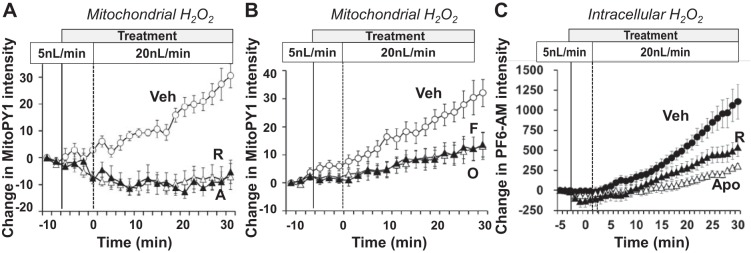
Isolated medullary thick ascending limb of Henle (mTAL) microperfusion studies in Sprague-Dawley rats under physiological conditions of increased luminal flow rate (from 5 to 20 nl/min) showing stimulation of mitochondrial H2O2 (Mito-PY1; A and B) and inhibitors of complex 1 [rotenone (R; 10 μM) and antimycin A (A; 1 μM; A)]. Furosemide (F; 100 μM) and ouabain (O; 4 mM) are shown in B. C: effects of mitochondrial H2O2 production upon whole cell H2O2 responses. The elimination of the mitochondrial component with rotenone decreased the response to increased luminal flow. In C, when apocynin (Apo; 1 mM) was given to eliminate NAD(P)H oxidase reactive oxygen species production, there was only a minimal increase in H2O2 to increased luminal flow. Regraphed from results presented in Ohsaki et al. (142).
Fig. 6.
Fig. 6.
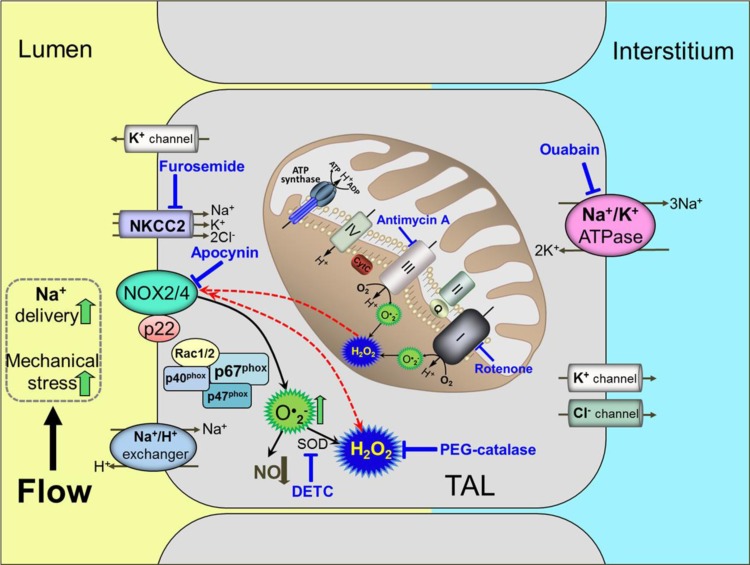
Schematic of mitochondria-mediated signaling of membrane NAD(P)H oxidases.
Fig. 7.
Fig. 7.
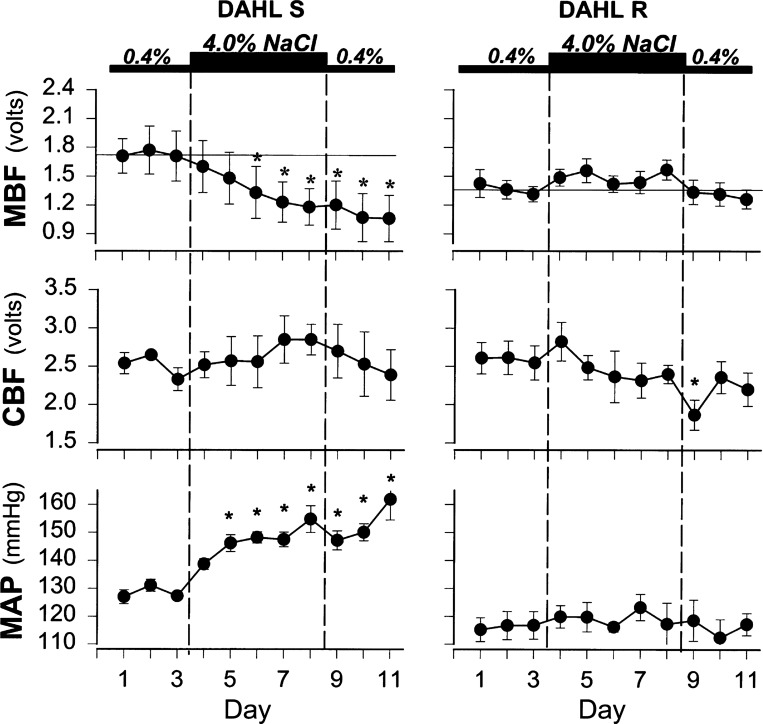
Effects of a high-salt diet (4%) on the changes in medullary blood flow (MBF; top), cortical blood flow (CBF; middle), and MAP (bottom) in unanesthetized Dahl S rats (left) and Dahl R rats (right). *Significant difference from control days (P < 0.05). Reprinted with permission from Miyata et al. (125).
Fig. 8.
Fig. 8.
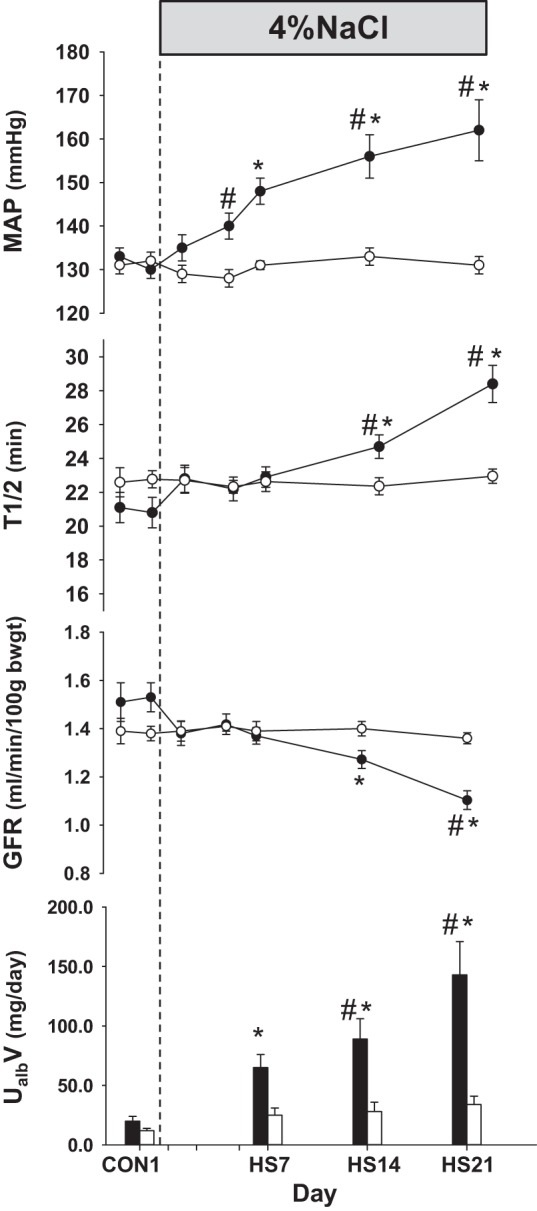
Comparison of the time control group of Dahl salt-sensitive (SS) rats (○) maintained on 0.4% salt diet with a group of SS rats fed with a high-salt diet of 4.0% (HS) for 21 days after control measurements (●). MAP, FITC-sinistrin elimination half-life (t1/2), glomerular filtration rate (GFR), and urinary excretion of albumin (UalbV) are summarized. Values are means ± SE. *P < 0.05 within-group difference from control days. #P < 0.05 between-group differences. Reprinted with permission from Cowley et al. (35).
Fig. 9.
Fig. 9.
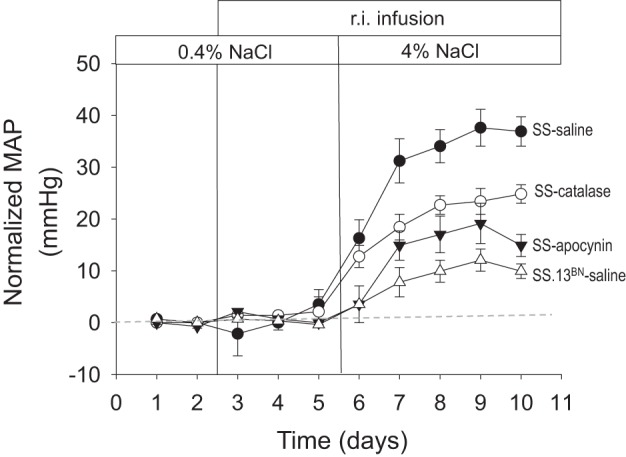
Summarized responses of MAP in to an increase in dietary salt. MAP has been normalized for each strain and treatment to the 0.4% salt control. All infusions were delivered directly into the renal interstitium (r.i.). Regraphed from results presented by Taylor et al. (185).
Fig. 10.
Fig. 10.
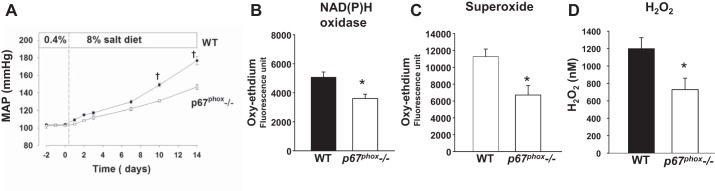
Salt-sensitive hypertension and renal oxidative stress are significantly attenuated in the p67phox−/− rats compared with their wild-type (WT) littermates. A: MAP of 5- to 6-wk-old rats on 0.4% salt and for 14 days after being fed an 8% salt diet. P < 0.001 significant difference between the 2 strains at that time point. B: outer medullary NAD(P)H oxidase activity on day 14 of 8% high salt. *P < 0.05 significant difference from WT. C: outer medullary superoxide on day 14 of 8% high salt. *P < 0.05 significant difference from WT. D: renal interstitial H2O2. *P < 0.05 significant difference from WT. Values are means ± SE. Regraphed from results by Feng et al. (51).
Fig. 11.
Fig. 11.
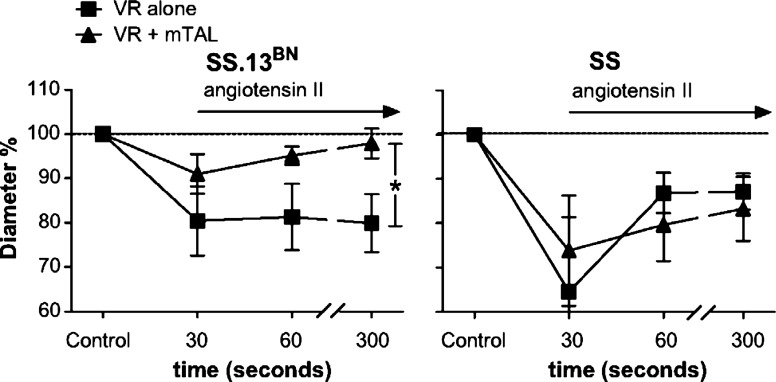
Vasoconstrictor responses to angiotensin II (1 μM) in SS and SS.13BN outer medullary vasa recta (VR) and VR with mTAL. The X-axis is time after administration of angiotensin II to the bath media; y-axis, percentage of change in VR inner luminal diameter relative to mean of initial VR diameter measurements at 51 min before administration of angiotensin II. Values are means ± SE. *P < 0.05 for interaction between strain and response to angiotensin II. Reprinted with permission from O'Connor and Cowley (141).
Fig. 12.
Fig. 12.
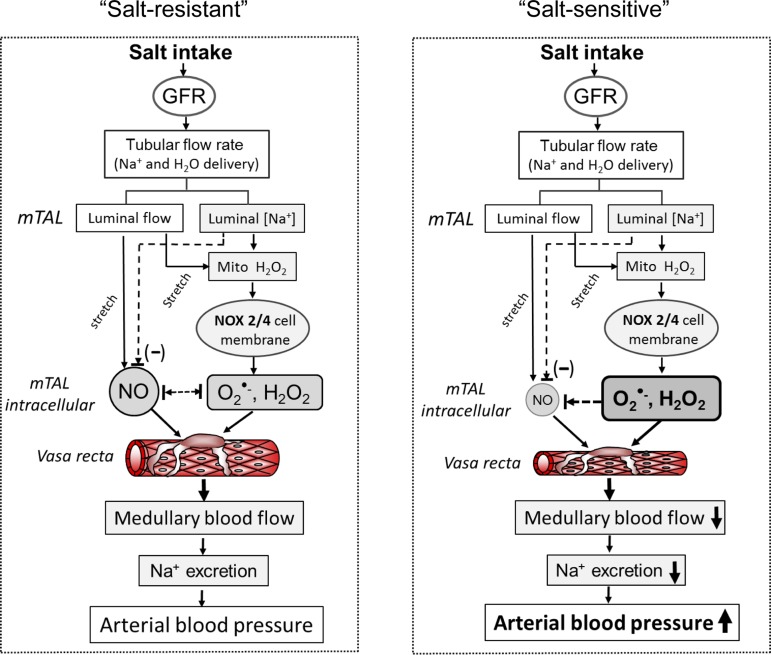
Summary overview.

References

    1. Abe M, O'Connor P, Kaldunski M, Liang M, Roman RJ, Cowley AW Jr. Effect of sodium delivery on superoxide and nitric oxide in the medullary thick ascending limb. Am J Physiol Renal Physiol 291: F350–F357, 2006. - PubMed
    1. Adler S, Huang H. Impaired regulation of renal oxygen consumption in spontaneously hypertensive rats. J Am Soc Nephrol 13: 1788–1794, 2002. - PubMed
    1. Ardanaz N, Pagano PJ. Hydrogen peroxide as a paracrine vascular mediator: regulation and signaling leading to dysfunction. Exp Biol Med (Maywood) 231: 237–251, 2006. - PubMed
    1. Asaba K, Tojo A, Onozato ML, Goto A, Quinn MT, Fujita T, Wilcox CS. Effects of NADPH oxidase inhibitor in diabetic nephropathy. Kidney Int 67: 1890–1888, 2005. - PubMed
    1. Aviv A, Hollenberg NK, Weder A. Urinary potassium excretion and sodium sensitivity in blacks. Hypertension 43: 707–713, 2004. - PubMed

Publication types

LinkOut - more resources