


Media use and communication inequalities in a public health emergency: a case study of 2009-2010 pandemic influenza A virus subtype H1N1
- PMID: 25355975
- PMCID: PMC4187307
- DOI: 10.1177/00333549141296S408
Media use and communication inequalities in a public health emergency: a case study of 2009-2010 pandemic influenza A virus subtype H1N1
Abstract
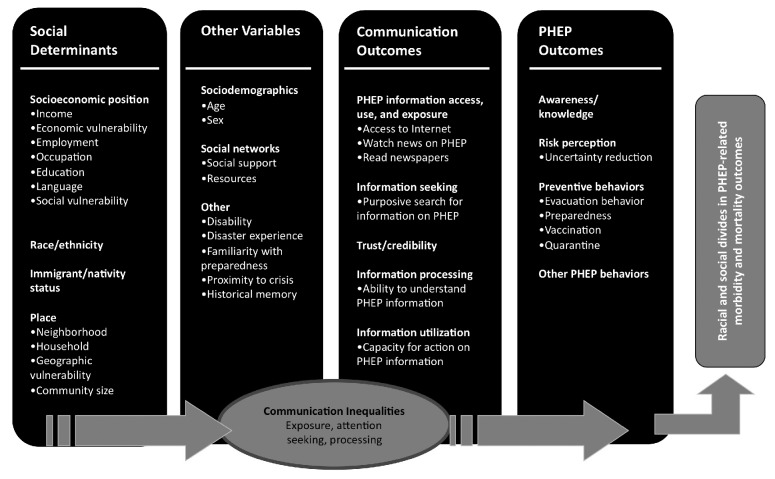
Objectives: Studies have shown that differences among individuals and social groups in accessing and using information on health and specific threats have an impact on their knowledge and behaviors. These differences, characterized as communication inequalities, may hamper the strength of a society's response to a public health emergency. Such inequalities not only make vulnerable populations subject to a disproportionate burden of adversity, but also compromise the public health system's efforts to prevent and respond to pandemic influenza outbreaks. We investigated the effect of socioeconomic status (SES) and health communication behaviors (including barriers) on people's knowledge and misconceptions about pandemic influenza A(H1N1) (pH1N1) and adoption of prevention behaviors.
Methods: The data for this study came from a survey of 1,569 respondents drawn from a nationally representative sample of American adults during pH1N1. We conducted logistic regression analyses when appropriate.
Results: We found that (1) SES has a significant association with barriers to information access and processing, levels of pH1N1-related knowledge, and misconceptions; (2) levels of pH1N1-related knowledge are associated positively with the adoption of recommended prevention measures and negatively with the adoption of incorrect protective behaviors; and (3) people with higher SES, higher news exposure, and higher levels of pH1N1-related knowledge, as well as those who actively seek information, are less likely than their counterparts to adopt incorrect prevention behaviors.
Conclusion: Strategic public health communication efforts in public health preparedness and during emergencies should take into account potential communication inequalities and develop campaigns that reach across different social groups.
Figures
References
-
- Chan M. Geneva: World Health Organization; 2009. Statement to the press: world now at the start of 2009 influenza pandemic.
-
- World Health Organization. Influenza A(H1N1)—update 46. 2009. [cited 2012 Nov 5]. Available from: URL: http://www.who.int/csr/don/2009_06_10a/en.
-
- Tafawa AO, Viswanath K, Kawachi I, Williams DR. Mass media exposure, social stratification, and tobacco consumption among Nigerian adults. Cancer Causes Control. 2012;23(Suppl 1):45–55. - PubMed
Publication types
MeSH terms
Grants and funding
LinkOut - more resources
Full Text Sources
Other Literature Sources
Medical
