


Halofuginone for fibrosis, regeneration and cancer in the gastrointestinal tract
- PMID: 25356039
- PMCID: PMC4209542
- DOI: 10.3748/wjg.v20.i40.14778
Halofuginone for fibrosis, regeneration and cancer in the gastrointestinal tract
Abstract
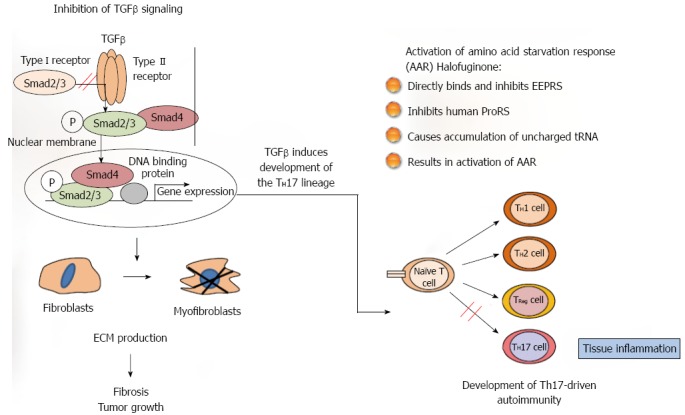
Organ fibrosis and architectural remodeling can severely disrupt tissue function, often with fatal consequences. Fibrosis is the end result of chronic inflammatory reactions induced by a variety of stimuli, and the key cellular mediator of fibrosis comprises the myofibroblasts which, when activated, serve as the primary collagen-producing cells. Complex links exist between fibrosis, regeneration and carcinogenesis, and the concept that all organs contain common tissue fibrosis pathways that could be potential therapeutic targets is an attractive one. Because of the major impact of fibrosis on human health there is an unmet need for safe and effective therapies that directly target fibrosis. Halofuginone inhibits tissue fibrosis and regeneration, and thereby affects the development of tumors in various tissues along the gastrointestinal tract. The high efficacy of halofuginone in reducing the fibrosis that affects tumor growth and tissue regeneration is probably due to its dual role in inhibiting the signaling pathway of transforming growth factor β, on the one hand, and inhibiting the development of Th17 cells, on the other hand. At present halofuginone is being evaluated in a clinical trial for other fibrotic indication, and any clinical success in that trial would allow the use of halofuginone, also for all other fibrotic indications, including those of the gastrointestinal tract.
Keywords: Cancer; Extracellular matrix; Myofibroblast; Stellate cell; Transforming growth factor β.
Figures
References
-
- Kramann R, DiRocco DP, Humphreys BD. Understanding the origin, activation and regulation of matrix-producing myofibroblasts for treatment of fibrotic disease. J Pathol. 2013;231:273–289. - PubMed
-
- Magness ST, Bataller R, Yang L, Brenner DA. A dual reporter gene transgenic mouse demonstrates heterogeneity in hepatic fibrogenic cell populations. Hepatology. 2004;40:1151–1159. - PubMed
-
- Verrecchia F, Mauviel A. Transforming growth factor-beta signaling through the Smad pathway: role in extracellular matrix gene expression and regulation. J Invest Dermatol. 2002;118:211–215. - PubMed
-
- Takaya Y, Tasaka H, Chiba T, Uwai K, Tanitsu M, Kim HS, Wataya Y, Miura M, Takeshita M, Oshima Y. New type of febrifugine analogues, bearing a quinolizidine moiety, show potent antimalarial activity against Plasmodium malaria parasite. J Med Chem. 1999;42:3163–3166. - PubMed
Publication types
MeSH terms
Substances
LinkOut - more resources
Full Text Sources
Other Literature Sources
Medical
