


Reducing versus stopping antiepileptic medications after temporal lobe surgery
- PMID: 25356390
- PMCID: PMC4212478
- DOI: 10.1002/acn3.35
Reducing versus stopping antiepileptic medications after temporal lobe surgery
Abstract
Objective: To study the safety of antiepileptic drug (AED) withdrawal after temporal lobe epilepsy (TLE) surgery.
Methods: We reviewed patients who underwent TLE surgery from 1995 to 2011, collecting data on doses, dates of AED initiation, reduction, and discontinuation. Predictors of seizure outcome were defined using Cox-proportional hazard modeling and adjusted for, while comparing longitudinal seizure-freedom in patients for whom AEDs were unchanged after resection as opposed to reduced or stopped.
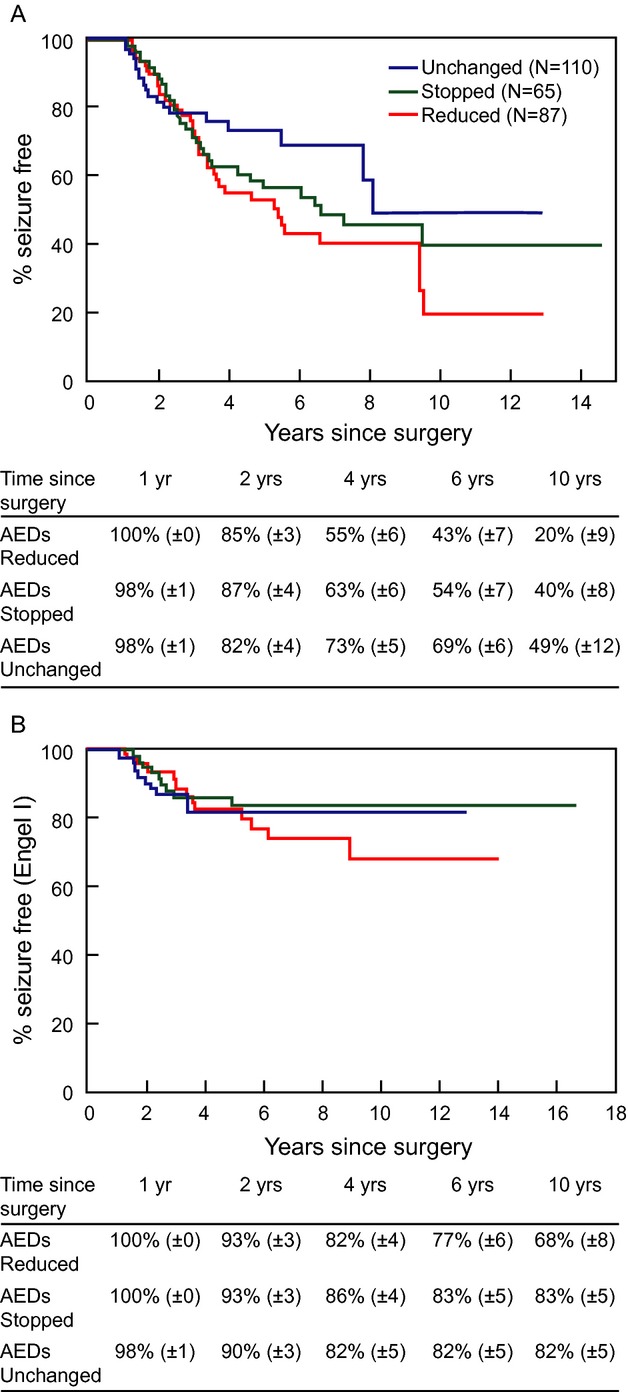
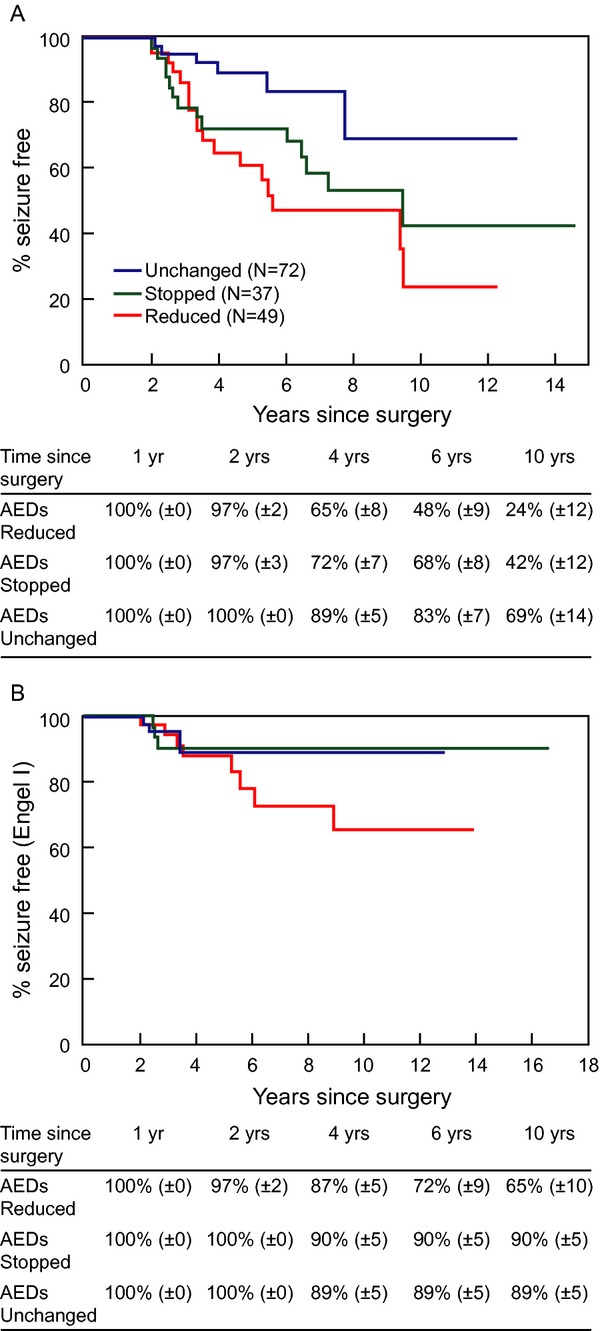
Results: A total of 609 patients (86% adults) were analyzed. Follow-up ranged from 0.5 to 16.7 years. Most (64%) had hippocampal sclerosis. Overall, 229 patients had remained on their same baseline AEDs, while 380 patients stopped (127 cases) or reduced (253 cases) their AEDs. Mean timing of the earliest AED change was shorter in patients with recurrent seizures (1.04 years) compared to those seizure-free at last follow-up (1.44 years; P-value 0.03). Whether AEDs were withdrawn 12 or 24 months after surgery, there was a 10-25% higher risk of breakthrough seizures within the subsequent 2 years. However, 70% of patients with seizure recurrence after AED discontinuation reachieved remission, as opposed to 50% of those whose seizures recurred while reducing AEDs (P = 0.0001). Long-term remission rates were similar in both AED discontinuation and "unchanged" groups (82% remission for AEDs withdrawn after 1 year and 90% for AEDs withdrawn after 2 years), while only 65% of patients whose recurrences started during AED reduction achieved a 2-year remission by last follow-up.
Interpretation: AED withdrawal increases the short-term risk of breakthrough seizures after TLE surgery, and may alter the long-term disease course in some patients.
Figures
References
-
- Cramer JA, Mintzer S, Wheless J, Mattson RH. Adverse effects of antiepileptic drugs: a brief overview of important issues. Expert Rev Neurother. 2010;10:885–891. - PubMed
-
- Hoppe C, Poepel A, Sassen R, Elger CE. Discontinuation of anticonvulsant medication after epilepsy surgery in children. Epilepsia. 2006;47:580–583. - PubMed
-
- Cole AJ, Wiebe S. Debate: should antiepileptic drugs be stopped after successful epilepsy surgery? Epilepsia. 2008;49(Suppl. 9):29–34. - PubMed
-
- Taylor DC, McMacKin D, Staunton H, et al. Patients’ aims for epilepsy surgery: desires beyond seizure freedom. Epilepsia. 2001;42:629–633. - PubMed
-
- Langfitt JT, Holloway RG, McDermott MP, et al. Health care costs decline after successful epilepsy surgery. Neurology. 2007;68:1290–1298. - PubMed
LinkOut - more resources
Full Text Sources
Other Literature Sources
