


Putting habit into practice, and practice into habit: a process evaluation and exploration of the acceptability of a habit-based dietary behaviour change intervention
- PMID: 25359007
- PMCID: PMC4216661
- DOI: 10.1186/s12966-014-0135-7
Putting habit into practice, and practice into habit: a process evaluation and exploration of the acceptability of a habit-based dietary behaviour change intervention
Abstract
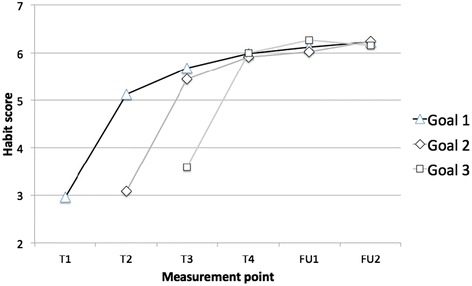
Background: Forming 'habit' - defined as a learned process that generates automatic responses to contextual cues - has been suggested as a mechanism for behaviour maintenance, but few studies have applied habit theory to behaviour change. This study used process evaluation data, taken from a randomised controlled trial of a healthy child-feeding intervention for parents previously shown to be effective, to explore the applicability to dietary behaviour change of predictions and recommendations drawn from habit theory. The intervention supported parents in pursuing child-feeding habit goals in three domains (giving fruit and vegetables, water, healthy snacks), over four fortnightly home visits. We explored whether (a) the habit-formation model was acceptable to participants, (b) better-specified habit-formation goals yielded greater habit gains, and (c) habit gains were sustained (d) even when subsequent, new habit goals were pursued.
Methods: Qualitative and quantitative data were taken from 57 parents randomised to the intervention arm, and so analyses presented here used a pre-post intervention design. Thematic analysis of post-intervention qualitative interviews evaluated acceptability, and self-reported habit goals were content-analysed. ANOVAs explored changes in habit strength, recorded at home visits and one- and two-month follow-ups, across time and goals.
Results: Participants understood and engaged positively with the habit-formation approach. Although many seemingly poorly-specified habit goals were set, goal characteristics had minimal impact on habit strength, which were achieved within two weeks for all behaviours (p's < .001), and were maintained or had increased further by the final follow-up.
Conclusions: The habit-formation model appears to be an acceptable and fruitful basis for dietary behaviour change.
Figures
References
-
- Lally P, Van Jaarsveld CHM, Potts HWW, Wardle J. How are habits formed: Modelling habit formation in the real world. Eur J Soc Psychol. 2010;40:998–1009. doi: 10.1002/ejsp.674. - DOI
Publication types
MeSH terms
Grants and funding
LinkOut - more resources
Full Text Sources
Other Literature Sources
