


Testing an online, dynamic consent portal for large population biobank research
- PMID: 25359560
- PMCID: PMC4289420
- DOI: 10.1159/000366128
Testing an online, dynamic consent portal for large population biobank research
Abstract
Background: Michigan's BioTrust for Health, a public health research biobank comprised of residual dried bloodspot (DBS) cards from newborn screening contains over 4 million samples collected without written consent. Participant-centric initiatives are IT tools that hold great promise to address the consent challenges in biobank research.
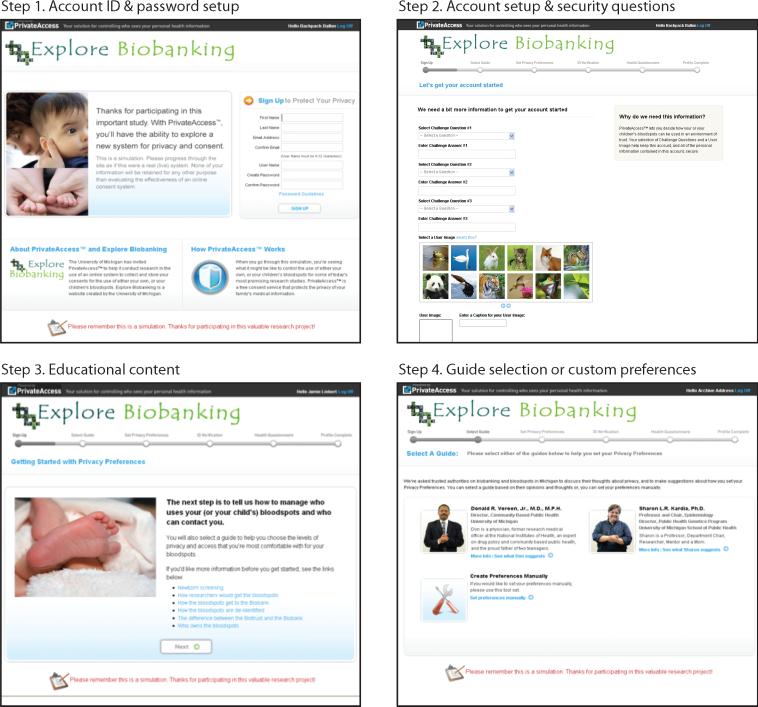
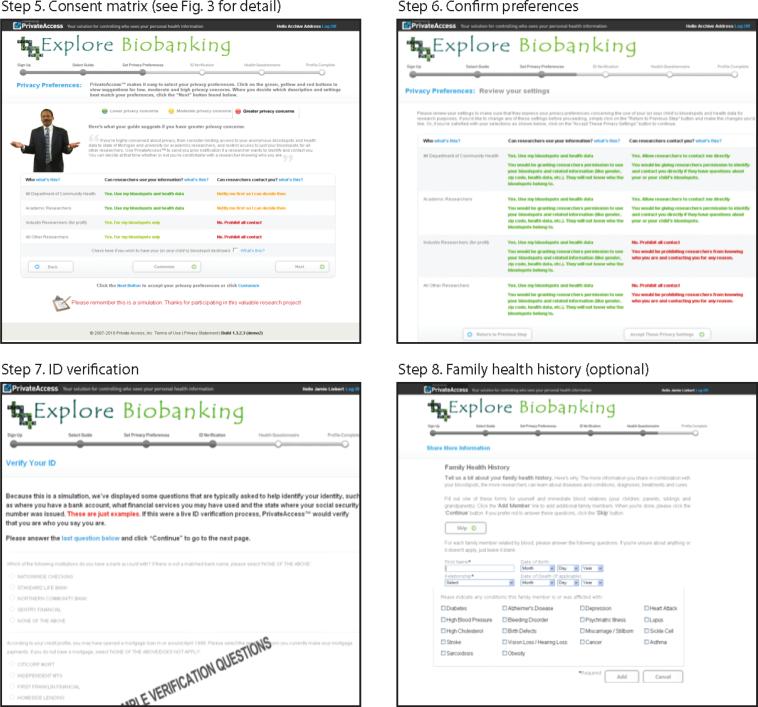
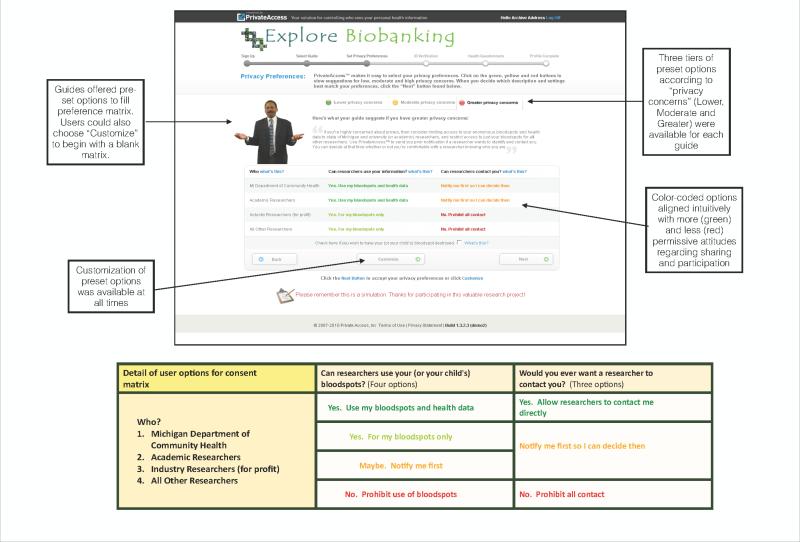
Methods: Working with Private Access Inc., a pioneer in patient-centric web solutions, we created and pilot tested a dynamic informed consent simulation, paired with an educational website, focusing on consent for research utilizing DBSs in Michigan's BioTrust for Health.
Results: Out of 187 pilot testers recruited in 2 groups, 137 completed the consent simulation and exit survey. Over 50% indicated their willingness to set up an account if the simulation went live and to recommend it to others. Participants raised concerns about the process of identity verification and appeared to have little experience with sharing health information online.
Conclusions: Applying online, dynamic approaches to address the consent challenges raised by biobanks with legacy sample collections should be explored, given the positive reaction to our pilot test and the strong preference for active consent. Balancing security and privacy with accessibility and ease of use will continue to be a challenge.
© 2014 S. Karger AG, Basel.
Figures
References
-
- Tarini BA, Goldenberg A, Singer D, Clark SJ, Butchart A, Davis MM. Not without my permission: Parents' willingness to permit use of newborn screening samples for research. Public Health Genomics. 2010;13(3):125–30. doi:10.1159/000228724. - PubMed
-
- Carmichael M. Newborn screening: A spot of trouble. Nature. 2011;475(7355):156–158. doi:10.1038/475156a. - PubMed
-
- Caplan A. What No One Knows Cannot Hurt You: The Limits of Informed Consent in the Emerging World of Biobanking. In: Solbakk JH, Holm S, Hofmann B, editors. The Ethics of Research Biobanking. Springer; London: 2009. pp. 25–32.
Publication types
MeSH terms
Grants and funding
LinkOut - more resources
Full Text Sources
Other Literature Sources
