. 2014 Nov 3;9(11):e111726.
doi: 10.1371/journal.pone.0111726. eCollection 2014.

High-throughput sequencing of human immunoglobulin variable regions with subtype identification

Affiliations

High-throughput sequencing of human immunoglobulin variable regions with subtype identification

Merle Schanz et al. PLoS One. .

Abstract

The humoral immune response plays a critical role in controlling infection, and the rapid adaptation to a broad range of pathogens depends on a highly diverse antibody repertoire. The advent of high-throughput sequencing technologies in the past decade has enabled insights into this immense diversity. However, not only the variable, but also the constant region of antibodies determines their in vivo activity. Antibody isotypes differ in effector functions and are thought to play a defining role in elicitation of immune responses, both in natural infection and in vaccination. We have developed an Illumina MiSeq high-throughput sequencing protocol that allows determination of the human IgG subtype alongside sequencing full-length antibody variable heavy chain regions. We thereby took advantage of the Illumina procedure containing two additional short reads as identifiers. By performing paired-end sequencing of the variable regions and customizing one of the identifier sequences to distinguish IgG subtypes, IgG transcripts with linked information of variable regions and IgG subtype can be retrieved. We applied our new method to the analysis of the IgG variable region repertoire from PBMC of an HIV-1 infected individual confirmed to have serum antibody reactivity to the Membrane Proximal External Region (MPER) of gp41. We found that IgG3 subtype frequencies in the memory B cell compartment increased after halted treatment and coincided with increased plasma antibody reactivity against the MPER domain. The sequencing strategy we developed is not restricted to analysis of IgG. It can be adopted for any Ig subtyping and beyond that for any research question where phasing of distant regions on the same amplicon is needed.


Conflict of interest statement

Competing Interests: The authors have declared that no competing interests exist.

Figures

Figure 1
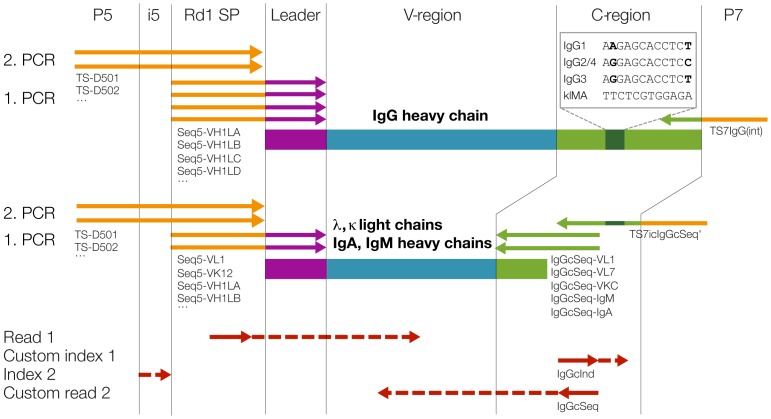
Figure 1. Amplification of Ig variable regions and high-throughput sequencing with subtype information.
Antibody heavy and light chain genes are shown schematically with leader regions in purple, variable (V-) regions in blue and constant (C-) regions in green. Ig heavy, kappa and lambda light chain genes were amplified in separate reactions with family specific primers (represented by arrows) binding to leader and constant region. Primer names are indicated exemplarily below the arrows and a complete list of all primers used can be found in Table 1. Sequencing adaptors essential for the Illumina platform (flow cell binding sites P5 and P7, the index 2 region i5 and the read 1 sequencing primer binding site Rd1 SP, illustrated in orange) were added by primer extension during a second PCR reaction, except for the IgG reverse primer TS7IgG(int) which contained an adaptor and was used for both amplifications. Purified libraries were then sequenced using standard Illumina MiSeq primers for read 1 and index 2, and customized primers for index 1 and read 2 (sequencing primers are shown in red and regions sequenced with red dashed arrows).
Figure 2
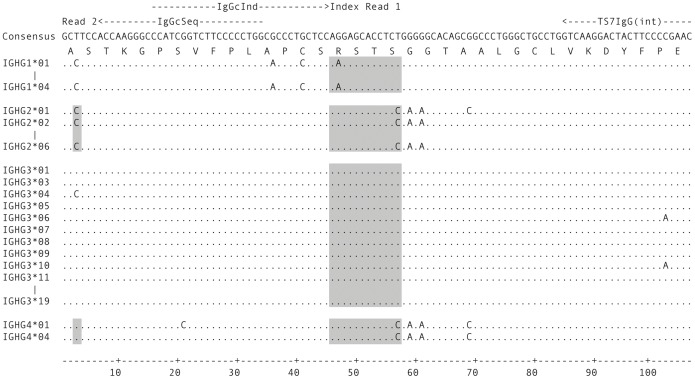
Figure 2. Determinants of IgG subtype in the constant region.
IgG1 to IgG4 CH1 regions were obtained from IMGT/GENE-DB . Only the first 107 nucleotides of the constant region are shown. Some alleles identical in this section have been omitted. Binding sites of the IgG reverse primer (TS7IgG(int)) used for library preparation and the custom sequencing and indexing primers (IgGcSeq and IgGcInd, respectively) are represented by dashed arrows on top. The full index 1 and the start of read 2 are indicated. Regions used for subtype assignment are shaded.
Figure 3
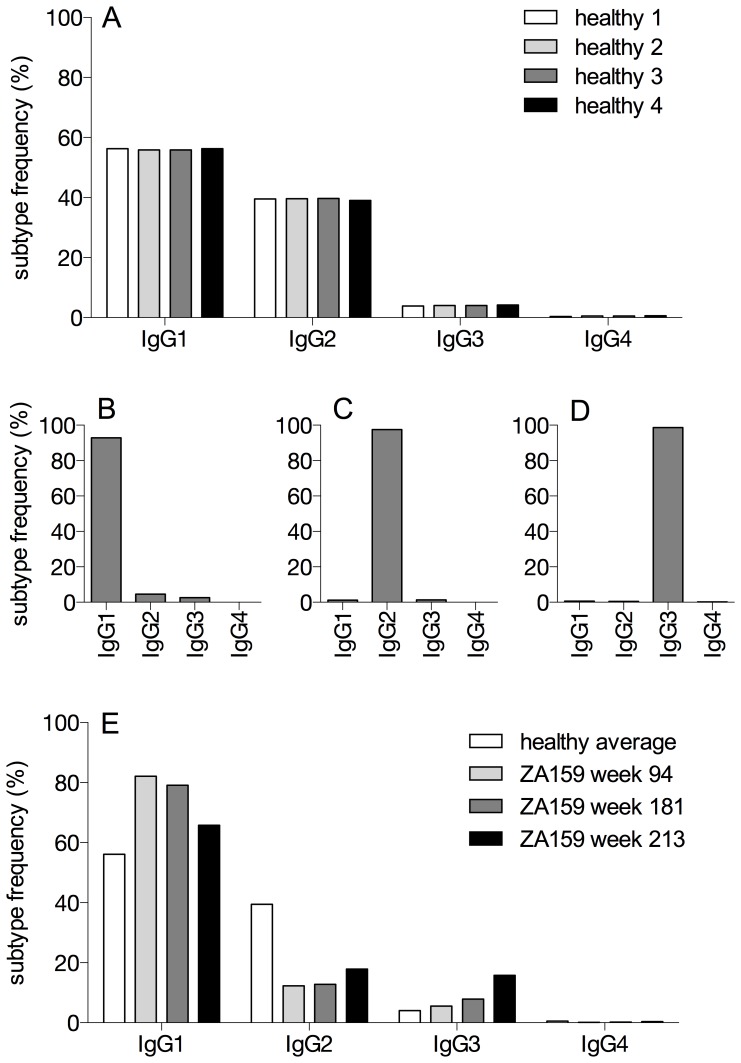
Figure 3. IgG subtypes are reliably identified.
A) IgG subtype frequencies of four preparations of PBMC from one healthy donor were determined by sequencing. Different PCR protocols (prep 1 to prep 4) as described in the methods section have been applied to amplify antibody transcripts. Read numbers for the different preparations are listed in Table 2. B–D) PBMC of a healthy control were sorted by FACS into individual IgG subtype populations and sequenced. 2′221′006, 2′044′153 and 1′889′353 reads were obtained for sorted IgG1 positive cells (B), IgG2 positive cells (C) and IgG3 positive cells (D), respectively, and assigned to the IgG subtypes. E) IgG subtype frequencies of time points week 94, week 181 and week 213 (Table 2, Table S1) for patient ZA159. The average frequencies from the healthy control preparations 1–4 are shown as a comparison. Subtype frequencies in all panels were calculated as the percentage of all completely indexed and full-length variable region rearrangements.

References

    1. Mathonet P, Ullman CG (2013) The Application of Next Generation Sequencing to the Understanding of Antibody Repertoires. Front Immunol 4: 265. - PMC - PubMed
    1. Georgiou G, Ippolito GC, Beausang J, Busse CE, Wardemann H, et al. (2014) The promise and challenge of high-throughput sequencing of the antibody repertoire. Nat Biotechnol 32: 158–168. - PMC - PubMed
    1. Liao HX, Lynch R, Zhou T, Gao F, Alam SM, et al. (2013) Co-evolution of a broadly neutralizing HIV-1 antibody and founder virus. Nature 496: 469–476. - PMC - PubMed
    1. Zhu J, O'Dell S, Ofek G, Pancera M, Wu X, et al. (2012) Somatic Populations of PGT135-137 HIV-1-Neutralizing Antibodies Identified by 454 Pyrosequencing and Bioinformatics. Front Microbiol 3: 315. - PMC - PubMed
    1. Zhu J, Ofek G, Yang Y, Zhang B, Louder MK, et al. (2013) Mining the antibodyome for HIV-1-neutralizing antibodies with next-generation sequencing and phylogenetic pairing of heavy/light chains. Proc Natl Acad Sci U S A. - PMC - PubMed

Publication types

Substances