. 2014 Nov 3;9(11):e111680.
doi: 10.1371/journal.pone.0111680. eCollection 2014.

Regulation of the ahpC gene encoding alkyl hydroperoxide reductase in Mycobacterium smegmatis

Affiliations

Regulation of the ahpC gene encoding alkyl hydroperoxide reductase in Mycobacterium smegmatis

Ha-Na Lee et al. PLoS One. .

Abstract

The ahpC (MSMEG_4891) gene encodes alkyl hydroperoxide reductase C in Mycobacterium smegmatis mc2155 and its expression is induced under oxidative stress conditions. Two well-defined inverted repeat sequences (IR1 and IR2) were identified in the upstream region of ahpC. Using a crp (cAMP receptor protein: MSMEG_6189) mutant and in vitro DNA-binding assay, it was demonstrated that the IR1 sequence serves as a Crp-binding site and that Crp functions as an activator in the regulation of ahpC expression. The expression level of ahpC was shown to be proportional to intracellular cAMP levels. Intracellular levels of cAMP were increased in M. smegmatis, when it was treated with oxidative stress inducers. The IR2 sequence is very similar to the known consensus sequence of FurA-binding sites and involved in the negative regulation of ahpC expression. Taken together, these results suggest that the induction of ahpC expression under oxidative stress conditions probably results from a combinatory effect of both inactivation of FurA by oxidative stress and activation of Crp in response to increased levels of cAMP.


Conflict of interest statement

Competing Interests: The authors have declared that no competing interests exist.

Figures

Figure 1
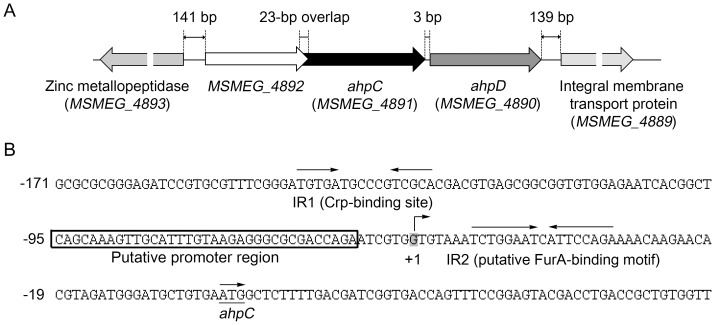
Figure 1. Genetic organization of the ahpC locus in M. smegmatis mc2155 (A) and the upstream sequence of ahpC encompassing its promoter region and the putative cis-acting elements involved in the regulation of ahpC expression (B).
The lengths of the overlapping region between MSMEG_4892 and ahpC and the intergenic regions are given as the nucleotide numbers above the schematic diagram. The two inverted repeats, IR1 (Crp-binding site) and IR2 (putative FurA-binding site), are marked by the two head-facing arrows above their sequences. The putative promoter region of ahpC is boxed. The nucleotide reported to be the transcriptional start point (+1) of ahpC is shaded in gray . The start codon of ahpC is underlined and the arrow above it indicates the transcriptional direction. The numbers on the left of the sequences indicate the positions of the leftmost nucleotides relative to the ahpC gene.
Figure 2
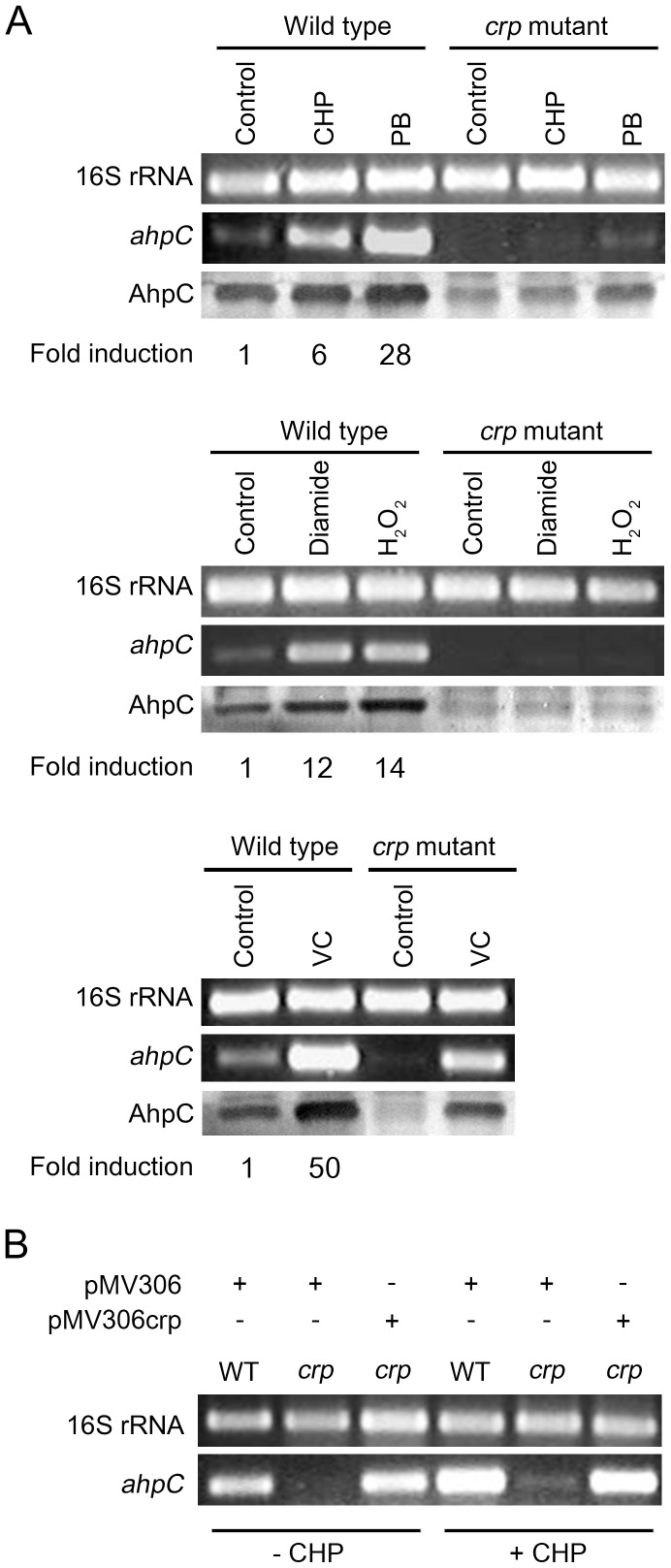
Figure 2. Expression of ahpC in the wild-type and crp mutant strains of M. smegmatis in response to various oxidative stresses and complementation of the crp mutant.
(A) Transcript levels of ahpC were determined by RT-PCR and qRT-PCR. RT-PCR for 16S ribosomal RNA was performed to ensure that the same amounts of total RNA were employed for RT-PCR. Fold induction of ahpC expression determined by qRT-PCR indicates levels of ahpC mRNA in the strains treated with the oxidative-stress inducers relative to those in the untreated strains (control). Protein levels of AhpC were detected by means of Western blotting with polyclonal AhpC antibodies, and the results are presented below the RT-PCR results. Abbreviations: CHP, cumene hydroperoxide; PB, plumbagin; VC, sodium ascorbate. (B) The crp mutant (crp) was complemented by introducing pMV306crp. The wild-type (WT) and crp mutant strains harboring the pMV306 empty vector were used as controls. RT-PCR was performed using total RNAs isolated from the strains treated with CHP (+CHP) and untreated strains (−CHP).
Figure 3
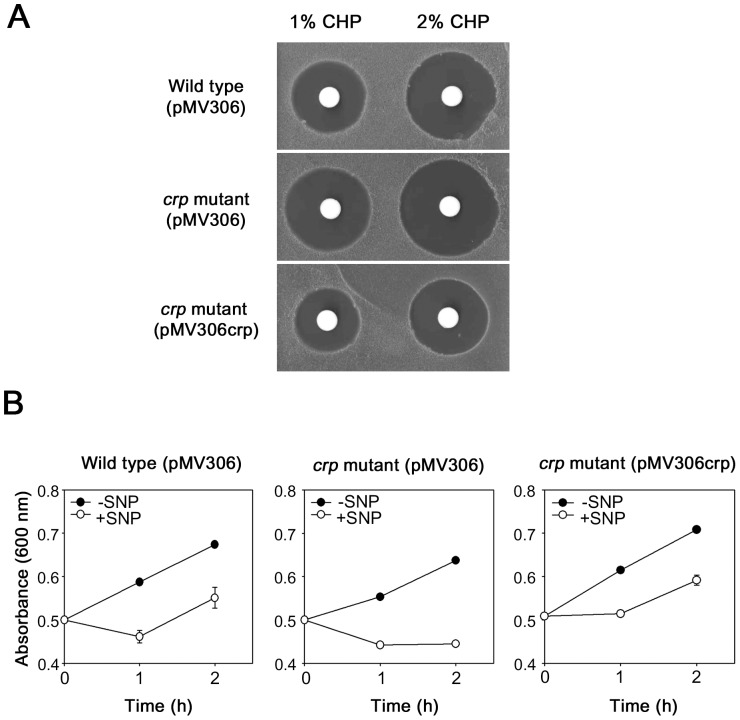
Figure 3. Susceptibility of the wild-type and crp mutant strains of M. smegmatis to CHP and NO.
(A) Zone inhibition assay. The wild-type and crp mutant strains harboring pMV306 as well as the crp mutant complemented with pMV306crp were used. (B) Effect of NO treatment on growth of the wild-type and crp mutant strains of M. smegmatis. When the strains were grown to an OD600 of 0.5, SNP was added to the cultures with a final concentration of 10 mM and the cultures were further grown under the illumination of light (+SNP). As controls the strains without SNP treatment were included in the experiment (−SNP). The absorbance of the cultures was measured at 600 nm at intervals of 1 h. Growth of the cultures was monitored for only 2 h due to instability of SNP. The error bars indicate the deviations from the averages of two independent measurements.
Figure 4
Figure 4. Effect of mutations in the IR1 sequence on Crp binding and ahpC expression.
(A) Base substitution mutations of the conserved nucleotides within IR1. The consensus sequence of the Crp-binding sites is given at the bottom line. The mutated nucleotides are marked with the asterisks above the sequences. The numbers above the sequences indicate the positions of the mutated nucleotides relative to ahpC. (B) The 150-bp DNA fragments (9.3 ng, 100 fmol) containing the wild-type or mutated IR1 sequence (mutation 1 or 2) were incubated with various amounts of purified Crp in the presence of 100 µM cAMP. The amounts of Crp used are given above the lanes. The Crp-DNA reaction mixtures were subject to native PAGE. After electrophoresis, gels were stained with SYBR green EMSA gel staining solution. (C) Effect of the mutations within the IR1 sequence on the promoter activity of ahpC. The ahpC promoter activity was measured by determining β-galactosidase activity. M. smegmatis wild-type strains harboring pNCahpC, pNCM1, and pNCM2 were grown to an OD600 of 0.45 to 0.5 and treated with CHP or DMSO (the solvent for CHP stock solution: control). The cultures were further grown for 1 h. Cell-free crude extracts were used to measure β-galactosidase activity. All values are the means of two independent experiments. The error bars indicate the deviations from the means.
Figure 5
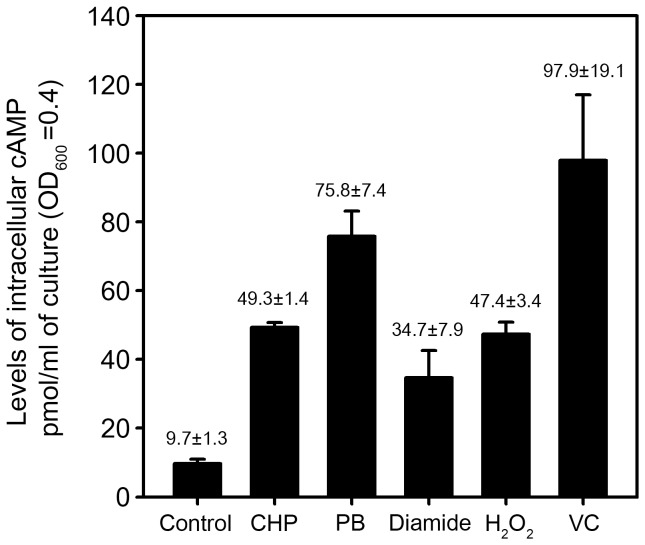
Figure 5. Determination of intracellular cAMP levels.
The wild-type strain of M. smegmatis was grown to an OD600 of 0.45 to 0.5 and treated with various oxidative stress inducers. The untreated wild-type strain was included in the experiment as a control. Levels of intracellular cAMP were determined by using the DetectX Direct Cyclic AMP Enzyme Immunoassay kit. All values are the means of two independent experiments. The error bars indicate the deviations from the means.
Figure 6
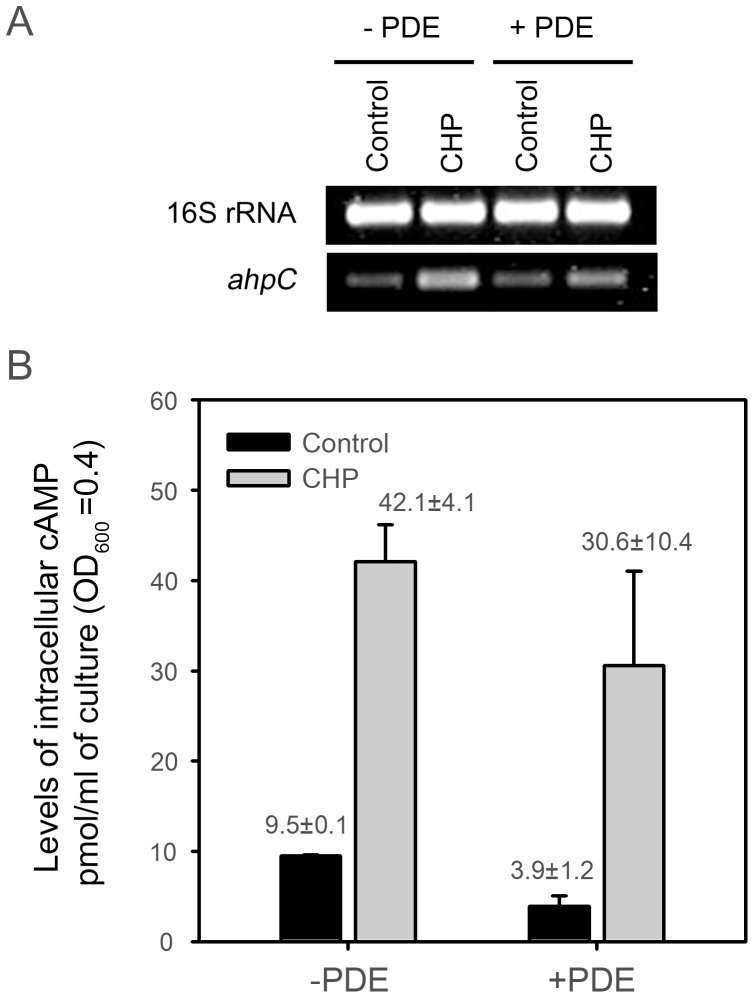
Figure 6. Effect of cAMP phosphodiesterase (PDE) overexpression on ahpC expression in M. smegmatis.
(A) Expression levels of ahpC were determined by means of RT-PCR. For induction of rv0805 encoding PDE of M. tuberculosis, the wild-type strain of M. smegmatis with pMHpdeHis (+PDE) was grown to an OD600 of 0.45 to 0.5 in the presence of 0.2% acetamide. The cultures were treated with CHP or DMSO (control) and further grown for 1 h to induce ahpC expression. The wild-type strain harboring pMH201 (−PDE) was included in the experiment. (B) Intracellular cAMP levels in the strains described in the panel A were determined. All values are the means of three independent experiments. The error bars indicate the standard deviations.
Figure 7
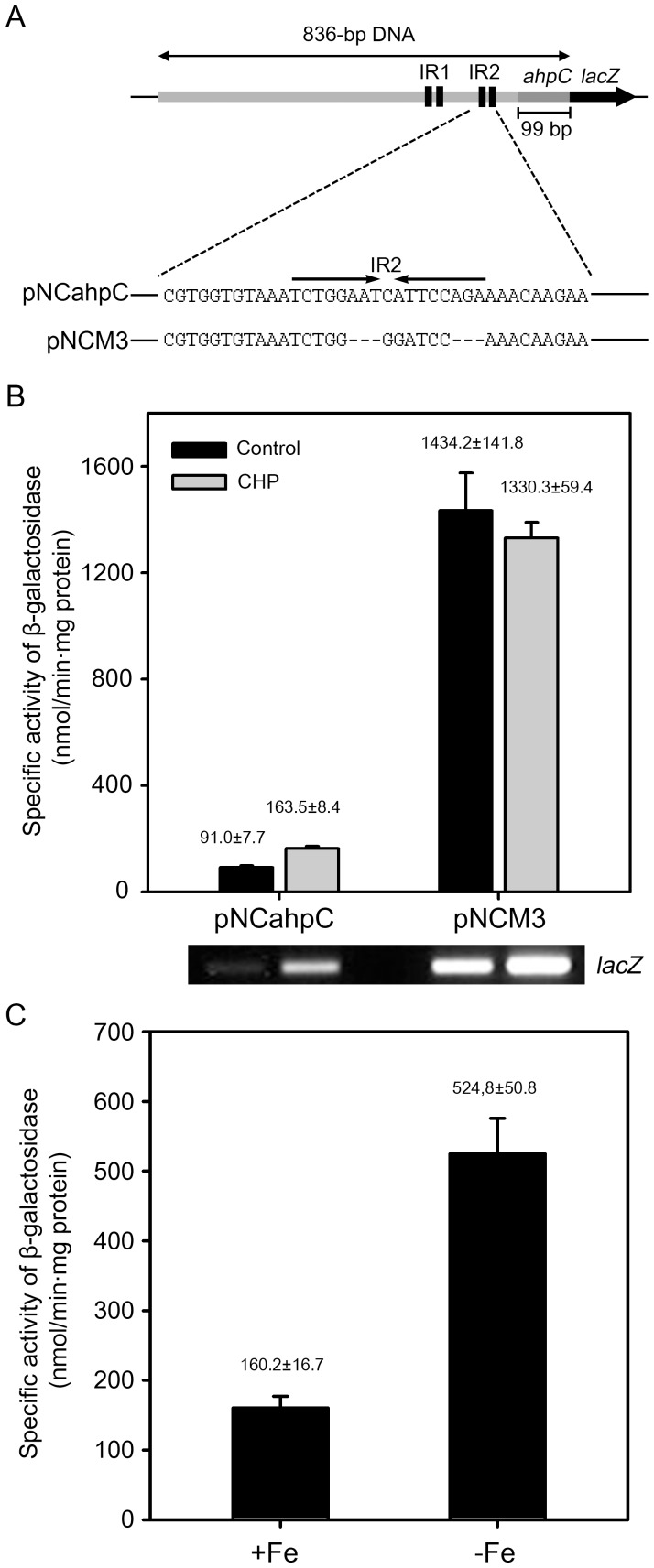
Figure 7. Effect of deletion of the IR2 sequence on ahpC expression and derepression of ahpC expression under iron-depleting conditions.
(A) Schematic diagram of pNCM3. The lacZ transcriptional fusion plasmid pNCM3 carries the same DNA fragment as pNCahpC except for the substitution of a part of IR2 with the BamHI recognition sequence. (B) M. smegmatis wild-type strains harboring pNCahpC and pNCM3 were grown to an OD600 of 0.45 to 0.5, and treated with CHP or DMSO (control). The cultures were further grown for 1 h. Cell-free crude extracts were used to measure β-galactosidase activity. Expression levels of lacZ in the wild-type strains carrying pNCahpC and pNCM3 were also determined by RT-PCR and the result is presented below the graph. All values are the means of two independent experiments. The error bars indicate the deviations from the means. (C) The wild-type strain of M. smegmatis harboring pNCahpC was grown in 7H9 medium to an OD600 of 1.5 to 2.0. Pre-cultured cells were washed twice with the original volume of MOPS medium supplemented with 0.02% Tween 80 and resuspended to the same volume of MOPS medium. 1 ml of the preculture was inoculated to 100 ml of MOPS medium supplemented with either 50 µM FeCl3 (+Fe) or 100 µM 2,2′-Dipyridyl (iron chelator) (−Fe). The strain was grown to an OD600 of 0.45 to 0.5 and harvested. Expression levels of ahpC were determined by performing β-galactosidase assay. The error bars indicate the deviations from the means of the two independent experiments.
Figure 8
Figure 8. Genetic organization of the furA1, furA2, and furA3 loci in M. smegmatis mc2155 (A) and multiple alignment of the FurA homologs (B).
Multiple alignment was generated by using Clustal W. The position of the helix-turn-helix motif was extrapolated from the determined three-dimensional structure of FurA and indicated with two cylinders. Identical and conservatively substituted residues are indicated by asterisks and colons, respectively. The amino acid residues, which comprise the helix-turn-helix motif and are conserved in two and three FurA homologs, are highlighted in black.

References

    1. Wood ZA, Schroder E, Robin Harris J, Poole LB (2003) Structure, mechanism and regulation of peroxiredoxins. Trends Biochem Sci 28: 32–40. - PubMed
    1. Hillas PJ, del Alba FS, Oyarzabal J, Wilks A, Ortiz De Montellano PR (2000) The AhpC and AhpD antioxidant defense system of Mycobacterium tuberculosis . J Biol Chem 275: 18801–18809. - PubMed
    1. Bryk R, Griffin P, Nathan C (2000) Peroxynitrite reductase activity of bacterial peroxiredoxins. Nature 407: 211–215. - PubMed
    1. Chen L, Xie QW, Nathan C (1998) Alkyl hydroperoxide reductase subunit C (AhpC) protects bacterial and human cells against reactive nitrogen intermediates. Mol Cell 1: 795–805. - PubMed
    1. Master SS, Springer B, Sander P, Boettger EC, Deretic V, et al. (2002) Oxidative stress response genes in Mycobacterium tuberculosis: role of ahpC in resistance to peroxynitrite and stage-specific survival in macrophages. Microbiology 148: 3139–3144. - PubMed

Publication types

MeSH terms

LinkOut - more resources