


Neonatal adaptation in infants prenatally exposed to antidepressants--clinical monitoring using Neonatal Abstinence Score
- PMID: 25365553
- PMCID: PMC4218720
- DOI: 10.1371/journal.pone.0111327
Neonatal adaptation in infants prenatally exposed to antidepressants--clinical monitoring using Neonatal Abstinence Score
Abstract
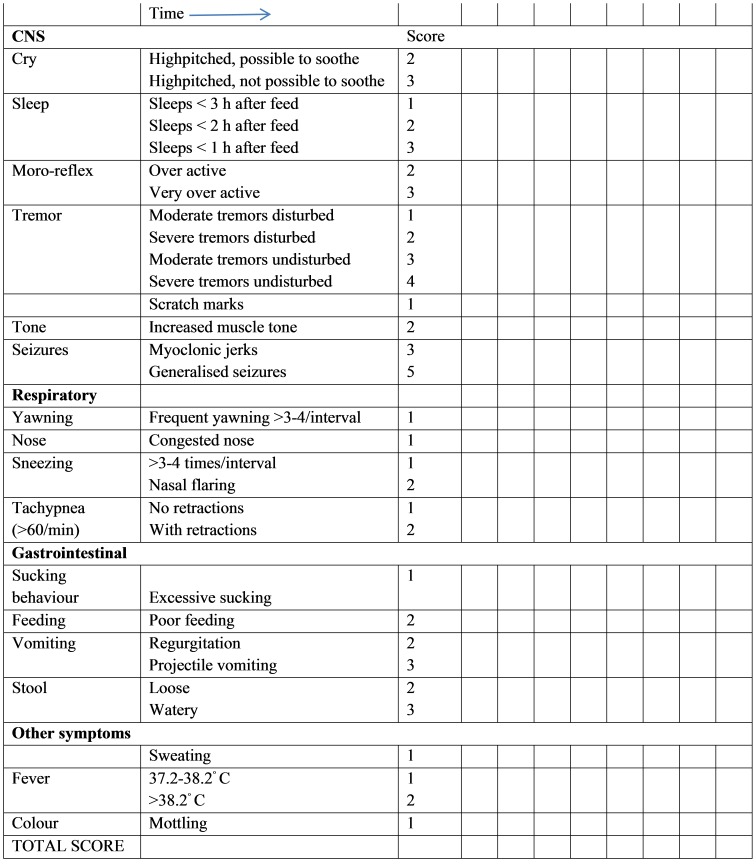
Background: Intrauterine exposure to antidepressants may lead to neonatal symptoms from the central nervous system, respiratory system and gastrointestinal system. Finnegan score (Neonatal Abstinence Score, NAS) has routinely been used to assess infants exposed to antidepressants in utero.
Aim: The purpose was to study neonatal maladaptation syndrome in infants exposed to selective serotonin reuptake inhibitors (SSRI) or serotonin-norepinephrine reuptake inhibitors (SNRI) in utero.
Method: Retrospective cohort study of women using antidepressants during pregnancy and their infants. Patients were identified from the electronic health record system at Karolinska University Hospital Huddinge containing pre-, peri- and postnatal information. Information was collected on maternal and infant health, social factors and pregnancy. NAS sheets were scrutinized.
Results: 220 women with reported 3rd trimester exposure to SSRIs or SNRIs and who gave birth between January 2007 and June 2009 were included. Seventy seven women (35%) used citalopram, 76 used (35%) sertraline, 34 (15%) fluoxetine and 33 (15%) other SSRI/SNRI. Twenty-nine infants (13%) were admitted to the neonatal ward, 19 were born prematurely. NAS was analyzed in 205 patients. Severe abstinence was defined as eight points or higher on at least two occasions (on a scale with maximum 40 points), mild abstinence as 4 points or higher on at least two occasions. Seven infants expressed signs of severe abstinence and 46 (22%) had mild abstinence symptoms. Hypoglycemia (plasma glucose <2.6 mmol/L) was found in 42 infants (19%).
Conclusion: Severe abstinence in infants prenatally exposed to antidepressants was found to be rare (3%) in this study population, a slightly lower prevalence than reported in previous studies. Neonatal hypoglycemia in infants prenatally exposed to antidepressant may however be more common than previously described.
Conflict of interest statement
Figures
References
-
- Lennestal R, Kallen B (2007) Delivery outcome in relation to maternal use of some recently introduced antidepressants. J Clin Psychopharmacol 27: 607–613. - PubMed
-
- Reis M, Kallen B (2010) Delivery outcome after maternal use of antidepressant drugs in pregnancy: an update using Swedish data. Psychol Med 40: 1723–1733. - PubMed
Publication types
MeSH terms
Substances
LinkOut - more resources
Full Text Sources
Other Literature Sources
Medical
