


Large-diameter metal-on-metal total hip arthroplasty: dislocation infrequent but survivorship poor
- PMID: 25367107
- PMCID: PMC4294925
- DOI: 10.1007/s11999-014-3976-0
Large-diameter metal-on-metal total hip arthroplasty: dislocation infrequent but survivorship poor
Abstract
Background: Use of large-diameter metal-on-metal (MoM) articulations in THA increased, at least in part, because of the possibility of achieving improved joint stability and excellent wear characteristics in vitro. However, there have been subsequent concerning reports with adverse reactions to metal debris (ARMD), pseudotumors, and systemic complications related to metal ions.
Questions/purposes: The purpose of this study was to determine at a minimum of 2 years' followup (1) the proportion of patients who experienced a dislocation; (2) the short-term survivorship obtained with these implants; (3) the causes of failure and the proportion of patients who developed ARMD; and (4) whether there were any identifiable risk factors for revision.
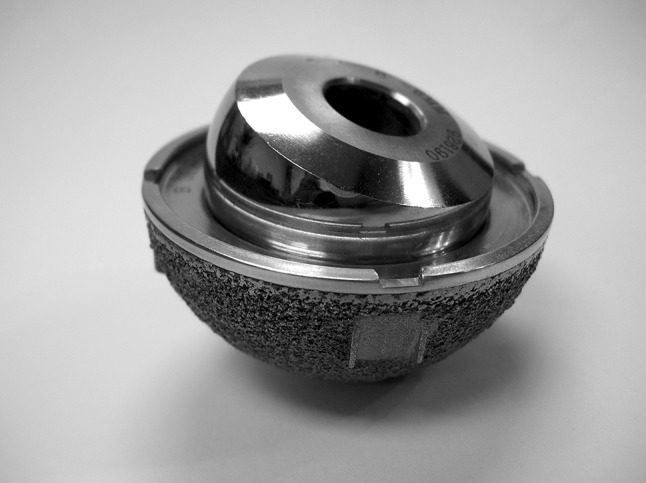
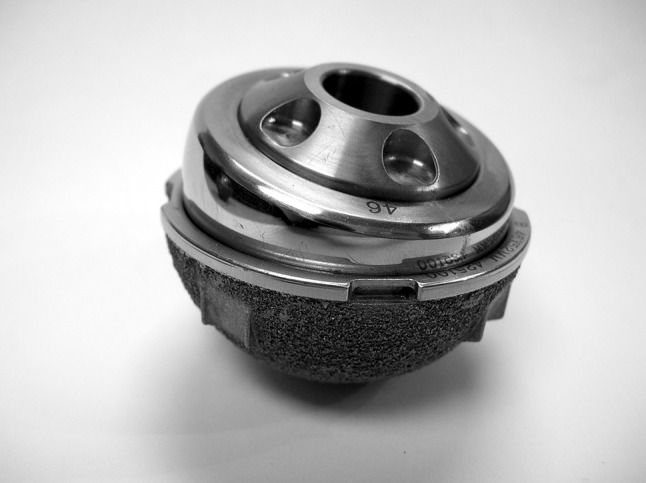
Methods: We reviewed the results of 1235 patients who underwent 1440 large-diameter MoM primary THAs at our institution using two acetabular devices from a single manufacturer with minimum 2-year followup. Large-diameter MoM devices were used in 48% (1695 of 3567) of primary THAs during the study period. We generally used these implants in younger, more active, higher-demand patients, in patients considered at higher risk of instability, and in patients with adequate bone stock to achieve stable fixation without use of screws. Clinical records and radiographs were reviewed to determine the incidence and etiology of revision. Patients whose hips were revised were compared with those not revised to identify risk factors; Kaplan-Meier survivorship analysis was performed as was multivariate analysis to account for potential confounding variables when evaluating risk factors. Minimum followup was 2 years (average, 7 years; range, 2-12 years); complete followup was available in 85% of hips (1440 of 1695).
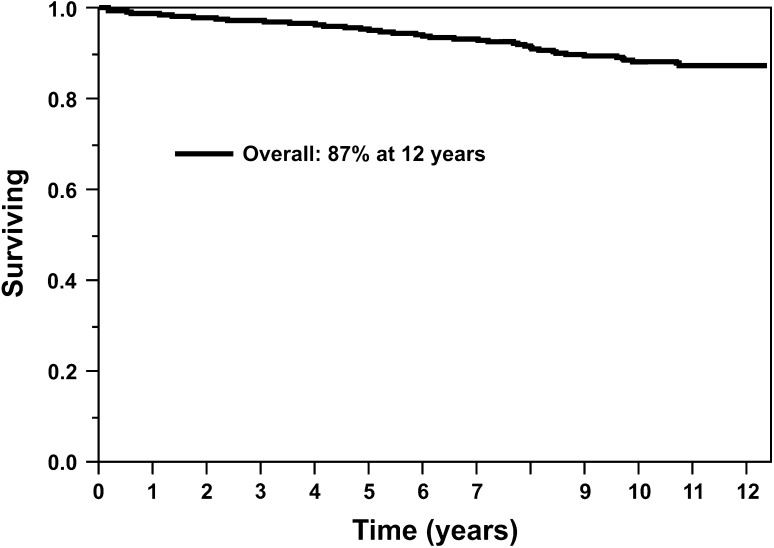
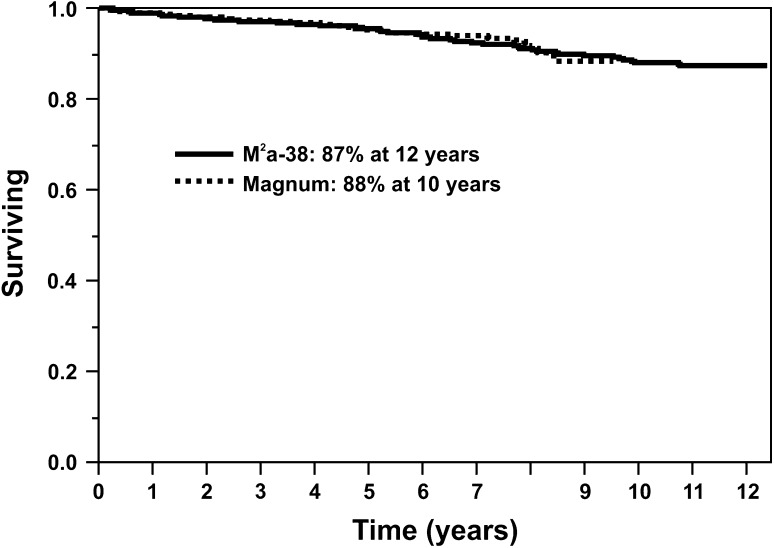
Results: Dislocation occurred in one hip overall (<1%; one of 1440). Kaplan-Meier analysis revealed survival free of component revision was 87% at 12 years (95% confidence interval, 84%-90%). The two most common indications for revision were ARMD (48%; 47 of 108 hips revised) and loosening or failure of ingrowth (31%; 34 of 108). Risk factors for component revision were younger age at surgery (relative risk [RR] 0.98 per each increased year; p=0.02), higher cup angle of inclination (RR 1.03 per each increased degree; p=0.04), and female sex (RR 1.67; p=0.03).
Conclusions: Large-diameter MoM THAs are associated with a very low dislocation rate, but failure secondary to ARMD and loosening or lack of ingrowth occur frequently. Patients with MoM THA should be encouraged to return for clinical and radiographic followup, and clinicians should maintain a low threshold to perform a systematic evaluation. Early diagnosis and appropriate treatment are recommended to prevent the damaging effects of advanced ARMD.
Level of evidence: Level IV, Therapeutic study.
Figures
References
-
- Althuizen MN, V Hooff ML, v d Berg-v Erp SH, V Limbeek J, Nijhof MW. Early failures in large head metal-on-metal total hip arthroplasty. Hip Int. 2012;22:641–647. - PubMed
-
- American Association of Orthopaedic Surgeons: metal-on-metal hip replacement. Orthopaedic surgeons provide awareness and information to patients, medical community at-large. October 29, 2010. Available at: www6.aaos.org/news/pemr/releases/release.cfm?releasenum=934. Accessed November 8, 2010.
-
- Amstutz HC, Thomas BJ, Jinnah R, Kim W, Grogan T, Yale C. Treatment of primary osteoarthritis of the hip. A comparison of total joint and surface replacement arthroplasty. J Bone Joint Surg Am. 1984;66:228–241. - PubMed
-
- Australian Orthopaedic Association National Joint Replacement Registry. Metal on metal total conventional hip arthroplasty, Supplementary Report 2013. Available at: https://aoanjrr.dmac.adelaide.edu.au/documents/10180/127369/Metal%20on%2.... Accessed February 18, 2014.
-
- Barrett WP, Kindsfater KA, Lesko JP. Large-diameter modular metal-on-metal total hip arthroplasty: incidence of revision for adverse reaction to metallic debris. J Arthroplasty. 2012;27(976–983):e1. - PubMed
Publication types
MeSH terms
LinkOut - more resources
Full Text Sources
Medical
Research Materials
