


Esophageal acid stimulation alters insular cortex functional connectivity in gastroesophageal reflux disease
- PMID: 25367277
- PMCID: PMC4308507
- DOI: 10.1111/nmo.12464
Esophageal acid stimulation alters insular cortex functional connectivity in gastroesophageal reflux disease
Abstract
Background: The insula plays a significant role in the interoceptive processing of visceral stimuli. We have previously shown that gastroesophageal reflux disease (GERD) patients have increased insular cortex activity during esophageal stimulation, suggesting a sensitized esophago-cortical neuraxis. However, information regarding the functional connectivity (FC) of the insula during visceral stimulation is lacking. The primary aim of this study was to investigate the FC of insular subregions during esophageal acid stimulation.
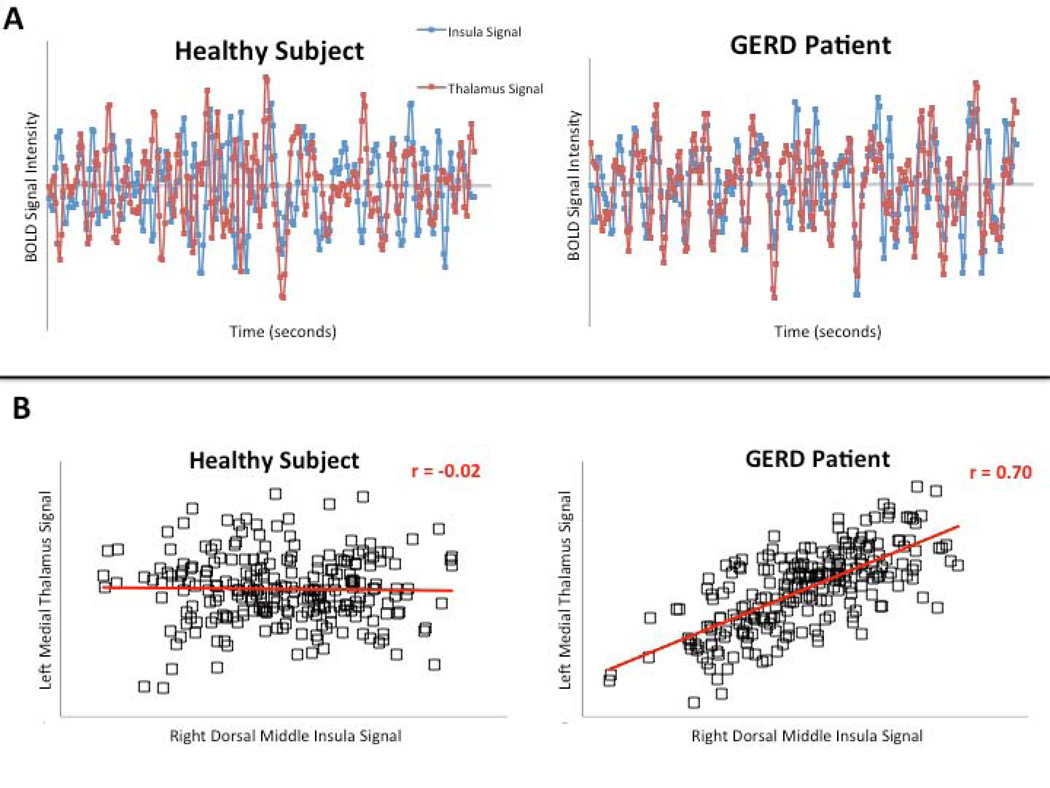
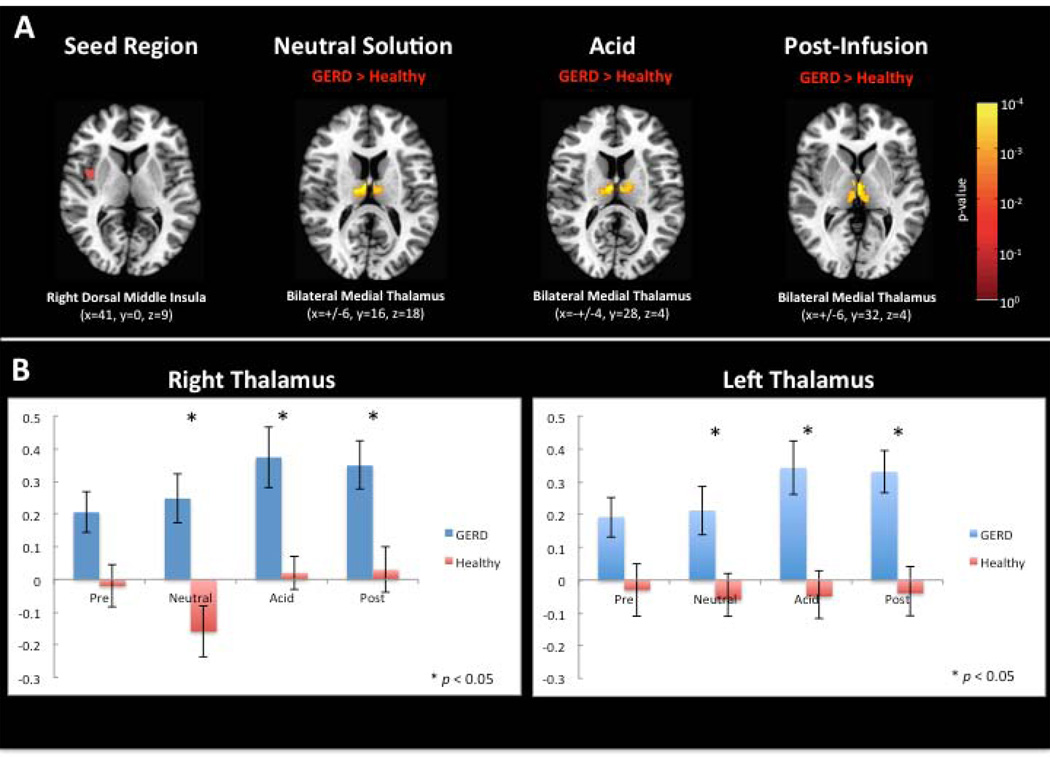
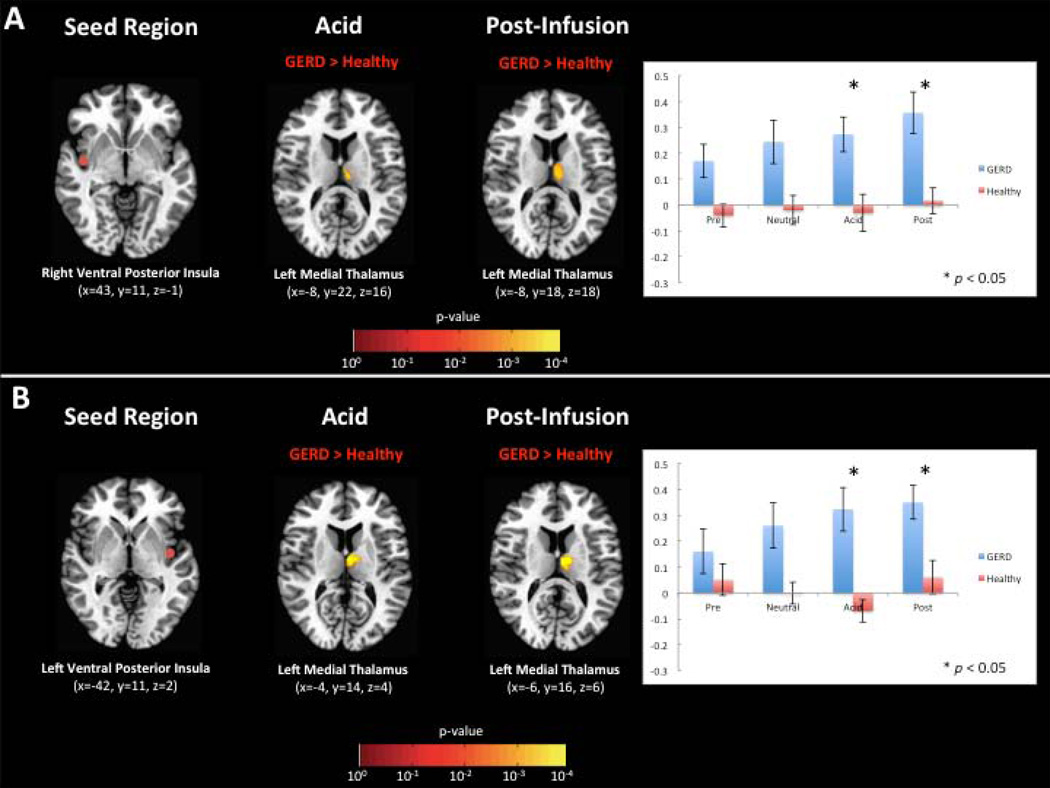
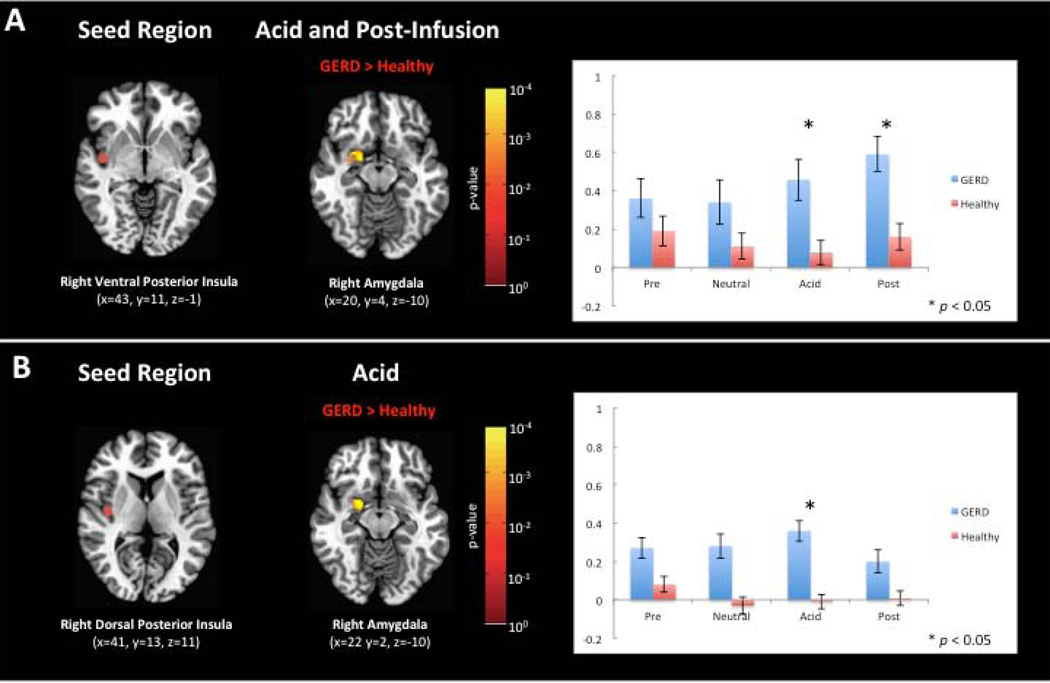
Methods: Functional imaging data were obtained from 12 GERD patients and 14 healthy subjects during four steady state conditions: (i) presence of transnasal esophageal catheter (pre-infusion); (ii) neutral solution; (iii) acid infusion; (iv) presence of transnasal esophageal catheter following infusions (post-infusion). The insula was parcellated into six regions of interest. FC maps between each insular ROI and interoceptive regions were created. Differences in FC between GERD patients and healthy subjects were determined across the 4 study conditions.
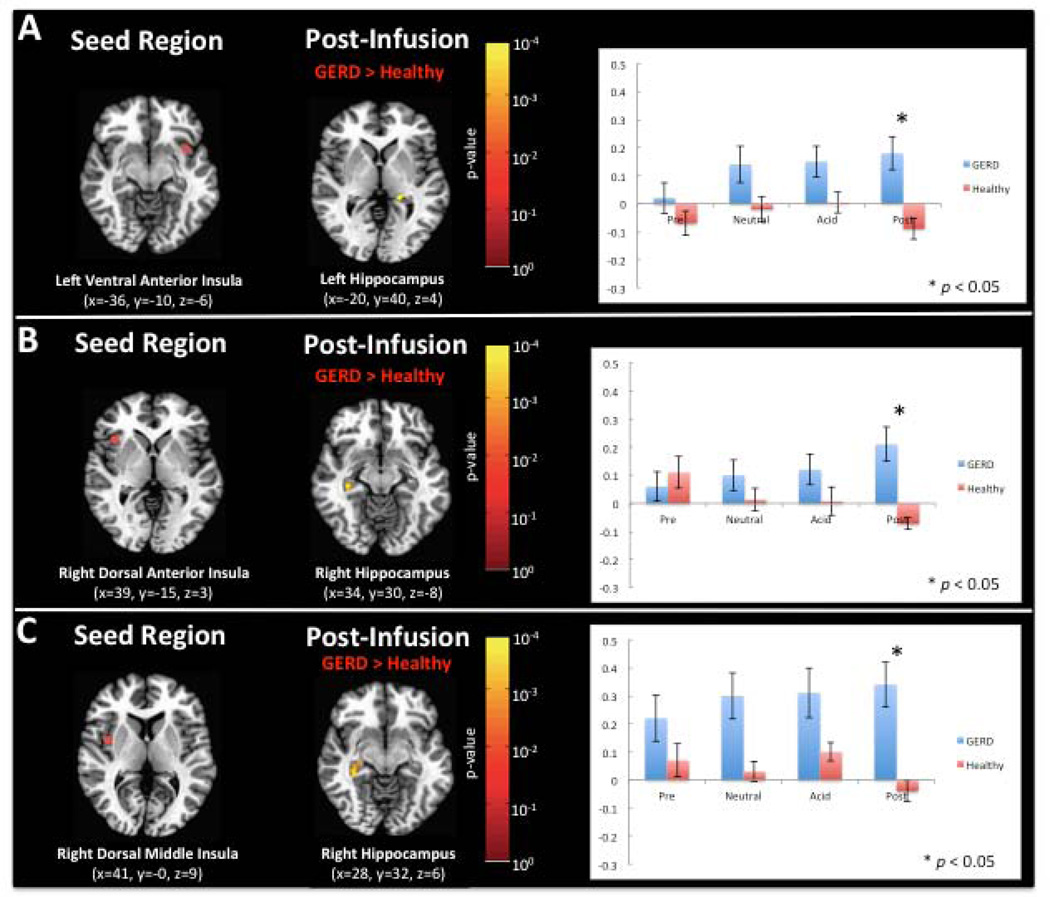
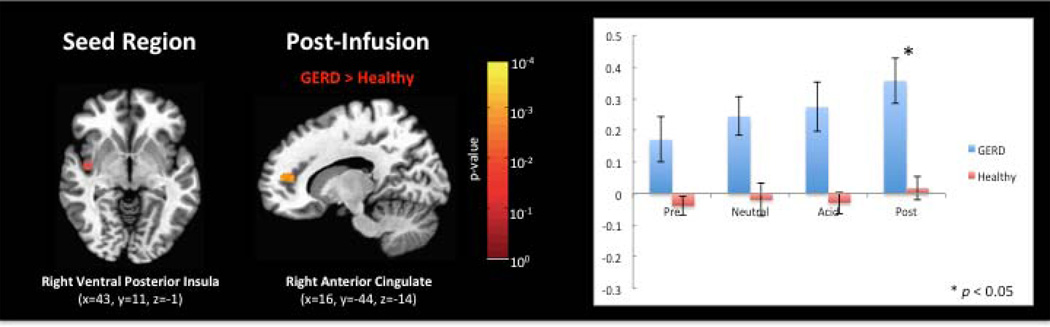
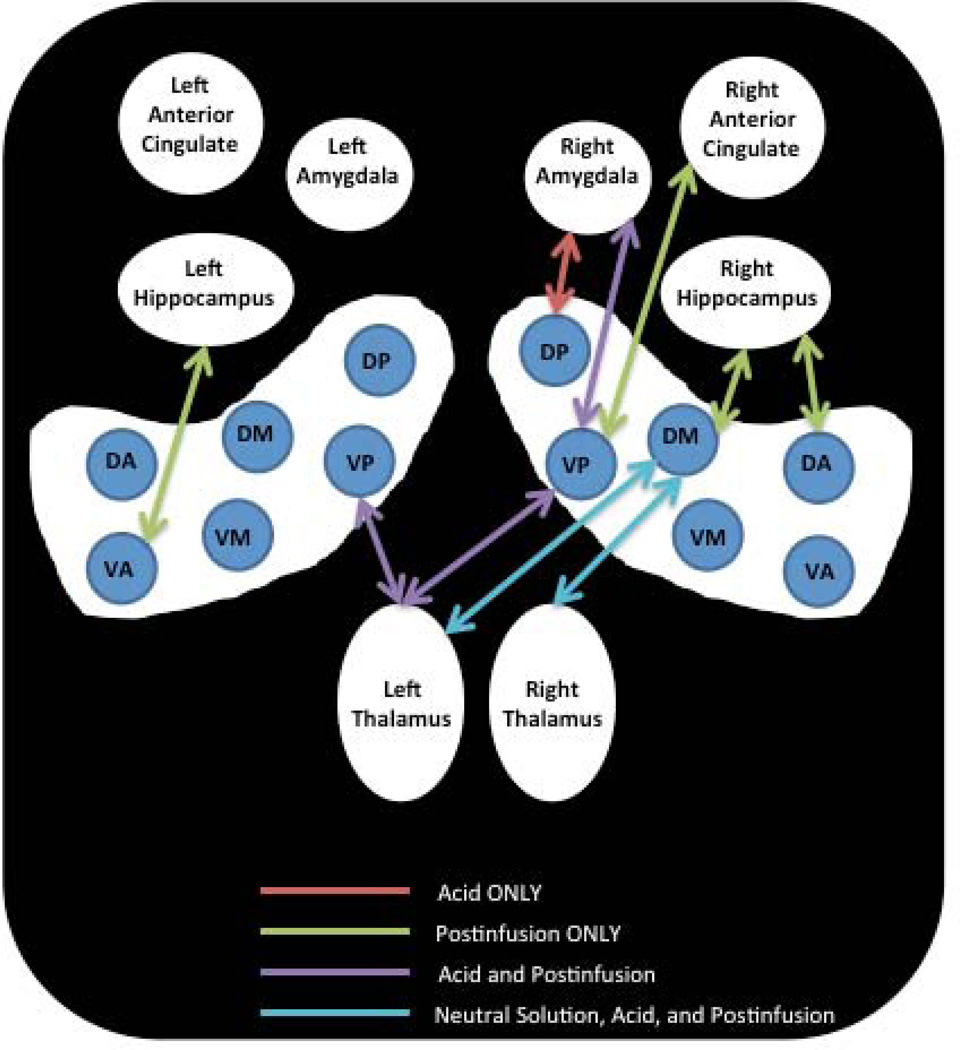
Key results: All GERD patients experienced heartburn during and after esophageal acidification. Significant differences between GERD patients and healthy subjects were seen in: (i) insula-thalamic FC (neutral solution infusion, acid infusion, post-infusion); (ii) insula-amygdala FC (acid infusion, post-infusion); (iii) insula-hippocampus and insula-cingulate FC (post-infusion).
Conclusions & inferences: Esophageal stimulation in GERD patients revealed significant insular cortex FC differences with regions involved in viscerosensation and interoception. The results of our study provide further evidence that the insula, located at the transition of afferent physiologic information to human feelings, is essential for both visceral homeostasis and the experience of heartburn in GERD patients.
Keywords: heartburn; interoception; viscerosensation.
© 2014 John Wiley & Sons Ltd.
Conflict of interest statement
The authors have no conflict of interest to disclose.
Figures
References
-
- Sengupta JN. An overview of esophageal sensory receptors. American journal of medicine. 2000;108:87S–89S. - PubMed
-
- Qin C, Farber JP, Foreman RD. Intraesophageal chemicals enhance responsiveness of upper thoracic spinal neurons to mechanical stimulation of esophagus in rats. American journal of physiology Gastrointestinal and liver physiology. 2008;294(3):G708–G716. - PubMed
-
- Randich A, Gebhart GF. Vagal afferent modulation of nociception. Brain research Brain research reviews. 1992;17(2):77–99. - PubMed
Publication types
MeSH terms
Substances
Grants and funding
LinkOut - more resources
Full Text Sources
Other Literature Sources
Medical
