


Impact of maternal and paternal preconception health on birth outcomes using prospective couples' data in Add Health
- PMID: 25367598
- PMCID: PMC4293222
- DOI: 10.1007/s00404-014-3521-0
Impact of maternal and paternal preconception health on birth outcomes using prospective couples' data in Add Health
Abstract
Purpose: Retrospective studies of preconception health have demonstrated that parents' health conditions and behaviors can impact a newborn's birth outcomes and, subsequently, future health status. This study sought to examine the impact of preconception health, measured prospectively, among both mothers and fathers, on two important birth outcomes: birthweight and gestational age.
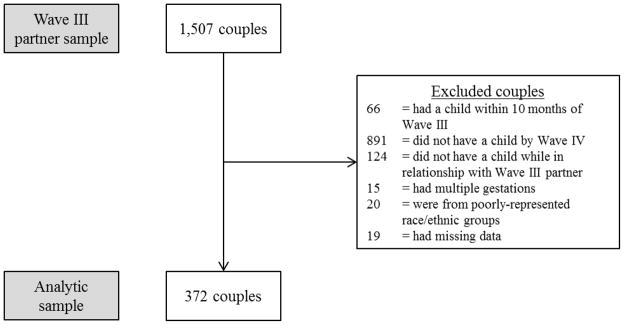
Methods: Data came from Add Health (the National Longitudinal Study of Adolescent Health), which included interviews with original participants and a subsample of their partners in 2001-02. In 2008, the original respondents again completed an interview for Add Health. For 372 eligible infants born to these couples, birth outcomes (measured in 2008) were regressed on preconception health conditions and behaviors among non-pregnant heterosexual partners (measured in 2001-02).
Results: Mean birthweight was 3,399 g, and mean gestational age was 39 weeks. Birthweight was higher for infants born to mothers with diabetes or high blood pressure, and for mothers who drank alcohol at least once per month, and lower for infants born to fathers with diabetes (p < 0.05). Infant gestational age was marginally lower for infants born to mothers with higher levels of depression (p < 0.10), and lower for infants born to fathers with diabetes and with higher levels of fast food consumption (p < 0.05).
Conclusions: Both maternal and paternal preconception health conditions and behaviors influenced infant birth outcomes. Interventions to promote preconception health should focus on prevention of diabetes and high blood pressure, as well as minimizing consumption of alcohol and fast food.
Conflict of interest statement
The authors declare that they have no conflict of interest. Access to the data used in the present analysis is restricted to protect against deductive disclosure, but if the journal requests to review the data, the authors will work with the journal to provide access to the data.
Figures
References
-
- Centers for Disease Control and Prevention (CDC) [Accessed April 20 2013];Preconception care and health care. 2012 http://www.cdc.gov/preconception/overview.html.
-
- Misra DP, Guyer B, Allston A. Integrated perinatal health framework. A multiple determinants model with a life span approach. Am J Prev Med. 2003 S0749379703000904. - PubMed
Publication types
MeSH terms
Grants and funding
LinkOut - more resources
Full Text Sources
Other Literature Sources
