


A chemical rescue screen identifies a Plasmodium falciparum apicoplast inhibitor targeting MEP isoprenoid precursor biosynthesis
- PMID: 25367906
- PMCID: PMC4291372
- DOI: 10.1128/AAC.03342-14
A chemical rescue screen identifies a Plasmodium falciparum apicoplast inhibitor targeting MEP isoprenoid precursor biosynthesis
Abstract
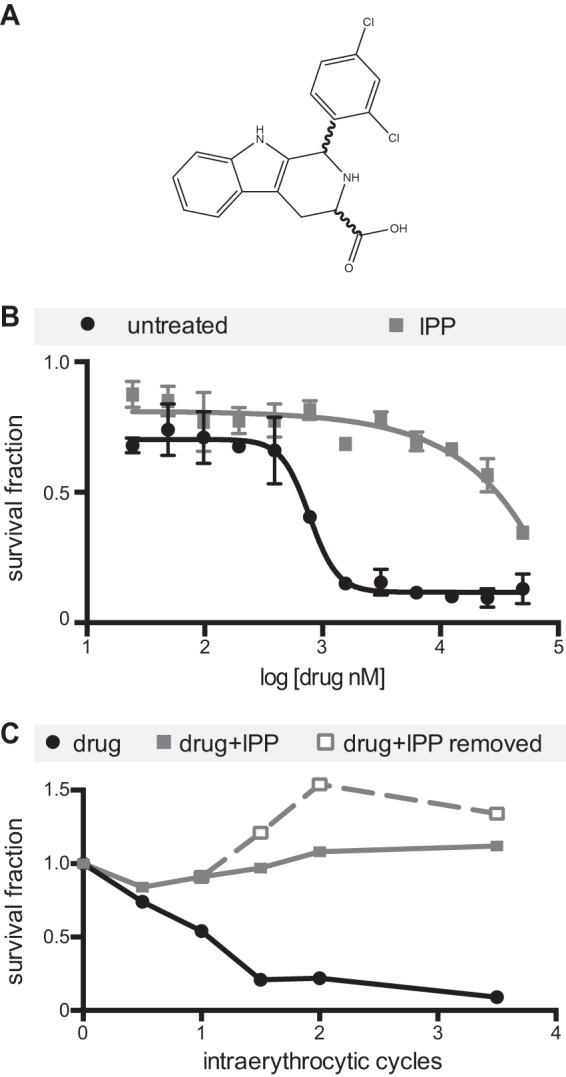
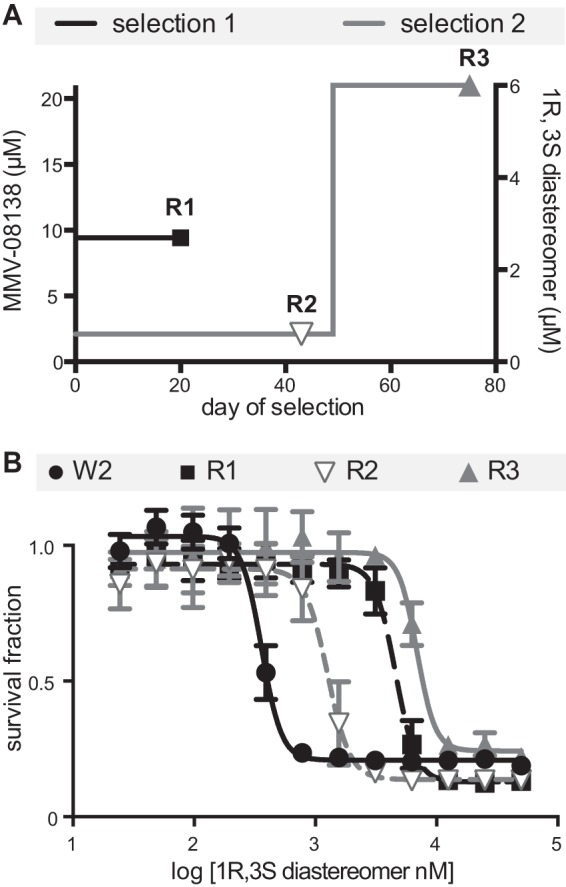
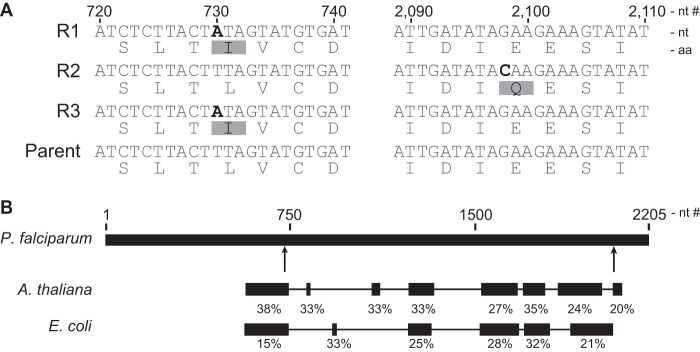
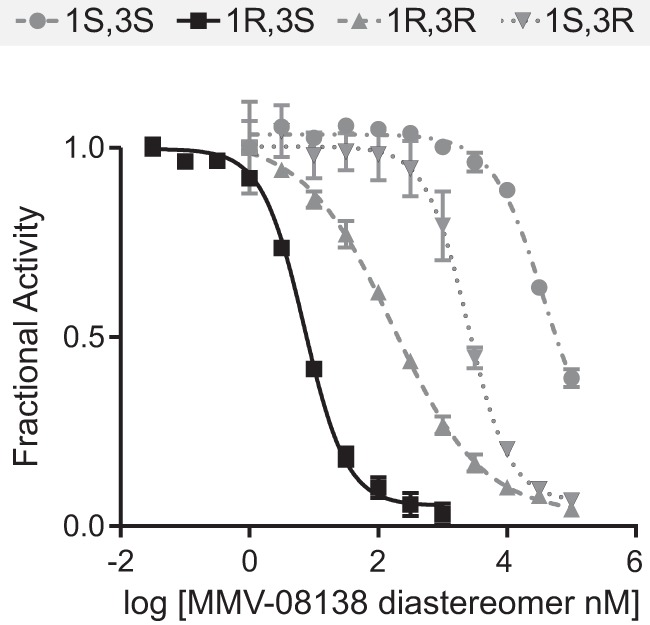
The apicoplast is an essential plastid organelle found in Plasmodium parasites which contains several clinically validated antimalarial-drug targets. A chemical rescue screen identified MMV-08138 from the "Malaria Box" library of growth-inhibitory antimalarial compounds as having specific activity against the apicoplast. MMV-08138 inhibition of blood-stage Plasmodium falciparum growth is stereospecific and potent, with the most active diastereomer demonstrating a 50% effective concentration (EC50) of 110 nM. Whole-genome sequencing of 3 drug-resistant parasite populations from two independent selections revealed E688Q and L244I mutations in P. falciparum IspD, an enzyme in the MEP (methyl-d-erythritol-4-phosphate) isoprenoid precursor biosynthesis pathway in the apicoplast. The active diastereomer of MMV-08138 directly inhibited PfIspD activity in vitro with a 50% inhibitory concentration (IC50) of 7.0 nM. MMV-08138 is the first PfIspD inhibitor to be identified and, together with heterologously expressed PfIspD, provides the foundation for further development of this promising antimalarial drug candidate lead. Furthermore, this report validates the use of the apicoplast chemical rescue screen coupled with target elucidation as a discovery tool to identify specific apicoplast-targeting compounds with new mechanisms of action.
Copyright © 2015, American Society for Microbiology. All Rights Reserved.
Figures
References
-
- WHO. 2013. World Malaria Report 2013. WHO, Geneva, Switzerland.
-
- Dondorp AM, Nosten F, Yi P, Das D, Phyo AP, Tarning J, Lwin KM, Ariey F, Hanpithakpong W, Lee SJ, Ringwald P, Silamut K, Imwong M, Chotivanich K, Lim P, Herdman T, An SS, Yeung S, Singhasivanon P, Day NPJ, Lindegardh N, Socheat D, White NJ. 2009. Artemisinin resistance in Plasmodium falciparum malaria. N Engl J Med 361:455–467. doi: 10.1056/NEJMoa0808859. - DOI - PMC - PubMed
Publication types
MeSH terms
Substances
Grants and funding
LinkOut - more resources
Full Text Sources
Other Literature Sources
Molecular Biology Databases
