


Arbuscular mycorrhizal symbiosis and osmotic adjustment in response to NaCl stress: a meta-analysis
- PMID: 25368626
- PMCID: PMC4201091
- DOI: 10.3389/fpls.2014.00562
Arbuscular mycorrhizal symbiosis and osmotic adjustment in response to NaCl stress: a meta-analysis
Abstract
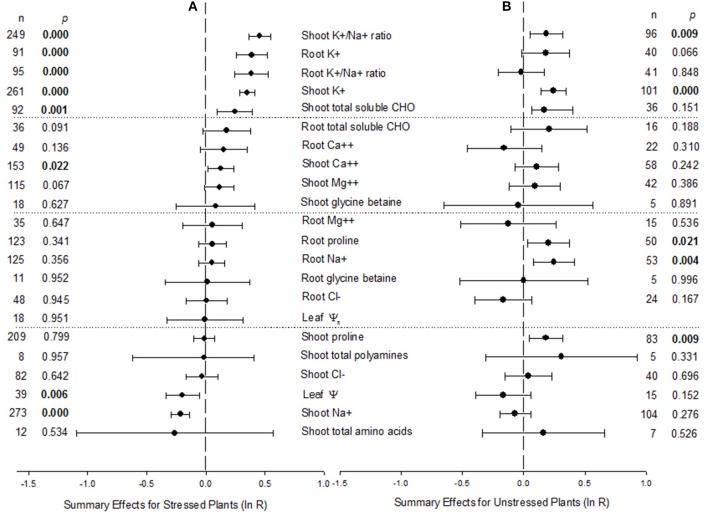
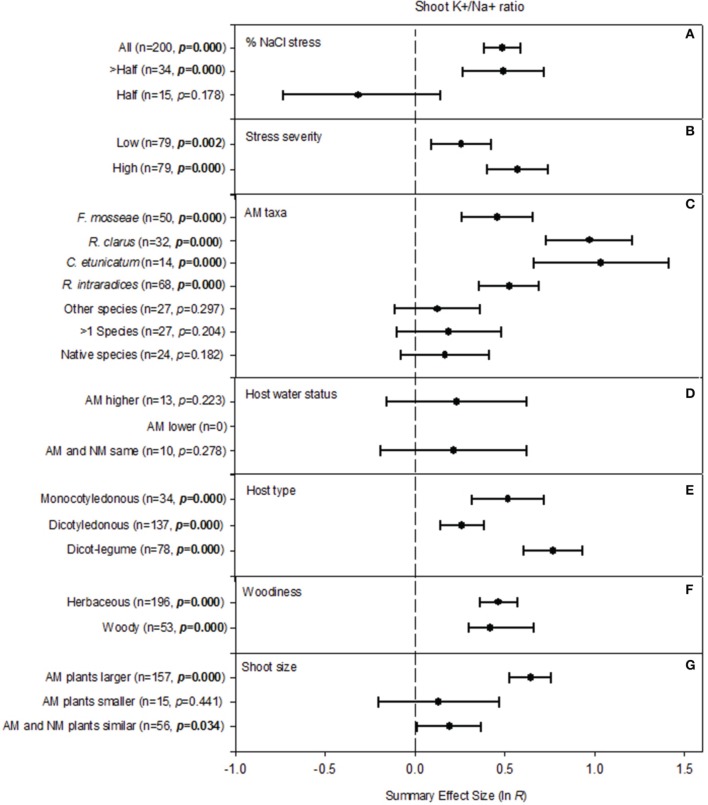
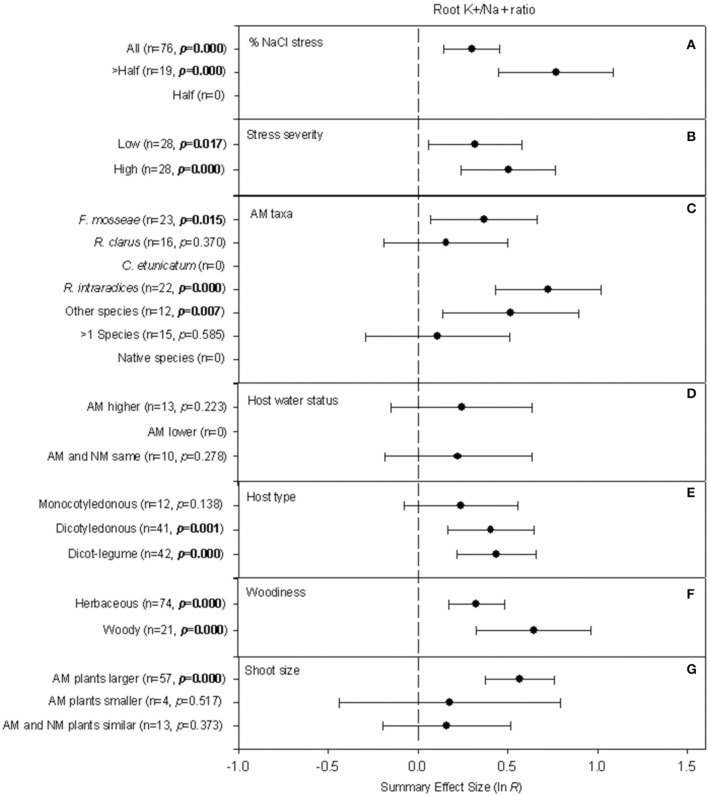
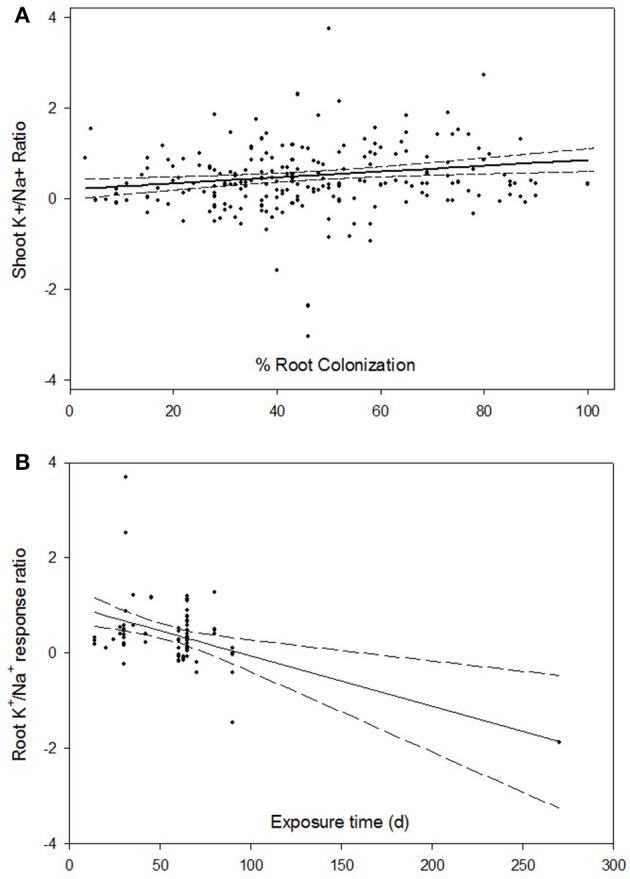
Arbuscular mycorrhizal (AM) symbiosis can enhance plant resistance to NaCl stress in several ways. Two fundamental roles involve osmotic and ionic adjustment. By stimulating accumulation of solutes, the symbiosis can help plants sustain optimal water balance and diminish Na(+) toxicity. The size of the AM effect on osmolytes has varied widely and is unpredictable. We conducted a meta-analysis to determine the size of the AM effect on 22 plant solute characteristics after exposure to NaCl and to examine how experimental conditions have influenced the AM effect. Viewed across studies, AM symbioses have had marked effects on plant K(+), increasing root and shoot K(+) concentrations by an average of 47 and 42%, respectively, and root and shoot K(+)/Na(+) ratios by 47 and 58%, respectively. Among organic solutes, soluble carbohydrates have been most impacted, with AM-induced increases of 28 and 19% in shoots and roots. The symbiosis has had no consistent effect on several characteristics, including root glycine betaine concentration, root or shoot Cl(-) concentrations, leaf Ψπ, or shoot proline or polyamine concentrations. The AM effect has been very small for shoot Ca(++) concentration and root concentrations of Na(+), Mg(++) and proline. Interpretations about AM-conferred benefits regarding these compounds may be best gauged within the context of the individual studies. Shoot and root K(+)/Na(+) ratios and root proline concentration showed significant between-study heterogeneity, and we examined nine moderator variables to explore what might explain the differences in mycorrhizal effects on these parameters. Moderators with significant impacts included AM taxa, host type, presence or absence of AM growth promotion, stress severity, and whether NaCl constituted part or all of the experimental saline stress treatment. Meta-regression of shoot K(+)/Na(+) ratio showed a positive response to root colonization, and root K(+)/Na(+) ratio a negative response to time of exposure to NaCl.
Keywords: K+/Na+ ratio; NaCl stress; arbuscular mycorrhiza; compatible solutes; meta-analysis; osmotic adjustment; salinity; salt stress.
Figures

References
-
- Aboul-Nasr A. (1999). Alleviation of salt stress by Glomus intraradices on linseed (Linum usitatissimum L.) in hydroponic culture. Alex. J. Agric. Res. 44, 115–127
-
- Aggarwal A., Kadian N., Neetu K., Tanwar A., Gupta K. K. (2012). Arbuscular mycorrhizal symbiosis and alleviation of salinity stress. J. Appl. Nat. Sci. 4, 144–155
-
- Al-Karaki G. N., Hammad R., Rusan M. (2001). Response of two tomato cultivars differing in salt tolerance to inoculation with mycorrhizal fungi under salt stress. Mycorrhiza 11, 43–47. 10.1007/s005720100098 - DOI
LinkOut - more resources
Full Text Sources
Other Literature Sources
