


Symptoms of an intrauterine hematoma associated with pregnancy complications: a systematic review
- PMID: 25369062
- PMCID: PMC4219764
- DOI: 10.1371/journal.pone.0111676
Symptoms of an intrauterine hematoma associated with pregnancy complications: a systematic review
Abstract
Objective: To evaluate the predictive value of the symptoms of an intrauterine hematoma (IUH) for adverse pregnancy outcomes.
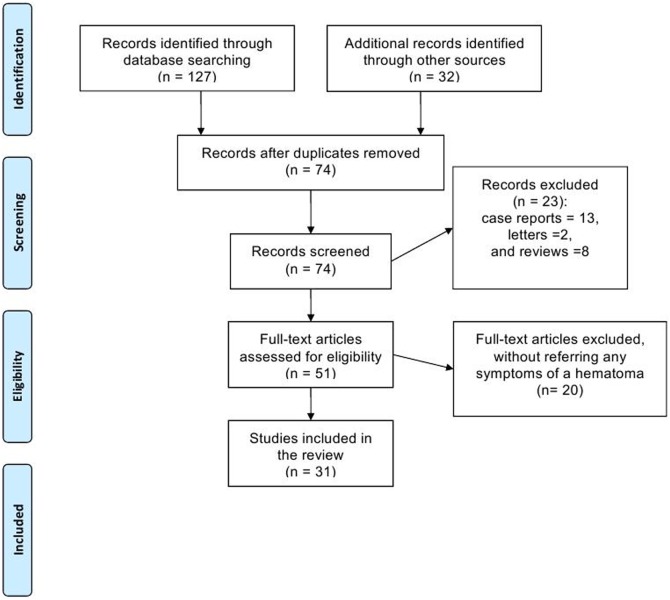
Methods: A literature review was performed with the search terms, including intrauterine/subchorionic/retroplacental/subplacental hematoma/hemorrhage/bleeding/collection/fluid, covering the period from January, 1981 to January, 2014. We just focused on the pregnancy outcomes associated with different symptoms of an IUH.
Results: It is generally agreed that a retroplacental, posterior or subchorionic in the fundus of uterus, and/or persistent IUH is associated with adverse outcomes in the ongoing pregnancy. However, the prognosis value of both volume and gestational age at diagnosis of IUH still remains controversial. Some researchers argue that a large IUH is associated with an increased risk of adverse events during pregnancy while others refuted. It is believed by some that the earlier an IUH was detected, the higher the risk for adverse outcomes would be, while no or weak association were reported by other studies. The prognostic value of the simultaneous presence of vaginal bleeding on pregnancy outcome is also controversial.
Conclusions: Both the position relative to the placenta or uterus and duration of IUH have strong predictive value on the prognosis in the ongoing pregnancy. However, the prognostic values of the IUH volume, gestational age at diagnosis and the simultaneous presence of vaginal bleeding remain controversial up to now. Moreover, most of previous reports are small, uncontrolled studies with incomplete information. Prospective, large sample, cohorts studies which take all detailed symptoms of an IUH into consideration are needed when we evaluate its clinical significance in the prognosis of pregnancy.
Conflict of interest statement
Figures
References
-
- Seki H, Kuromaki K, Takeda S, Kinoshita K (1998) Persistent subchorionic hematoma with clinical symptoms until delivery. Int J Gynaecol Obstet 63: 123–128. - PubMed
-
- Johns J, Hyett J, Jauniaux E (2003) Obstetric outcome after threatened miscarriage with and without a hematoma on ultrasound. Obstet Gynecol 102: 483–487. - PubMed
-
- Mantoni M, Pedersen JF (1981) Intrauterine haematoma an ultrasonic study of threatened abortion. Br J Obstet Gynaecol 88: 47–51. - PubMed
-
- van Oppenraaij RH, Jauniaux E, Christiansen OB, Horcajadas JA, Farquharson RG, et al. (2009) Predicting adverse obstetric outcome after early pregnancy events and complications: a review. Hum Reprod Update 15: 409–421. - PubMed
-
- Tower CL, Regan L (2001) Intrauterine haematomas in a recurrent miscarriage population. Hum Reprod 16: 2005–2007. - PubMed
Publication types
MeSH terms
LinkOut - more resources
Full Text Sources
Other Literature Sources
Medical
