


Evaluation of Wound Closure Activity of Nigella sativa, Melastoma malabathricum, Pluchea indica, and Piper sarmentosum Extracts on Scratched Monolayer of Human Gingival Fibroblasts
- PMID: 25371695
- PMCID: PMC4211176
- DOI: 10.1155/2014/190342
Evaluation of Wound Closure Activity of Nigella sativa, Melastoma malabathricum, Pluchea indica, and Piper sarmentosum Extracts on Scratched Monolayer of Human Gingival Fibroblasts
Abstract
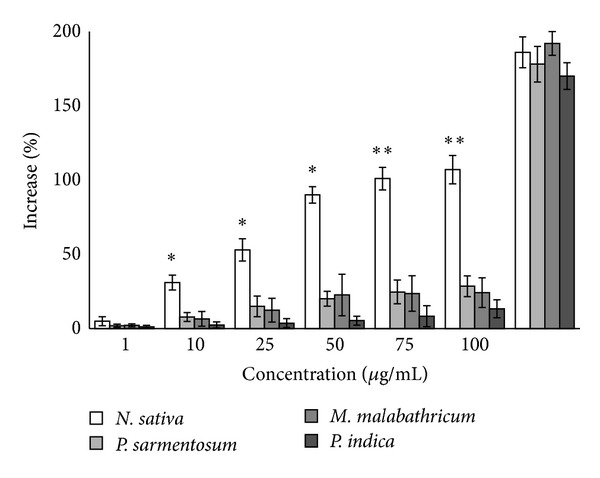
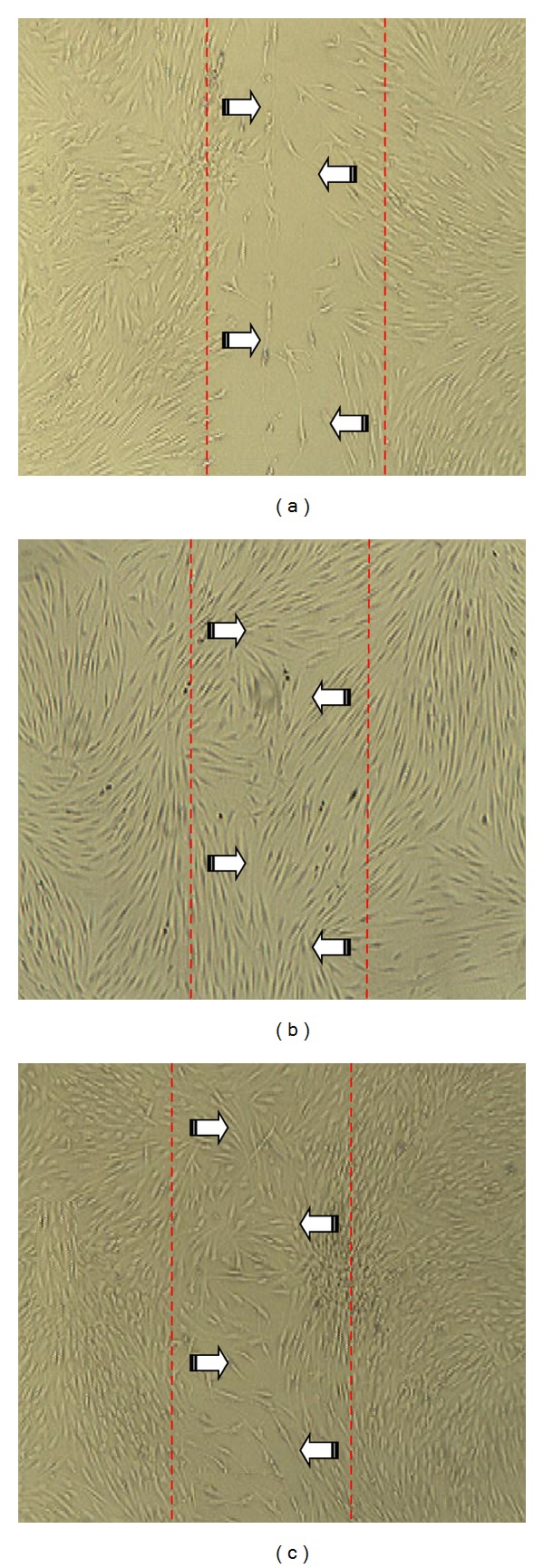
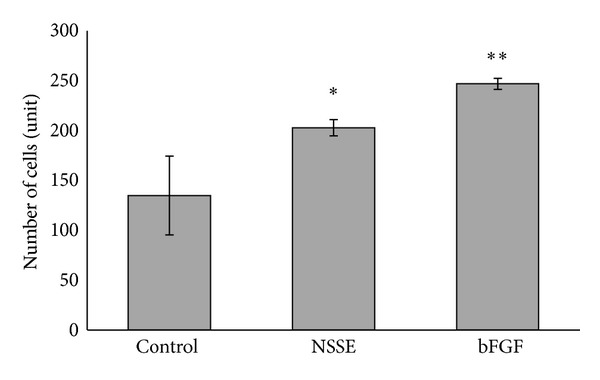
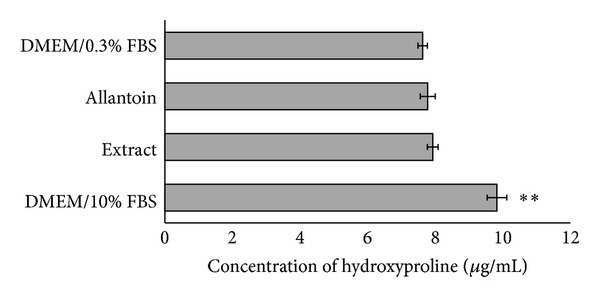
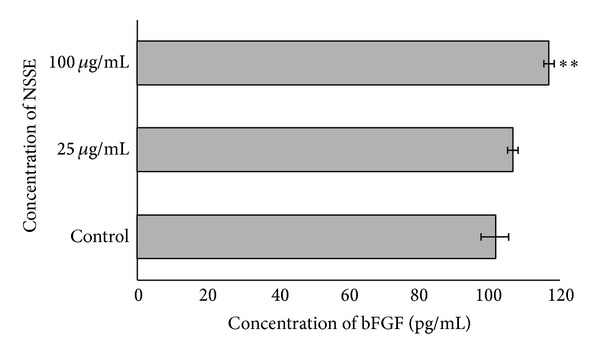
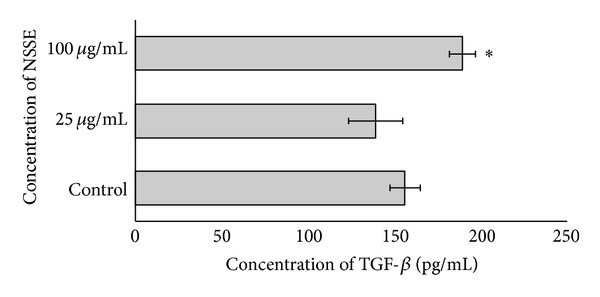
Nigella sativa, Melastoma malabathricum, Pluchea indica, and Piper sarmentosum are common Asian traditional medicines to treat minor wounds. This study aimed to investigate the in vitro wound healing properties of aqueous extracts of these plants using human gingival fibroblast (HGF) monolayer as study model. DPPH scavenging activity of the extracts was evaluated and effect on HGF proliferation was determined. Their effect on HGF's function to synthesize collagen was indicated by the level of hydroxyproline produced and effect on wound healing activity was assessed using an in vitro scratch assay. The influence of the extracts on expression of bFGF and TGF-β was also determined. Results revealed all four extracts to exhibit low free radical scavenging activity. The extract from N. sativa (NSSE) compared to the others showed favourable enhancement of HGF proliferation with EC50 of 22.67 ± 3.06 µg/mL (P < 0.05) with accelerated wound closure activity despite its nonsignificant effect on collagen synthesis. In addition to the elevated level of bFGF by up to 15% at 100 µg/mL of NSSE, a slightly better effect was observed on the expression of TGF-β. NSSE thus showed that promising wound healing properties and data obtained may contribute towards validation of its traditional use for the healing of oral wounds.
Figures
References
-
- Pradhan D, Panda PK, Tripathy G. Wound healing activity of aqueous and methanolic bark extracts of vernonia arborea Buch.-Ham. in wistar rats. Natural Product Radiance. 2009;8(1):6–11.
-
- Joseph B, Raj SJ. A comparitive study on various properties of five medicinally important plants. International Journal of Pharmacology. 2011;7(2):206–211.
-
- Schmidt C, Fronza M, Goettert M, et al. Biological studies on Brazilian plants used in wound healing. Journal of Ethnopharmacology. 2009;122(3):523–532. - PubMed
-
- Marion F, Winkler MS. Nutrition and Oral Medicine. Totowa, NJ, USA: Humana Press; 2005.
-
- Glim JE, van Egmond M, Niessen FB, Everts V, Beelen RHJ. Detrimental dermal wound healing: what can we learn from the oral mucosa? Wound Repair and Regeneration. 2013;21(5):648–660. - PubMed
LinkOut - more resources
Full Text Sources
Other Literature Sources
