


Maternal weight gain in pregnancy and risk of obesity among offspring: a systematic review
- PMID: 25371815
- PMCID: PMC4202338
- DOI: 10.1155/2014/524939
Maternal weight gain in pregnancy and risk of obesity among offspring: a systematic review
Abstract
Objectives: To systematically review the evidence from prospective and retrospective cohort studies on the association between gestational weight gain (GWG) and offspring's body weight.
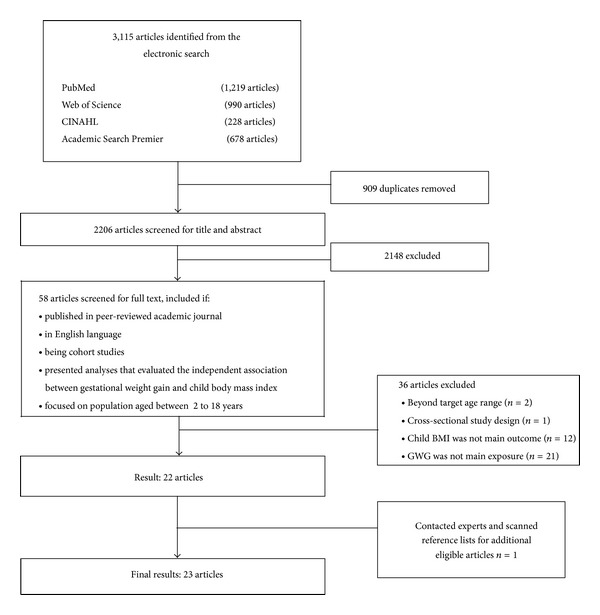
Methods: Electronic databases PubMed, Web of Science, CINAHL, and Academic Search Premiere were searched from inception through March 18, 2013. Included studies (n = 23) were English articles that examined the independent associations of GWG with body mass index (BMI) and/or overweight status in the offspring aged 2 to 18.9 years. Two authors independently extracted the data and assessed methodological quality of the included studies.
Results: Evidence from cohort studies supports that total GWG and exceeding the Institute of Medicine maternal weight gain recommendation were associated with higher BMI z-score and elevated risk of overweight or obesity in offspring. The evidence of high rate of GWG during early- and mid-pregnancy is suggestive. Additionally, the evidence on inadequate GWG and net GWG in relation to body weight outcomes in offspring is insufficient to draw conclusions.
Conclusions: These findings suggest that GWG is a potential risk factor for childhood obesity. However, findings should be interpreted with caution due to measurement issues of GWG and potential confounding effects of shared familial characteristics (i.e., genetics and maternal and child's lifestyle factors).
Figures
References
-
- World Health Organization. Series 894. Geneva, Switzerland: World Health Organization; 2000. Obesity: preventing and managing the global epidemic. - PubMed
-
- International Obesity Task Force: childhood obesity, 2008.
-
- Kipping RR, Jago R, Lawlor DA. Obesity in children, part 1: epidemiology, measurement, risk factors, and screening. British Medical Jouranl. 2008;337a1824 - PubMed
Publication types
MeSH terms
LinkOut - more resources
Full Text Sources
Other Literature Sources
