


Intestinal microbiota is different in women with preterm birth: results from terminal restriction fragment length polymorphism analysis
- PMID: 25372390
- PMCID: PMC4221021
- DOI: 10.1371/journal.pone.0111374
Intestinal microbiota is different in women with preterm birth: results from terminal restriction fragment length polymorphism analysis
Abstract
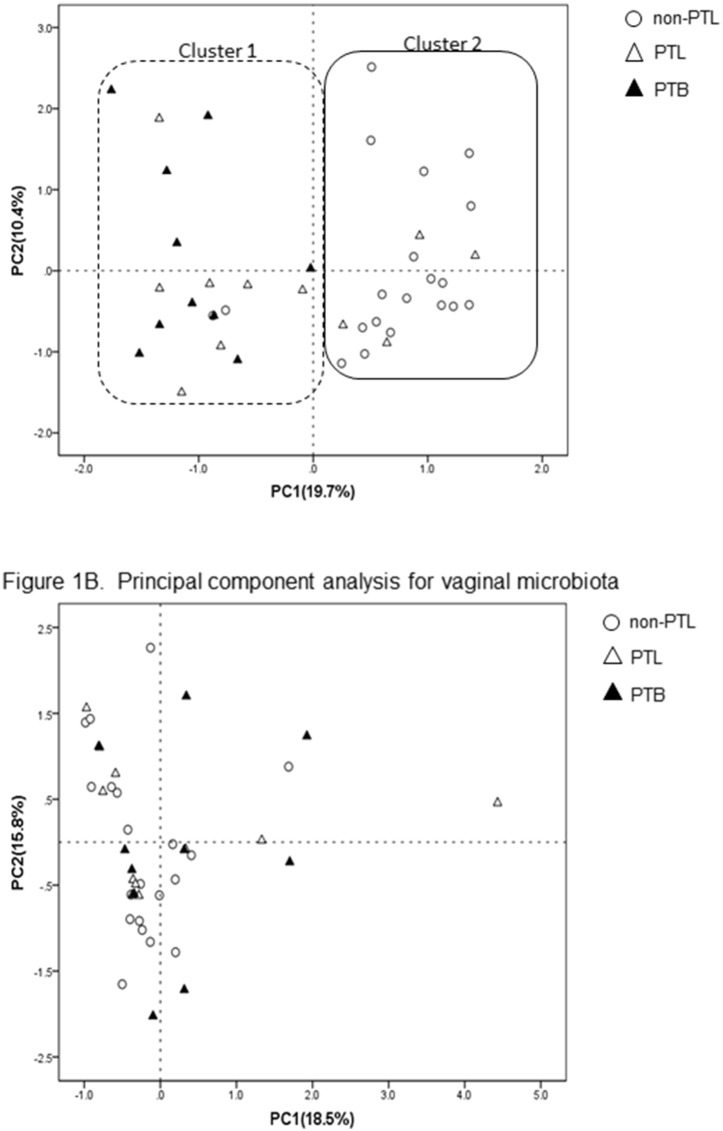
Preterm birth is a leading cause of perinatal morbidity and mortality. Studies using a cultivation method or molecular identification have shown that bacterial vaginosis is one of the risk factors for preterm birth. However, an association between preterm birth and intestinal microbiota has not been reported using molecular techniques, although the vaginal microbiota changes during pregnancy. Our aim here was to clarify the difference in intestinal and vaginal microbiota between women with preterm birth and women without preterm labor. 16S ribosomal ribonucleic acid genes were amplified from fecal and vaginal DNA by polymerase chain reaction. Using terminal restriction fragment length polymorphism (T-RFLP), we compared the levels of operational taxonomic units of both intestinal and vaginal flora among three groups: pregnant women who delivered term babies without preterm labor (non-PTL group) (n = 20), those who had preterm labor but delivered term babies (PTL group) (n = 11), and those who had preterm birth (PTB group) (n = 10). Significantly low levels of Clostridium subcluster XVIII, Clostridium cluster IV, Clostridium subcluster XIVa, and Bacteroides, and a significantly high level of Lactobacillales were observed in the intestinal microbiota in the PTB group compared with those in the non-PTL group. The levels of Clostridium subcluster XVIII and Clostridium subcluster XIVa in the PTB group were significantly lower than those in the PTL group, and these levels in the PTL group were significantly lower than those in non-PTL group. However, there were no significant differences in vaginal microbiota among the three groups. Intestinal microbiota in the PTB group was found to differ from that in the non-PTL group using the T-RFLP method.
Conflict of interest statement
Figures
References
-
- Shendure J, Ji H (2008) Next-generation DNA sequencing. Nat Biotechnol 26: 1135–1145. - PubMed
Publication types
MeSH terms
LinkOut - more resources
Full Text Sources
Other Literature Sources
