


Interventions for women in subsequent pregnancies following obstetric anal sphincter injury to reduce the risk of recurrent injury and associated harms
- PMID: 25373366
- PMCID: PMC10823349
- DOI: 10.1002/14651858.CD010374.pub2
Interventions for women in subsequent pregnancies following obstetric anal sphincter injury to reduce the risk of recurrent injury and associated harms
Abstract
Background: Perineal damage occurs frequently during childbirth, with severe damage involving injury to the anal sphincter reported in up to 18% of vaginal births. Women who have sustained anal sphincter damage are more likely to suffer perineal pain, dyspareunia (painful sexual intercourse), defaecatory dysfunction, and urinary and faecal incontinence compared to those without damage. Interventions in a subsequent pregnancy may be beneficial in reducing the risk of further severe trauma and may reduce the risk of associated morbidities.
Objectives: To examine the effects of Interventions for women in subsequent pregnancies following obstetric anal sphincter injury for improving health.
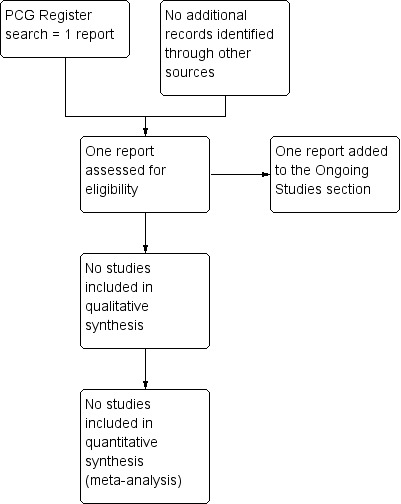
Search methods: We searched the Cochrane Pregnancy and Childbirth Group's Trials Register (30 September 2014).
Selection criteria: Randomised controlled trials, cluster-randomised trials and multi-arm trials assessing the effects of any intervention in subsequent pregnancies following obstetric anal sphincter injury to improve health. Quasi-randomised controlled trials and cross-over trials were not eligible for inclusion.
Data collection and analysis: No trials were included. In future updates of this review, at least two review authors will extract data and assess the risk of bias of included studies.
Main results: No eligible completed trials were identified. One ongoing trial was identified.
Authors' conclusions: No relevant trials were included. The effectiveness of interventions for women in subsequent pregnancies following obstetric anal sphincter injury for improving health is therefore unknown. Randomised trials to assess the relative effects of interventions are required before clear practice recommendations can be made.
Conflict of interest statement
None known.
Update of
References
References to ongoing studies
Abramowitz 2008 {published data only}
-
- Abramowitz L. EPICc: anal incontinence after delivery. Secondary prevention with caesarean section. ClinicalTrials.gov (http://clinicaltrials.gov/) 2008.
Additional references
Abbott 2010
-
- Abbott D, Atere‐Roberts N, Williams A, Oteng‐Ntim E, Chappell LC. Obstetric anal sphincter injury. BMJ 2010;341:140‐5. - PubMed
Albers 1999
-
- Albers L, Garcia J, Renfrew M, McCandlish R, Elbourne D. Distribution of genital tract trauma in childbirth and related postnatal pain. Birth 1999;26:11‐7. - PubMed
Andrews 2006
-
- Andrews V, Sultan AH, Thakar R, Jones PW. Occult anal sphincter injuries—myth or reality?. BJOG: an international journal of obstetrics and gynaecology 2006;113:195‐200. - PubMed
Baghestan 2012
-
- Baghestan E, Irgens LM, Børdahl PE, Rasmussen S. Risk of recurrence and subsequent delivery after obstetric anal sphincter injuries. BJOG: an international journal of obstetrics and gynaecology 2012;119:62‐9. - PubMed
Barrett 2000
-
- Barrett G, Pendry E, Peacock J, Victor C, Thakar R, Manyonda I. Women's sexual health after childbirth. BJOG: an international journal of obstetrics and gynaecology 2000;107:186‐95. - PubMed
Bek 1992
-
- Bek KM, Laurberg S. Risks of anal incontinence from subsequent vaginal delivery after a complete obstetric anal sphincter tear. BJOG: an international journal of obstetrics and gynaecology 1992;99:724‐6. - PubMed
Brown 2000
-
- Brown S, Lumley J. Physical health problems after childbirth and maternal depression at six to seven months postpartum. BJOG: an international journal of obstetrics and gynaecology 2000;107:1194‐201. - PubMed
Buhling 2006
-
- Buhling KJ, Schmidt S, Robinson JN, Klapp C, Siebert G, Dudenhausen JW. Rate of dyspareunia after delivery in primiparae according to mode of delivery. European Journal of Obstetrics & Gynecology and Reproductive Biology 2006;124:42‐6. - PubMed
Dandolu 2005
-
- Dandolu V, Gaughan J, Chatwani A, Harmanli O, Mabine B, Hernandez E. Risk of recurrence of anal sphincter lacerations. Obstetrics and Gynecology 2005;105:831‐5. - PubMed
de Leeuw 2007
-
- Leeuw JW, Wit C, Kuijken J, Bruinse HW. Mediolateral episiotomy reduces the risk for anal sphincter injury during operative vaginal delivery. BJOG: an international journal of obstetrics and gynaecology 2007;115:104‐8. - PubMed
Edozien 2014
-
- Edozien LC, Gurol‐Urganci I, Cromwell DA, Adams EJ, Richmond DH, Mahmood TA, et al. Impact of third‐ and fourth‐degree perineal tears at first birth on subsequent pregnancy outcomes: a cohort study. BJOG: an international journal of obstetrics and gynaecology 2014 [Epub ahead of print]. - PubMed
Fenner 2003
-
- Fenner DE, Genberg B, Brahma P, Marek L, DeLancey JO. Fecal and urinary incontinence after vaginal delivery with anal sphincter disruption in an obstetrics unit in the United States. American Journal of Obstetrics and Gynecology 2003;189:1543‐9. - PubMed
Fernando 2006
Fizgerald 2007
-
- Fitzgerald MP, Weber AM, Howden N, Cundiff GW, Brown MBP, for the Pelvic Floor Disorders Network. Risk factors for anal sphincter tear during vaginal delivery. Obstetrics and Gynecology 2007;109:29‐34. - PubMed
Fornell 2005
-
- Fornell EU, Matthiesen L, Sjödahl R, Berg G. Obstetric anal sphincter injury ten years after: subjective and objective long term effects. BJOG: an international journal of obstetrics and gynaecology 2005;112:312‐6. - PubMed
Fynes 1998
-
- Fynes M, Donnelly V, O'Connell PR, O'Herlihy C. Cesarean delivery and anal sphincter injury. Obstetrics and Gynecology 1998;92(4 Pt 1):496‐500. - PubMed
Gurol‐Urganci 2013
-
- Gurol‐Urganci I, Cromwell DA, Edozien LC, Mahmood TA, Adams EJ, Richmond DH, et al. Third‐ and fourth‐degree perineal tears among primiparous women in England between 2000 and 2012: time trends and risk factors. BJOG: an international journal of obstetrics and gynaecology 2013;120:1516‐25. - PubMed
Harkin 2003
-
- Harkin R, Fitzpatrick M, O’Connell PR, O’Herlihy C. Anal sphincter disruption at vaginal delivery: is recurrence predictable?. European Journal of Obstetrics, Gynecology, and Reproductive Biology 2003;109:149‐52. - PubMed
Higgins 2011
-
- Higgins JPT, Green S, editors. Cochrane Handbook for Systematic Reviews of Interventions Version 5.1.0 [updated March 2011]. The Cochrane Collaboration, 2011. Available from www.cochrane‐handbook.org.
Hirayama 2012
-
- Hirayama F, Koyanagi A, Mori R, Zhang J, Souza JP, Gülmezoglu AM. Prevalence and risk factors for third‐ and fourth‐degree perineal lacerations during vaginal delivery: a multi‐country study. BJOG: an international journal of obstetrics and gynaecology 2012;119:340‐7. - PubMed
Jango 2012
-
- Jangö H, Langhoff‐Roos J, Rosthøj S, Sakse A. Risk factors of recurrent anal sphincter ruptures: a population‐based cohort study. BJOG: an international journal of obstetrics and gynaecology 2012;119:1640‐7. - PubMed
Kudish 2008
Laine 2009
-
- Laine K, Gissler M, Pirhonen J. Changing incidence of anal sphincter tears in four Nordic countries through the last decades. European Journal of Obstetrics, Gynecology, and Reproductive Biology 2009;146:71‐5. - PubMed
Laine 2011
-
- Laine K, Skjeldestad FE, Sanda B, Horne H, Spydslaug A, Staff AC. Prevalence and risk factors for anal incontinence after obstetric anal sphincter rupture. Acta Obstetricia et Gynecologica Scandinavica 2011;90:319‐24. - PubMed
Lowder 2007
-
- Lowder JL, Burrows LJ, Krohn MA, Weber AM. Risk factors for primary and subsequent anal sphincter lacerations: a comparison of cohorts by parity and prior mode of delivery. American Journal of Obstetrics and Gynecology 2007;196:344.e1‐344.e5. - PubMed
MacArthur 1997
-
- MacArthur C, Bick DE, Keighley MRB. Faecal incontinence after childbirth. BJOG: an international journal of obstetrics and gynaecology 1997;104:46‐50. - PubMed
Macarthur 2004
-
- Macarthur AJ, Macarthur C. Incidence, severity, and determinants of perineal pain after vaginal delivery: a prospective cohort study. American Journal of Obstetrics and Gynecology 2004;191:1199‐204. - PubMed
McCandlish 1998
-
- McCandlish R, Bowler U, Asten H, Berridge G, Winter C, Sames L, et al. A randomised controlled trial of care of the perineum during second stage of normal labour. BJOG: an international journal of obstetrics and gynaecology 1998;105:1262‐72. - PubMed
McLeod 2003
-
- McLeod NL, Gilmour DT, Joseph KS, Farrell SA, Luther ER. Trends in major risk factors for anal sphincter lacerations: a 10‐year study. Journal of Obstetrics and Gynaecology Canada 2003;7:586‐93. - PubMed
Miner 1990
-
- Miner PB, Donnelly TC, Read NW. Investigation of mode of action of biofeedback in treatment of fecal incontinence. Digestive Diseases and Sciences 1990;35(10):1291‐8. - PubMed
Mowatt 2007
NICE 2007
-
- National Institute for Health and Care Excellence. Intrapartum care of healthy women and their babies during childbirth. National Collaborating Centre for Women’s and Children’s Health 2007.
Norton 2012
Payne 1999
-
- Payne TN, Carey JC, Rayburn WF. Prior third‐ or fourth‐degree perineal tears and recurrence risks. International Journal of Gynecology and Obstetrics 1999;64:55‐7. - PubMed
Peleg 1999
-
- Peleg D, Kennedy CM, Merrill D, Zlatnik FJ. Risk of repetition of a severe perineal laceration. Obstetrics and Gynecology 1999;93:1021‐4. - PubMed
Rathfisch 2010
-
- Rathfisch G, Dikencik BK, Kizilkaya Beji N, Comert N, Tekirdag AI, Kadioglu A. Effects of perineal trauma on postpartum sexual function. Journal of Advanced Nursing 2010;66(12):2640‐9. - PubMed
RCOG 2007
-
- Royal College of Obstetricians and Gynaecologists. The Management of Third and Fourth Degree Perineal Ttears. Green Top Guideline No 29. London: RCOG, 2007.
RevMan 2014 [Computer program]
-
- The Nordic Cochrane Centre, The Cochrane Collaboration. Review Manager (RevMan). Version 5.3. Copenhagen: The Nordic Cochrane Centre, The Cochrane Collaboration, 2014.
Richter 2006
-
- Richter HE, Fielding JR, Bradley CS, Handa VL, Fine P, Fitzgerald MP, et al. Endoanal ultrasound findings and fecal incontinence symptoms in women with and without recognized anal sphincter tears. Obstetrics and Gynecology 2006;108:1394‐401. - PubMed
Stafne 2012
-
- Stafne SN, Salvesen KÅ, Romundstad PR, Torjusen IH, Mørkved S. Does regular exercise including pelvic floor muscle training prevent urinary and anal incontinence during pregnancy? A randomised controlled trial. BJOG: an international journal of obstetrics and gynaecology 2012;119(10):1270‐80. - PubMed
Sultan 1993
-
- Sultan AH, Kamm MA, Hudson CN, Thomas JM, Bartram CI. Anal‐sphincter disruption during vaginal delivery. New England Journal of Medicine 1993;329:1905‐11. - PubMed
Sultan 1999
-
- Sultan AH. Obstetric perineal injury and anal incontinence. Clinical Risk 1999;5:193‐6.
Wheeler 2011
-
- Wheeler J, Davis D, Fry M, Brodie P, Homer CSE. Is Asian ethnicity an independent risk factor for severe perineal trauma in childbirth? A systematic review of the literature. Women and Birth 2011;25:107‐13. - PubMed
Williams 2005
-
- Williams A, Tincello DG, White S, Adams EJ, Alfirevic Z, Richmond DH. Risk scoring system for prediction of obstetric anal sphincter injury. BJOG: an international journal of obstetrics and gynaecology 2005;112:1066‐9. - PubMed
Publication types
MeSH terms
LinkOut - more resources
Full Text Sources
Other Literature Sources
Medical
