


Oncoplastic breast surgery: initial experience at the Centro Clinico de Estereotaxia-CECLINES, Caracas, Venezuela
- PMID: 25374618
- PMCID: PMC4203471
- DOI: 10.3332/ecancer.2014.470
Oncoplastic breast surgery: initial experience at the Centro Clinico de Estereotaxia-CECLINES, Caracas, Venezuela
Abstract
Background: Breast-conserving surgery (BCS) may sometimes lead to deformities in the remaining breast. Oncoplastic surgery (OPS) aims to improve our aesthetic results even in the case of major volume resections. The purpose of this study is to provide an objective evaluation of our initial experience with OPS, mainly based on the levels of satisfaction reported by both patients and surgeons.
Patients and methods: This prospective study was performed at CECLINES in Caracas, Venezuela, between January 2011 and October 2012. It involved 107 consecutive patients in two groups: 52 patients with level II OPS versus 55 patients with 'standard' BCS (SBCS). We evaluated the level of satisfaction and cosmetic outcome at 6 and 12 months post-operation using a score from 1 (bad) to 5 (excellent). The cosmetic score was recorded during the follow-up by the surgeon, by phone calls, and photographs were reviewed by a panel of four observers.
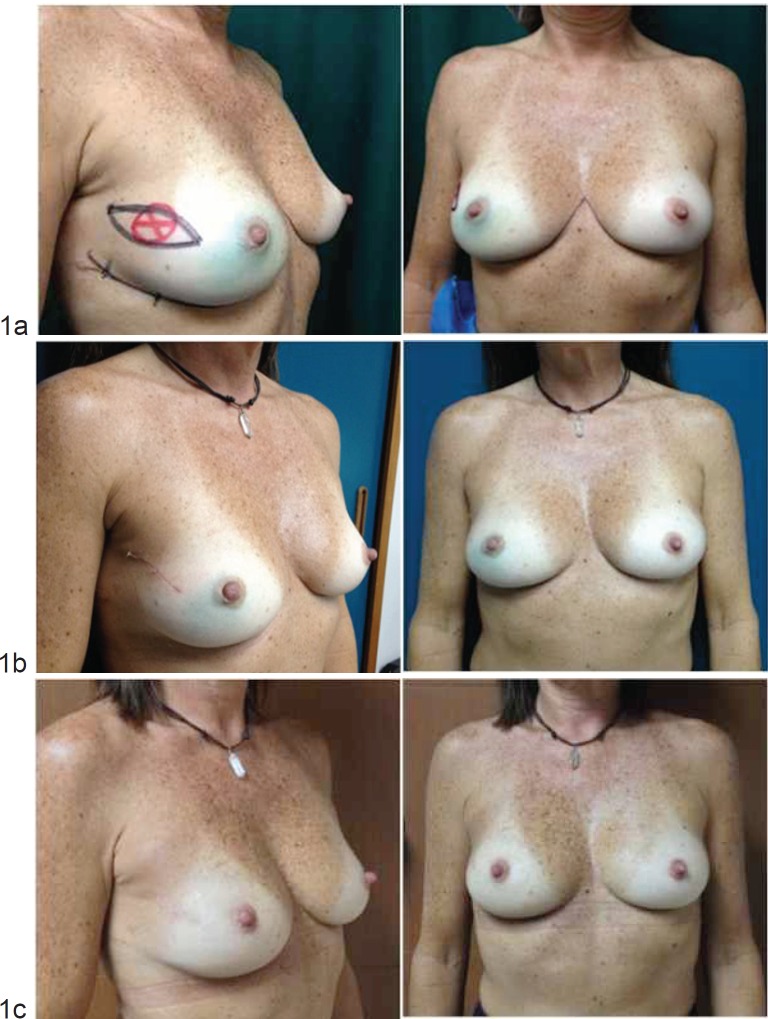
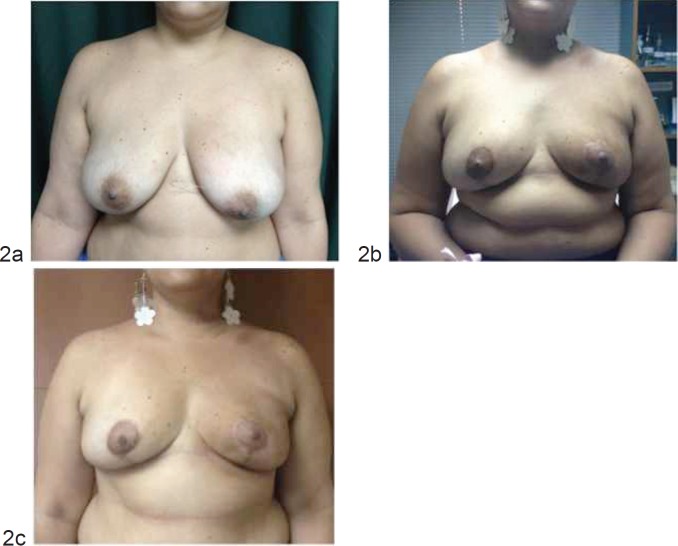
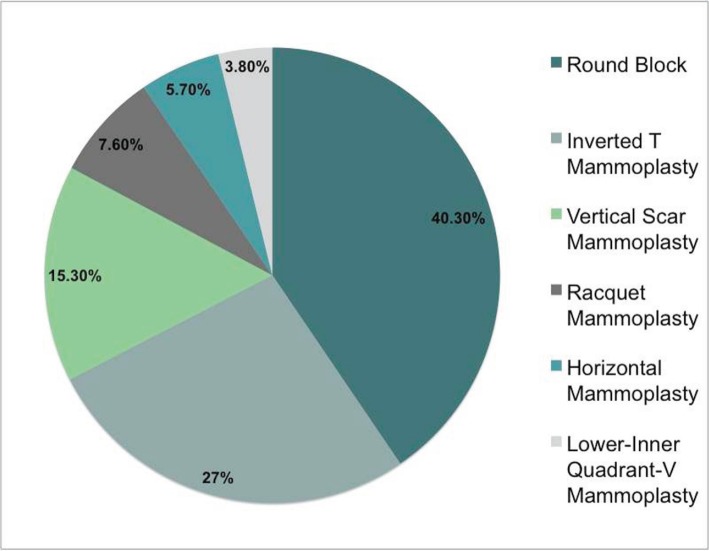
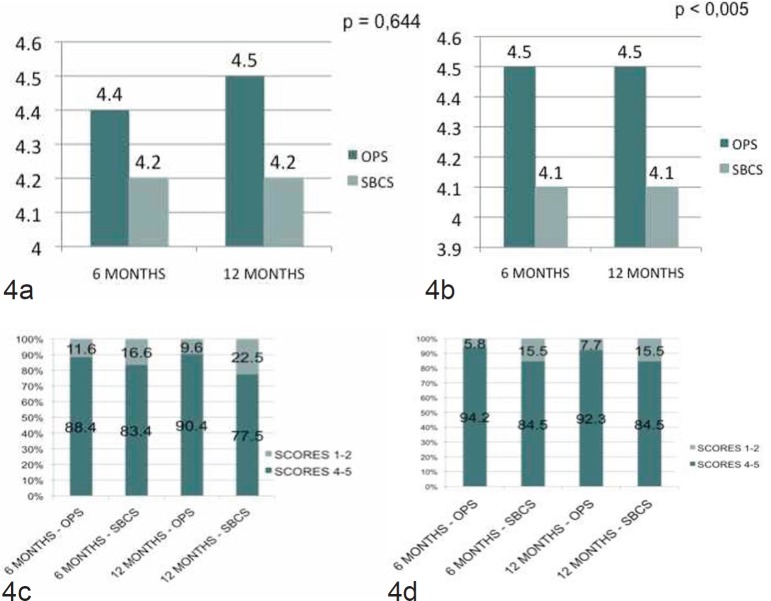
Results: The participation rate in the cosmetic outcome/level of satisfaction evaluation was 100% at 6 months and 96.2% at 12 months. The average tumour size was 23 mm [standard deviation (SD): 13.5] for the OPS group versus 17.6 mm (SD: 8.3) for the SBCS group (p = 0.017). The average weight for the surgical specimen was 101 g (range: 30-512 g) in the OPS group versus 60.4 g (range: 20-135 g) in the SBCS group (p = 0.004). The OPS techniques most performed were round block 40.3% (21/52), inverted T mammoplasty 26.8% (14/52) and vertical scar mammoplasty 15.3% (8/52). Of all the patients, 51.9% (27/52) had symmetrisation procedures performed distributed according to the period of the study: 77.2% (17/22) in 2011, 56.6% (17/30) in 2012, and 18.1% (6/33) in 2013. The rate of complications was 5.7% (3/52) in the OPS group and 0% for the SBCS group (p < 0.005). The average cosmetic score at 6 months by patients in the OPS group was 4.4; patient satisfaction scores of 4 (good) and 5 (excellent) were 88.4%. In the SBCS group at 6 months, the mean score reported by patients was 4.2, with scores 4-5 being 83.4% (p = 0.644). The cosmetic score by surgeons in the OPS group at 6 months was 4.5; the surgeon satisfaction scores of 4-5 were 94.2%. In the SBCS group, the surgeons' mean score at 6 months was 4.1, with 84.5% of scores being 4 or 5 (p < 0.005). The final cosmetic score by patients in the OPS group at 12 months was 4.5; patient satisfaction scores of 4-5 were 90.4%. In the SBCS group, the final mean score at 12 months by patients was 4.2, with 77.5% of scores being 4 or 5 (p < 0.005). The final cosmetic score by surgeons in the OPS group at 12 months was 4.5; surgeon satisfaction scores of 4-5 were 92.3%. In the SBCS group, the surgeons' final mean score at 12 months was 4.1, with 84.5% of scores being 4 or 5 (p < 0.005).
Conclusions: OPS provides good satisfaction rates. An SBCS when an OPS is not indicated mostly results in good satisfaction levels and cosmetic scores. Usually, the results remain stable after 6 months. The use of OPS allows the excision of bigger lesions and surgical specimens. Symmetrisation procedures are not always required. With the appropriate patient selection, the rate of complications is low for both OPS and SBCS.
Keywords: Venezuela; breast cancer; conservative surgery; mammoplasty; oncoplastic surgery; satisfaction.
Figures
References
LinkOut - more resources
Full Text Sources
Research Materials